
The Hidden Costs of Deferred Boat Maintenance: Why Procrastination Sinks Your Budget

Skipping your annual hull polish or antifoul isn't a savvy way to save money; it's a high-interest loan you're taking out against your vessel's future value. Between rising Auckland marina fees and the constant struggle to find time for DIY tasks, it's easy to see why many owners push routine care to the bottom of the list. You might think that slightly chalky gelcoat or a bit of slime on the running gear can wait another summer whilst you enjoy the Hauraki Gulf.
The reality is that the hidden costs of deferred boat maintenance are often exponential. What starts as a minor cosmetic issue quickly evolves into a multi-thousand-dollar restoration project or a structural nightmare. By reading on, you'll discover how to protect your investment from Auckland’s harsh salt air and ensure your boat delivers reliable performance every time you leave the dock. We will break down the specific financial risks of procrastination and show you why a proactive grooming schedule is the most cost-effective way to own a boat today.
Table of Contents
What is Deferred Boat Maintenance and Why Does it Happen?
Many Auckland boaties fall into the trap of thinking a missed wash or a late antifoul won't hurt. They often view maintenance as an optional expense rather than a necessity. However, deferred maintenance is formally defined as the practice of postponing necessary repairs or upkeep until a later date. This delay creates a backlog of work that only grows more complex and expensive over time. Deferred maintenance acts as a cumulative financial liability for vessel owners.
In our local marinas, the "She’ll be right" attitude is a common sight. Owners often delay work due to rising marina fees or a simple lack of time to manage the logistics of a haul-out. They frequently underestimate the speed at which the marine environment degrades their asset. The hidden costs of deferred boat maintenance start with small issues, like minor salt spotting, but they quickly snowball into permanent damage that requires aggressive restoration rather than simple care.
The Psychology of the Procrastinating Boat Owner
It's a human tendency to value immediate savings over future prevention. You might feel like you're winning by keeping that money in your pocket today instead of booking a Boat Cut and Polish. This "out of sight, out of mind" trap is especially dangerous for underwater hull components and engine rooms. Auckland's seasonal boating cycle also encourages these delays. When the Hauraki Gulf settles down in winter, boats are often left unattended. Owners assume that if the vessel isn't moving, it isn't wearing out. In reality, stagnant salt water and damp Auckland winters are when the most significant damage occurs.
Auckland’s Unique Environmental Stressors
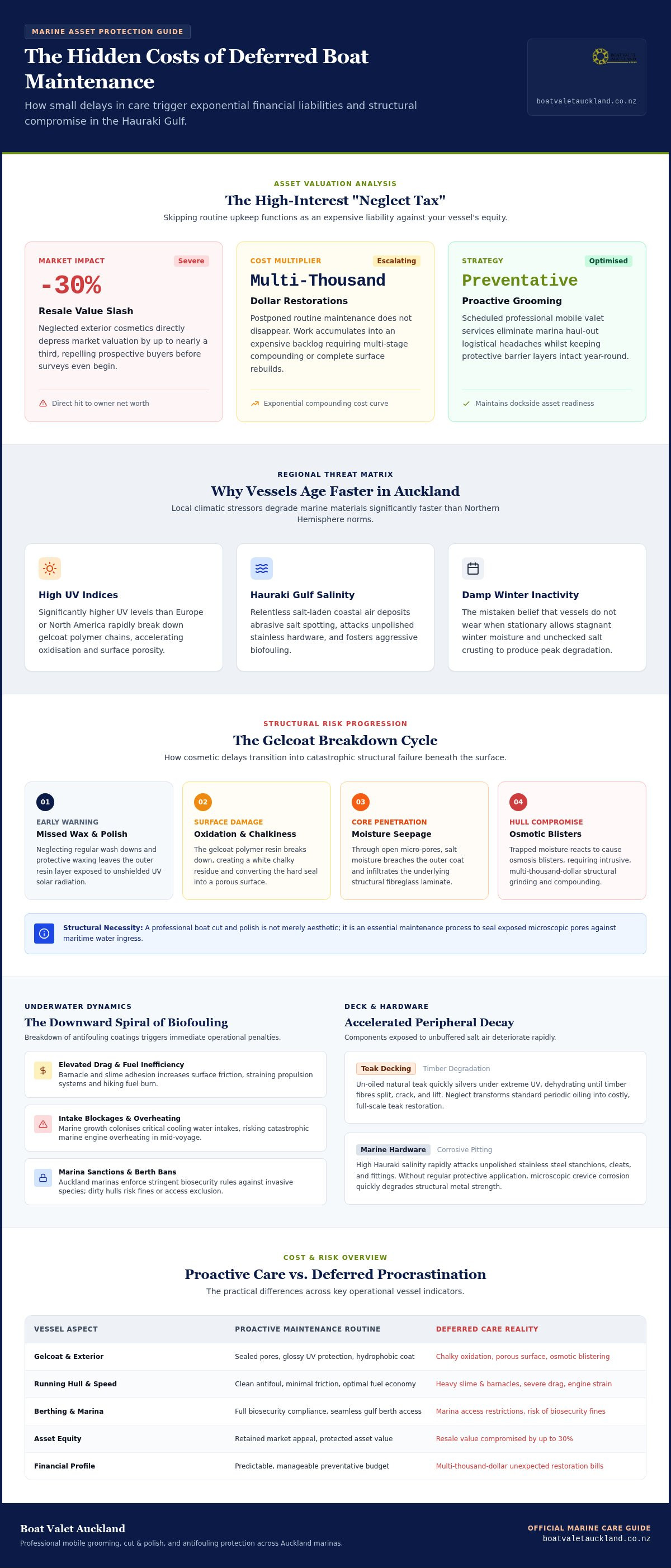
Our local environment is exceptionally aggressive towards marine materials. New Zealand’s high UV indices are significantly more intense than those found in Europe or North America. These rays break down gelcoat polymer chains at an accelerated rate, leading to rapid oxidation and a chalky, porous finish. The high salinity of the Hauraki Gulf is equally relentless. It attacks unpolished stainless steel and encourages heavy biofouling on the hull. Boats in Auckland age much faster than their Northern Hemisphere counterparts. Without a strict programme of preparation, application, and protection, your boat's value will plummet. Ignoring the hidden costs of deferred boat maintenance in this climate isn't just a delay; it's a direct hit to your net worth.
The Physical Reality of Neglect: From Gelcoat to Hull
Neglect isn't just a matter of aesthetics. It's a chemical process that compromises the integrity of your vessel. When you ignore the exterior, you aren't just letting the shine fade; you're allowing the protective layers to fail. The hidden costs of deferred boat maintenance manifest most clearly when these barriers break down, leaving your hull vulnerable to the elements. Small issues with gelcoat or stainless steel quickly become expensive structural problems.
Gelcoat Failure and the Threat of Osmosis
Gelcoat is your boat's first line of defence. It's a thin layer of resin that seals the fibreglass laminate against the ocean. When you skip routine waxing, UV rays and salt air cause the gelcoat to oxidise. This creates a "chalky" residue and makes the surface porous. Porous gelcoat allows moisture to seep into the underlying laminate. This eventually leads to osmotic blisters, which are incredibly expensive to repair. A professional boat cut and polish in Auckland is a structural necessity to keep these pores sealed. Experts at BoatUS note that restoring oxidized gelcoat requires aggressive, multi-stage compounding that costs far more than preventative care.
The Downward Spiral of Biofouling
The damage continues below the waterline. As antifouling coatings break down, marine growth like barnacles and slime takes hold. This biofouling increases hull friction, which significantly reduces fuel efficiency and increases engine strain. It can also block water intakes, leading to engine overheating. Auckland marinas are increasingly strict about hull cleanliness to prevent the spread of invasive species. Failing to maintain your hull can lead to fines or restricted access to certain berths. Consequently, marine antifouling in Auckland must be treated as a non-negotiable annual requirement.
Other areas suffer just as quickly. Teak decks that aren't oiled will silver and eventually split, requiring a full Teak Restoration. Stainless steel fittings are also at risk. When salt is left to crystallise amongst the hardware, it causes pitting corrosion that weakens the metal. These are the hidden costs of deferred boat maintenance that turn a minor groom into a major refit. If you want to keep your vessel in peak condition, booking a regular Exterior Wash and Wax is the simplest way to prevent this downward spiral.
Calculating the Neglect Tax: Maintenance vs. Restoration
Boating is often described as a hole in the water you throw money into. However, the size of that hole is determined by your maintenance schedule. The hidden costs of deferred boat maintenance follow an exponential curve. Whilst an annual service might seem like a significant outlay, waiting three years doesn't just triple the cost; it often decuples it. This "neglect tax" is paid in restoration fees, inflated fuel bills, and a plummeting resale value. You aren't saving money by waiting; you're simply deferring a much larger bill with a high interest rate.
A fouled hull is a major culprit for operational costs. Research indicates that heavy biofouling can increase fuel consumption by up to 40% as the engine works harder to push a drag-heavy hull through the water. Beyond the wallet, there's the cost of missed memories. When you defer maintenance, you inevitably face a breakdown or a mandatory haul-out during the peak of summer. Losing two weeks of the Hauraki Gulf season whilst your boat sits in a yard is a price no boatie wants to pay. Following established EPA boat maintenance and cleaning guidelines helps maintain seaworthiness and efficiency without these nasty surprises.
Case Study: The Polished vs. The Painted
Consider the difference between a vessel that receives an annual Boat Cut and Polish and one that is left to oxidise. Routine mobile boat grooming in Auckland preserves the original factory finish by sealing the gelcoat. If you let that gelcoat fail, the only solution is a full respray, which costs thousands more than a decade of annual polishing. Maintaining the original surface is always cheaper and more durable than replacing it. Proactive care ensures your asset remains a source of pride rather than a financial burden.
The Resale Value Penalty
Buyers are terrified of chalky hulls and grey teak. These visual cues suggest that the mechanical systems have been equally neglected. A "tired" boat can easily lose 20% to 30% of its market price compared to a well-maintained sister ship. Investing in pre-sale boat grooming in NZ often pays for itself five times over by securing a faster sale at a higher price point. Detailed maintenance records are your best friend during a vessel survey. They prove to the buyer that you haven't been ignoring the hidden costs of deferred boat maintenance, giving them the confidence to pay a premium for a reliable boat.
Prioritising Your Boat Maintenance Schedule
Managing a vessel in the Hauraki Gulf requires a strategic approach. You cannot do everything at once, especially if you're balancing a budget. The key is identifying the "Critical Path", those tasks that prevent catastrophic failure or irreversible decay. By focusing on these essentials, you mitigate the hidden costs of deferred boat maintenance whilst keeping your vessel safe for the family. Start by conducting a thorough self-audit. Look for tea staining on stainless steel, check your engine room for salt crusting, and inspect your teak for the first signs of silvering.
The ideal Auckland calendar follows a seasonal rhythm. Spring is for preparation. This is when you book your Antifouling and Exterior Wash and Wax to ensure the hull is efficient and protected for the summer rush. Autumn is for preservation. After a heavy season of salt and sun, a deep Interior Valet and a protective sealant application will prevent mould and oxidation from taking hold during the damp winter months. Working with a specialist to create a multi-year plan allows you to organise the cost of larger projects over several seasons.
The Non-Negotiable Annual Checklist
Antifouling and Anodes: Never skip your annual haul-out. Replacing sacrificial anodes is the only way to prevent galvanic corrosion from eating your propellers and through-hull fittings.
Engine Room Cleaning: A clean engine room is a diagnostic tool. It allows you to spot oil leaks or cooling system weepage before they result in a seized block or a costly tow.
Interior Valet: Auckland's humidity is a breeding ground for mildew. A professional deep clean prevents spores from ruining expensive upholstery and headliners.
Preserving Your External Surfaces
Protection is always cheaper than replacement. Regular Stainless Steel Polishing removes salt crystals that cause pitting, which eventually requires expensive hardware replacement. Similarly, teak restoration in Auckland should be performed as soon as the wood loses its golden hue. If you wait until the grain opens and the wood splits, you're looking at a full deck replacement. Safe navigation in the Gulf also depends on Window Polishing to remove water spots that obscure vision during glare-heavy conditions. To get your vessel on a sustainable schedule, book a professional consultation today.
Professional Mobile Grooming: The Smart Owner’s Solution
The biggest barrier to consistent vessel care isn't usually money; it's the sheer logistics involved. Between coordinating haul-outs and finding time to scrub the deck, many owners simply run out of hours. This is where a mobile service becomes essential. By removing the friction of maintenance, you eliminate the temptation to procrastinate. You stop worrying about the hidden costs of deferred boat maintenance because the work happens reliably in the background. It's the most efficient way to ensure your high-value asset remains in safe hands whilst you focus on enjoying the water.
Experience matters in the marine world. Steve Kellie has been operating Boat Valet Auckland since 1998, bringing over 25 years of local industry tenure to every berth. He doesn't just perform a service; he acts as a proactive partner who spots early warning signs before they become failures. Whether it's identifying the first hint of tea staining during Stainless Steel Polishing or noticing a thinning layer of antifoul, this expert eye is invaluable. We customise every grooming package to fit your specific vessel and budget, ensuring you only pay for the protection you actually need.
Why a Mobile Service Makes Sense in Auckland
Auckland’s traffic and marina logistics can turn a simple cleaning task into a weekend-long ordeal. Our mobile model saves you significant time and fuel by bringing the workshop directly to your marina or driveway. We use professional-grade tools and specialised chemicals that achieve results DIY efforts simply can't match. From high-end buffers for a Boat Cut and Polish to specific marine-grade soaps, we ensure the application is precise and the finish is durable. Consistent care from a trusted local operator means your boat is always ready for a spontaneous trip to the Hauraki Gulf.
Investing in Your Boating Lifestyle
It's time to shift your perspective. Don't view maintenance as a chore or a drain on your bank account. Instead, see it as essential investment protection. A professionally maintained boat isn't just about preserving resale value; it's about the quality of your lifestyle. You'll find yourself taking more frequent and more enjoyable outings when your vessel is clean, reliable, and performing at its peak. There's a profound peace of mind that comes from knowing your engine room is spotless and your hull is slick. Take the first step toward a worry-free season and Contact Steve at Boat Valet Auckland for a professional assessment of your vessel’s needs today.
Secure Your Vessel’s Future Today
Owning a boat in Auckland is a privilege, but it requires a disciplined approach to care. We have explored how skipping routine tasks triggers an exponential neglect tax, leading to structural failures and a severe drop in resale value. By understanding the hidden costs of deferred boat maintenance, you can move away from reactive repairs and towards a proactive partnership that protects your asset. Prevention is always more affordable than restoration.
Steve Kellie has been providing expert mobile marine grooming across Westhaven, the Viaduct, and all major Auckland marinas since 1998. With over 25 years of specialist tenure, our owner-operated service ensures your vessel remains in peak condition without the logistical headache of DIY work. Don't wait for a minor cosmetic issue to become a major refit. Book a Professional Maintenance Audit with Boat Valet Auckland to identify the critical path for your vessel’s upkeep. Let's work together to keep your boat reliable, beautiful, and ready for your next Hauraki Gulf adventure.
Frequently Asked Questions
What are the most common hidden costs of skipping boat maintenance?
The most significant hidden costs of deferred boat maintenance include a 20% to 30% drop in resale value and a massive spike in fuel consumption. Neglect also triggers an exponential "restoration tax" where simple cleaning tasks evolve into expensive structural repairs. You also face the cost of lost time, as neglected vessels are more likely to suffer mechanical failures or require emergency haul-outs during the peak summer season in the Hauraki Gulf.
How long can I really wait between antifouling applications in Auckland?
You should generally not exceed 12 to 18 months between antifouling applications in Auckland. The Hauraki Gulf is a high-fouling environment where marine growth thrives year-round. Waiting too long allows barnacles and tubeworms to establish themselves, which can damage the hull surface and block engine cooling intakes. Regular annual applications ensure your hull remains slick and efficient, preventing the need for aggressive and costly shell removal later on.
Is professional boat polishing worth the cost compared to DIY?
Professional polishing is significantly more effective because specialists use industrial-grade rotary buffers and multi-stage compounding techniques that DIY efforts can't match. Professionals like Steve Kellie use specific chemical sealants that bond with the gelcoat to provide long-lasting UV protection. DIY attempts often only achieve a temporary shine that fades within weeks, whereas a professional service seals the pores of the gelcoat to prevent deep-seated oxidation and permanent staining.
Can deferred maintenance affect my boat insurance coverage?
Yes, deferred maintenance can lead to a denied insurance claim. Most marine insurance policies specifically exclude damage resulting from "wear and tear" or a lack of reasonable maintenance. If a through-hull fitting fails because you neglected to replace sacrificial anodes, or if your engine overheats due to a fouled intake, your insurer may argue the damage was preventable. Keeping a detailed log of professional grooming and hull care is essential for proving diligence.
What are the first signs that my boat gelcoat is failing?
The earliest sign of gelcoat failure is "chalking," which is a white, powdery residue that appears on your hand when you touch the hull. You may also notice a loss of gloss or "tea staining" around stainless steel fittings. These symptoms indicate that the resin has become porous and is no longer resisting UV radiation. If left untreated, this porosity allows moisture to penetrate the fibreglass laminate, eventually leading to osmotic blistering.
How does a fouled hull affect my boat’s fuel consumption?
A fouled hull creates significant hydrodynamic drag, forcing your engine to work harder to maintain speed. Research suggests that even a light layer of slime can increase fuel burn, whilst heavy barnacle growth can spike consumption by up to 40%. This inefficiency doesn't just cost you more at the fuel dock; it also puts unnecessary strain on your engine’s internal components and cooling system, potentially leading to premature mechanical failure.
Does a clean engine room actually improve boat reliability?
A clean engine room is a vital diagnostic tool for any boat owner. It allows you to spot oil leaks, coolant seeps, or frayed belts immediately before they cause a breakdown at sea. Removing salt crusting and grime also protects sensitive electrical connections from corrosion. By booking a professional Engine Room Cleaning, you ensure that any emerging issues are visible to the naked eye, making your pre-departure checks far more effective and reliable.
What is the best month to organise professional boat grooming in Auckland?
September and October are the best months to organise professional grooming in Auckland. Scheduling your Boat Cut and Polish and Antifouling before the summer rush ensures your vessel is efficient and protected for the peak Hauraki Gulf season. Alternatively, an autumn valet in April or May is excellent for protecting your boat’s surfaces against the damp Auckland winter. Booking ahead ensures you secure a spot with a trusted local specialist like Steve Kellie.
Comments