
Avoid Boat Maintenance Mistakes: Auckland Owners' Guide

In the Hauraki Gulf, the wrong maintenance is often more damaging to your vessel than doing nothing at all. You've likely spent your weekends scrubbing and polishing, only to find the gelcoat chalking again within weeks or the teak decks turning a splintered grey. It's frustrating to watch a high-value asset lose its lustre despite your best efforts. Understanding how to avoid boat maintenance mistakes is the difference between a boat that turns heads at Westhaven and one that faces mounting repair bills. I've seen many Auckland owners accidentally strip away their boat’s protection by using the wrong chemicals, leading to oxidation that occurs 40% faster than in Europe due to our intense Southern Hemisphere UV levels.
You deserve a vessel that retains its resale value and a maintenance routine that actually works. This guide identifies the most common errors that devalue your boat and explains how to bypass them to save thousands in avoidable repairs. We'll cover why traditional waxes fail under the New Zealand sun, how to navigate Auckland's strict biosecurity hull regulations, and the correct way to preserve your teak without ruining the grain. You'll gain a clear, professional-grade strategy to keep your investment in showroom condition without the usual stress.
Table of Contents
Understanding the High Cost of Common Maintenance Errors
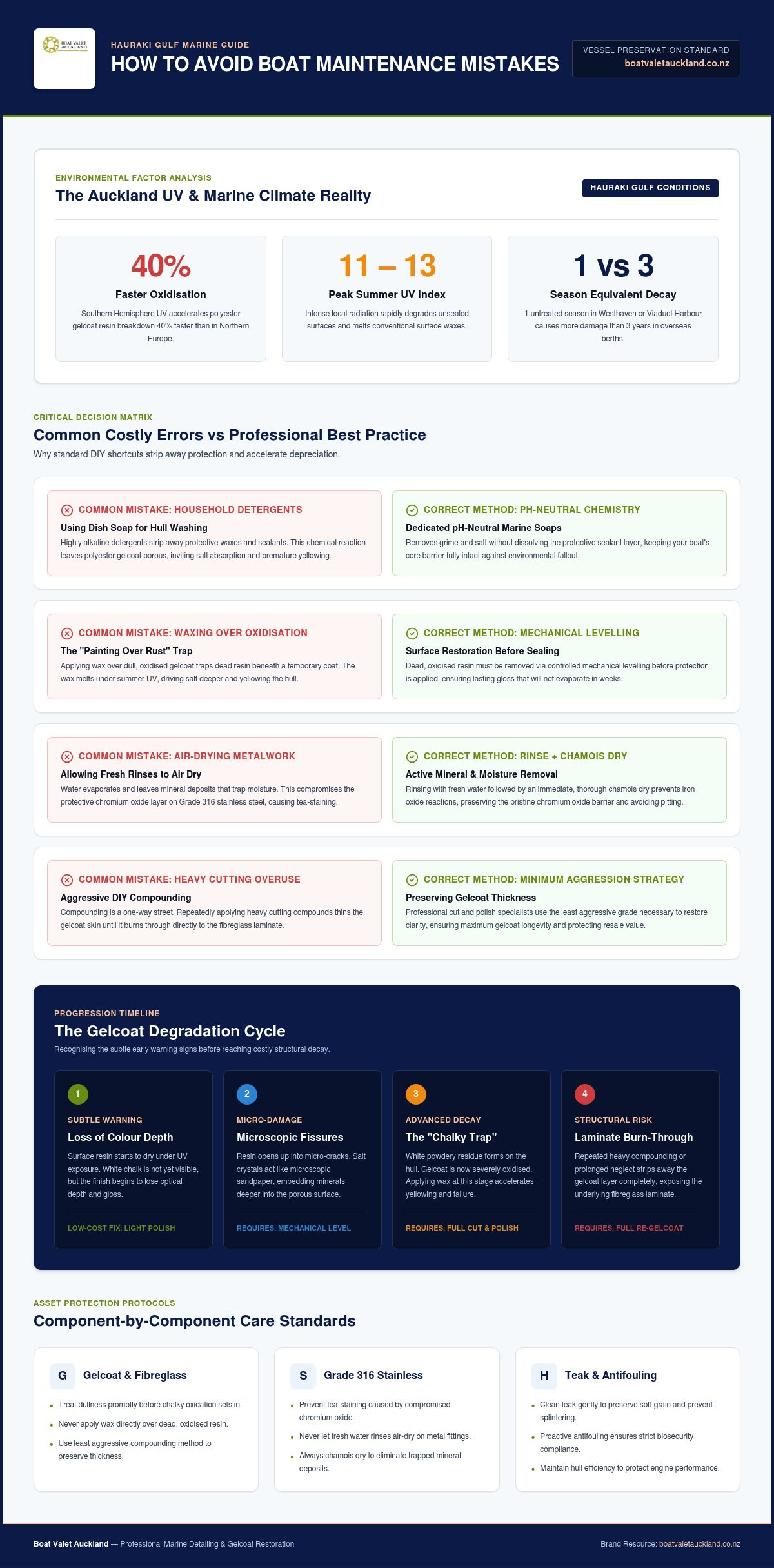
Choosing the cheapest path often leads to the most expensive destination. In the maritime world, the allure of DIY fixes and general-purpose cleaners is a primary reason owners end up paying for full professional restorations later. Understanding how to avoid boat maintenance mistakes requires a shift in mindset from reactive repairs to proactive protection. Marine environments are uniquely aggressive, and Auckland presents a specific challenge that many international guides overlook. Our peak UV index frequently hits 11 to 13 during the summer months. This intensity accelerates polyester gelcoat resin degradation and oxidation up to 40% faster than exposure in regions like Northern Europe. A vessel left untreated for just one season in Westhaven or Viaduct Harbour can suffer more damage than a boat kept overseas for three years.
The psychological trap of "out of sight, out of mind" is particularly dangerous regarding hull health. Because the most critical degradation often happens below the waterline or in microscopic fissures in the gelcoat, many owners wait for visible failure before acting. By the time you see chalking or tea-staining, the damage is already deep. Proactive grooming isn't just about aesthetics; it's a strategic investment that preserves the structural integrity and resale value of your vessel. Ignoring these early signs leads to a compounding effect where the cost of restoration grows exponentially compared to the cost of routine care.
The Dish Soap Disaster: Why pH Balance Matters
Household detergents are designed to strip grease from ceramic plates. On a boat, they perform that job too well. These soaps are often highly alkaline, which means they strip away the protective wax and sealants that act as your hull's only line of defence. This chemical reaction leaves the gelcoat porous and prone to premature yellowing as it absorbs airborne pollutants and salt. Using these products is one of the most common ways people fail when learning how to avoid boat maintenance mistakes. Use only pH-neutral marine soaps to maintain the integrity of your finish and keep your protective barrier intact.
Ignoring the Small Stuff: Salt and Stainless Steel
Salt crystals are essentially microscopic sandpaper. When they dry on your polished surfaces, any friction can cause micro-abrasions that dull the finish. A frequent error is rinsing with freshwater but allowing it to air-dry on stainless steel fittings. This leaves mineral deposits that trap moisture against the metal, triggering the iron oxide reaction known as tea-staining. On grade 316 stainless steel, this staining is a clear sign of maintenance failure rather than age. It indicates that the protective chromium oxide layer has been compromised. Regular fresh-water rinses followed by a thorough chamois dry are essential to prevent this cosmetic damage from turning into permanent pitting.
Gelcoat and Fibreglass: Avoiding the Chalky Trap
Auckland's marine environment is relentless. Your boat's gelcoat is a porous polyester resin that acts as a protective skin. When exposed to constant salt spray and intense UV, this resin begins to break down. The first sign of trouble isn't white powder; it's a subtle loss of depth in the colour. One of the most critical lessons in how to avoid boat maintenance mistakes is recognising this early dullness before it transforms into a chalky mess. Once the surface becomes powdery, the gelcoat has reached an advanced state of decay that requires aggressive intervention.
Many owners attempt to fix a dull hull by applying a heavy coat of wax. This is a significant error. Waxing over oxidised gelcoat traps the degradation beneath a temporary seal. It's essentially like painting over rust. The wax eventually melts under the summer sun, allowing salt to penetrate deeper into the porous resin. This creates a cycle where the gelcoat thins and yellows prematurely. To fix this, you must remove the dead resin through mechanical levelling before any protection is applied. If you skip this step, your "shine" will vanish within weeks.
Be cautious with aggressive compounding. It's a one-way street. Every time you use a heavy cutting compound, you strip away a layer of your boat’s skin. If you do this too often, you'll eventually "burn through" to the laminate. A professional boat cut and polish Auckland specialist uses the least aggressive method possible to achieve the result. This preserves the thickness of your gelcoat and ensures your vessel retains its value for years to come.
Polishing vs Waxing: Knowing the Difference
Polishing is a corrective process that levels the surface; waxing is a sacrificial layer that protects it. You cannot skip the polish and expect a shine from wax alone. Gelcoat oxidisation is a porous state that requires mechanical levelling to restore a smooth, reflective surface. Only after the surface is levelled should you apply a high-quality sealant or wax to lock out the elements.
The Danger of Dirty Buffing Pads
Professional detailers never use the same pad for the entire boat. Reused pads become clogged with dried compound and removed resin. This introduces swirl marks and unsightly "holograms" into your finish. High-speed buffing also generates significant heat. If you linger too long on one spot with a dry or dirty pad, you can permanently burn the gelcoat. Proper pad management and constant rotation are the secrets to a flawless finish. If you're unsure about your hull's condition, booking a professional groom is the safest way to assess the damage and restore the gloss.
Antifouling and Hull Care: Mistakes That Sink Performance
Waiting until you see grass growing on your waterline before checking your hull is a recipe for financial disaster. A simple slime layer increases drag by up to 10%, but light macrofouling like barnacles can increase hydrodynamic drag by 40%. This forces your engine to work harder, pushing fuel consumption up by 30% whilst cruising. Understanding how to avoid boat maintenance mistakes below the waterline is as much about biosecurity as it is about performance. Under the Auckland Council Regional Pest Management Plan, vessels must not exceed "light fouling" (Level of Fouling 2). Breaching these rules can result in statutory fines of up to $100,000 for individuals, making a neglected hull a massive legal liability.
Many owners fall into the "false economy" trap by skipping mid-season hull cleaning. In Auckland, major marinas like Westhaven strictly ban in-water scrubbing of macrofouling to protect water quality. You are only permitted to clean soft slime layers using non-abrasive techniques. If you let the growth get out of hand, you'll face an extra scraping surcharge of 1.5 times the standard waterblast rate at the haul-out yard. Knowing how to avoid boat maintenance mistakes like these will save you from both regulatory fines and excessive yard fees. Choosing the wrong antifoul for our specific conditions is another common waste of money. Whether you opt for dual-coat ablative paints or modern silicone foul-release coatings, the product must match your vessel's usage pattern and home berth.
Preparation: The Most Overlooked Step
New antifoul paint won't bond to poorly prepared surfaces or old, salt-laden slime. If the preparation is rushed, the paint will flake off within months, leaving your hull unprotected. Correct film thickness is vital for multi-season protection; applying it too thin is a common DIY error that leads to premature fouling. For detailed technical specifications and application methods, refer to our guide on boat antifouling Auckland to ensure your hull remains compliant and efficient.
Sacrificial Anodes: The Silent Protectors
One of the most catastrophic errors is painting over sacrificial anodes. This renders them completely useless, leaving your engine, shaft, and propellers vulnerable to electrolytic corrosion. In "hot" marinas where stray current is prevalent, anodes deplete much faster. You should inspect them regularly and replace them once they reach 50% mass depletion. For those berthed in upper Waitematā marinas like Hobsonville or Westpark, aluminium-indium alloy anodes often provide superior protection in brackish water compared to traditional zinc. Ignoring these silent protectors can lead to thousands of dollars in avoidable drive damage.
Teak and Stainless Steel: Preserving Your Vessel’s Value
A golden teak deck is often a sign of a dying deck. Many Auckland boat owners believe that the brighter the wood, the better the care. This is the "Golden Deck" myth. Achieving that constant honey glow usually requires aggressive scrubbing with stiff brushes or, worse, pressure washers. High-pressure water forces out the soft summer wood fibres, leaving behind a ridged, corrugated surface that traps dirt and water. This is a prime example of how to avoid boat maintenance mistakes that lead to permanent structural damage. Once you strip the soft pulp, the only way to fix the surface is through heavy sanding, which thins the planks and significantly shortens the life of your deck.
Investing in professional teak restoration Auckland ensures the wood is treated with respect. A well-maintained deck significantly boosts resale value; it is often the first thing a buyer sees when stepping aboard. Keeping your timber in top condition requires a balance of chemical cleaning and gentle physical agitation.
Teak Care: To Oil or Not to Oil?
Auckland’s humid climate makes teak oils a risky choice. Natural oils provide a beautiful finish but can act as a food source for mould and mildew in damp conditions. Synthetic sealers are often a better alternative for high-traffic areas as they provide a breathable barrier without the sticky residue. Avoid using two-part acid cleaners more than once a year. These chemicals are highly effective but also highly destructive; they eat away at the wood and the caulking if used too frequently. If your deck feels "hairy" or pulpy, you have already over-cleaned. Stop scrubbing with the grain and switch to a soft-bristle brush used perpendicular to the wood fibres.
Stainless Steel: Beyond the Surface Shine
Grade 316 stainless steel is standard on most vessels in the Viaduct, but it still requires specific care. A common error is using steel wool or carbon steel brushes to remove tea-staining. This embeds free iron particles into the surface, triggering severe galvanic rust that is almost impossible to stop. Understanding how to avoid boat maintenance mistakes with your stainless steel prevents cosmetic tea-staining from becoming structural pitting. Use only synthetic abrasive pads or chemical passivation gels. Always neutralise these cleaners with plenty of freshwater to prevent "bleeding" from the fittings onto your fresh gelcoat. For long-term protection, modern ceramic coatings provide a hydrophobic barrier that stops salt from bonding to the metal in the first place.
If your teak is looking tired or your stainless is staining, enquire about our professional detailing services to restore your vessel's pride and value.
Creating a Professional-Grade Maintenance Schedule
Adopting a "little and often" approach is the most effective way to protect your investment. Spending 15 minutes a week on basic rinsing and wipe-downs can save you over 15 hours of heavy labour at the end of the month. When you understand how to avoid boat maintenance mistakes, you realise that consistency beats intensity every time. A vessel that is neglected for months requires aggressive restoration; a boat on a regular schedule only needs light maintenance. This proactive habit keeps your gelcoat sealed and your stainless steel bright without the need for harsh chemicals or heavy compounding.
For many owners at Westhaven or Viaduct Harbour, professional mobile boat grooming Auckland is a strategic investment rather than a luxury. Outsourcing the technical detailing allows you to focus on enjoying the water whilst ensuring that specialists handle the delicate preservation of your teak and gelcoat. Even if you don't plan to list your vessel this season, maintaining a pre-sale mindset ensures the boat is always in peak condition. This prevents the deferred maintenance trap where small issues snowball into five-figure repair bills.
The Monthly Grooming Checklist
Establish a monthly routine to catch environmental damage before it sets in. Your checklist should include several critical tasks that preserve both aesthetics and function. Focus on window polishing to clear salt deposits before they cause permanent etching. Wipe down all stainless steel fittings to stop tea-staining in its tracks. Perform regular bilge checks to ensure pumps are clear and the area is dry. In Auckland’s high humidity, a regular interior valet is essential to prevent mildew and that stubborn "boat smell" from taking hold. Document every cleaning session in a dedicated log. This record provides tangible proof of care for future buyers, significantly increasing your leverage during a sale.
Seasonal and Annual Milestones
Timing is everything in the Auckland maritime industry. Schedule your annual cut and polish for late winter or early spring to beat the summer rush at the yards. This ensures your protective sealants are fresh just as the UV index begins to climb. Planning your haul-outs well in advance of the peak boating season avoids the frustration of long wait times. By integrating pre-sale boat grooming NZ techniques into your year-round routine, you ensure your vessel remains a high-value asset. This disciplined approach is the ultimate secret of how to avoid boat maintenance mistakes and keep your long-term restoration costs at a minimum.
Protect Your Maritime Investment for the Long Term
Auckland’s unique marine environment demands more than just a casual wash-down. By choosing pH-neutral cleaners, adhering to strict biosecurity standards, and respecting the delicate grain of your teak, you ensure your vessel remains a high-value asset. Understanding how to avoid boat maintenance mistakes is the difference between a boat that ages prematurely and one that retains its showroom shine for decades. Consistent, professional-grade care doesn't just save you thousands in restoration costs. It guarantees you're always ready to hit the Hauraki Gulf at a moment's notice.
With over 25 years of local maritime expertise and specialist equipment for gelcoat and teak restoration, I'm here to help you navigate these challenges. We provide a fully mobile service across all major Auckland marinas, bringing professional detailing directly to your berth. Don't let hidden oxidation or salt damage devalue your vessel. Book a professional maintenance consultation with Steve Kellie today to establish a routine that works. Your boat represents a significant lifestyle investment, and it deserves the highest level of care to keep it looking and performing its best.
Frequently Asked Questions
What is the most common boat maintenance mistake people make in Auckland?
The most frequent error is using household dish soaps or high-alkaline detergents for routine cleaning. These chemicals strip away protective waxes and sealants, leaving the porous gelcoat exposed to Auckland’s extreme UV levels. Because our local UV index often reaches 11 to 13 during summer, unprotected resin oxidises 40% faster than in other regions. Using pH-neutral marine soaps is the primary way to maintain your vessel’s finish and prevent premature yellowing.
Can I use a pressure washer to clean my boat hull?
You should avoid using high-pressure washers on your hull or decks. Whilst they seem efficient, the intense pressure can force water into microscopic gelcoat fissures or compromise the seals around through-hull fittings. On woodwork, pressure washing is even more destructive as it blasts out the soft summer wood fibres. This leaves a ridged, corrugated texture that requires professional sanding to repair. Stick to soft-bristle brushes and low-pressure garden hoses for safe cleaning.
How often should I wax my fibreglass boat to prevent oxidisation?
In the Hauraki Gulf environment, you should apply a high-quality marine wax or sealant every three to four months. Auckland’s intense sun and salt spray degrade traditional carnauba waxes quickly, often within six weeks. Regular application creates a sacrificial barrier that prevents the sun from drying out the polyester resin. Learning how to avoid boat maintenance mistakes like infrequent waxing will keep your gelcoat from becoming porous and chalky over time.
Is it okay to use car wax on a marine gelcoat?
Car wax is not recommended for marine use because gelcoat is significantly more porous than automotive paint. Marine-specific waxes and sealants are formulated with higher concentrations of UV inhibitors and harder waxes to withstand constant salt exposure and moisture. Car products often fail to bond correctly to the resin, melting off in the summer heat and leaving your boat’s topsides vulnerable to deep oxidation and yellowing within just a few weeks.
Why is my teak deck turning grey so quickly?
Teak turns grey as a natural defence mechanism against UV radiation; the wood develops a silver patina to protect the fibres beneath. If your deck greys rapidly, it usually indicates that your current sealer has failed or that the wood is being scrubbed too aggressively with harsh chemicals. Avoid using chlorine bleach, which destroys the wood's natural oils. Instead, use neutral cleaners and soft brushes to preserve the timber's structural integrity and prevent splintering.
What happens if I skip antifouling for a season?
Skipping antifouling leads to rapid macrofouling, which can increase fuel consumption by up to 30% due to hydrodynamic drag. Beyond performance issues, you risk heavy biosecurity fines from the Auckland Council if your hull exceeds "light fouling" limits. In-water cleaning of heavy growth is strictly prohibited in most local marinas. You may also face a 1.5 times surcharge at the haul-out yard for the specialised disposal of invasive marine pests found on neglected hulls.
How do I remove tea-staining from my boat’s stainless steel?
To remove tea-staining, use a chemical passivation gel or a phosphoric acid-based cleaner specifically designed for marine stainless steel. Never use steel wool or carbon steel brushes; these embed iron particles into the surface and cause permanent rust. After cleaning, thoroughly neutralise the area with freshwater and apply a protective sealant. Regular freshwater rinses after every trip are the most effective way to prevent these cosmetic surface stains from returning to your polished fittings.
Is professional boat grooming worth the cost for a smaller vessel?
Professional grooming is a strategic investment regardless of vessel size. For smaller boats, maintaining a flawless gelcoat and clean engine room significantly increases resale value and reduces the time the boat spends on the market. It also ensures that small issues, such as anode depletion or seal leaks, are identified before they become expensive failures. A regular maintenance routine managed by an expert prevents the need for costly full-scale restorations later in the boat's life.
Comments