Expert Guide to Cleaning Boat Clears and Canvas in 2026

Your boat's clears and canvas are likely the most expensive soft furnishings on board, yet they're often the most neglected until the damage becomes irreversible. We've all seen the results of Auckland’s harsh conditions: once-transparent vinyl turning a milky yellow or stubborn black mould colonising a premium canvas cover. It’s frustrating to lose your panoramic view of the harbour because of salt crust and UV degradation. You want to protect your investment, but the fear of using a harsh chemical that might permanently cloud the vinyl often leads to hesitation. Mastering the specific art of cleaning boat clears and canvas shouldn't be a gamble with your vessel's value.
You can restore factory-fresh clarity and keep your covers supple for years with the right professional approach. This guide provides a masterclass in preserving your enclosures using techniques refined through decades of mobile grooming in local marinas. We'll show you how to neutralise salt safely, eliminate mildew without damaging fabric fibres, and establish a 2026 maintenance routine that stands up to New Zealand’s intense sun. From selecting pH-neutral solutions to the final protective coating, you’re about to learn how to keep your high-value assets looking pristine and performing perfectly.
Table of Contents
Understanding Your Vessel's Soft Enclosures and Covers
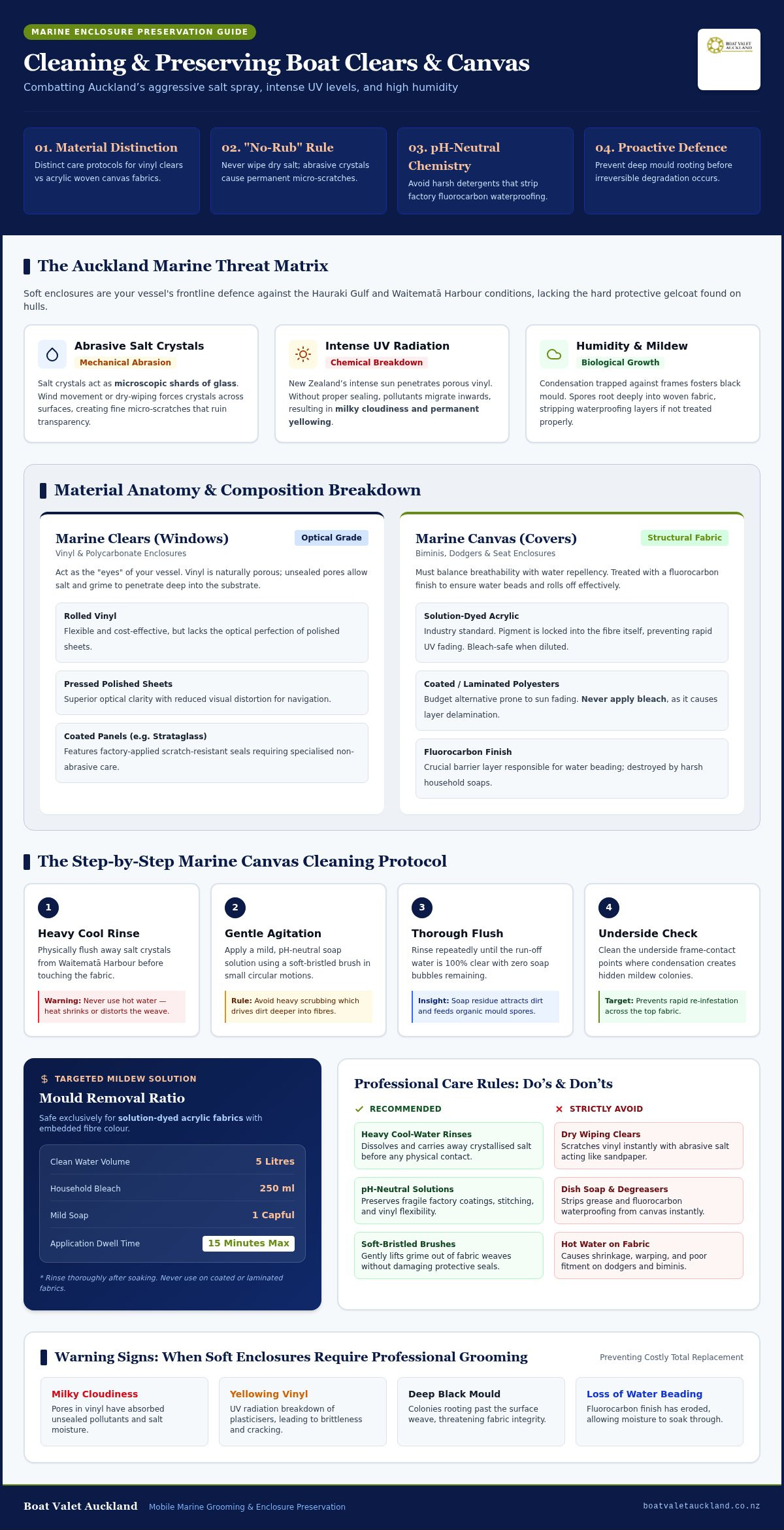
Your boat's enclosures are the frontline of defence against the Hauraki Gulf’s unpredictable weather. While the hull and engine get regular attention, the soft materials often bear the brunt of Auckland’s intense UV and salt spray. Understanding the composition of these materials is the first step in effective cleaning boat clears and canvas. Clears refer to the transparent windows, usually made from vinyl or polycarbonate, that provide visibility while keeping you dry. Canvas is the structural fabric, typically acrylic or polyester, used for biminis, dodgers, and seat covers. These are the most vulnerable parts of your vessel because they lack the hard protective gelcoat found on the hull.
In 2026, we’re seeing even higher UV indices and more aggressive salt crystallisation. These elements don't just sit on the surface; they chemically and physically attack the material structure. Salt crystals act like microscopic shards of glass. They scratch the vinyl every time the wind moves the enclosure or someone wipes a dry surface. Without a clear understanding of what you’re cleaning, it’s easy to cause more harm than good.
The Anatomy of Marine Clears
Not all transparent panels are created equal. Rolled vinyl is common for its flexibility and cost-effectiveness, but it lacks the optical perfection of pressed polished sheets. High-end vessels often feature coated materials like Strataglass, which includes a factory-applied scratch-resistant seal. Regardless of the type, vinyl is naturally porous. If you don't seal these pores, salt and pollutants migrate into the material, causing that dreaded milky cloudiness or permanent yellowing. Think of your clears as the "eyes" of your vessel; they require optical-grade care to maintain safe navigation and aesthetic appeal.
Canvas Types and Their Performance
Marine canvas must balance breathability with water repellency. Solution-dyed acrylics are the industry standard because the colour is integrated into the fibre itself. This prevents the rapid fading common in cheaper coated polyesters that sit in the Auckland sun all day. Most premium fabrics are treated with a fluorocarbon finish to ensure water beads and rolls off. However, Auckland’s high humidity creates a perfect breeding ground for mould. Without a proactive approach to cleaning boat clears and canvas, these spores can root deeply into the weave. Once they take hold, they're nearly impossible to remove without damaging the fabric's integrity or stripping the essential waterproofing layers.
The Step-by-Step Guide to Cleaning Marine Canvas
Cleaning boat clears and canvas begins with a heavy, cool-water rinse. This isn't just about wetting the surface; you need to physically flush away the abrasive salt crystals that accumulate from the Waitematā Harbour. Never use hot water on your canvas. Heat can cause the weave to shrink or distort, leading to fitment issues with your bimini or dodger. Once the salt is cleared, apply a mild, pH-neutral soap solution. Avoid household detergents or dish soaps, as these are formulated to strip grease and will quickly destroy the fabric’s protective coatings.
Use the "gentle agitation" technique to lift surface grime. A soft-bristled brush is your best tool here. Work in small, circular motions without applying excessive pressure. Aggressive scrubbing might seem productive, but it often drives dirt deeper into the fibres or damages the fluorocarbon finish. After washing, rinse the canvas repeatedly until the water runs completely clear. Any soap residue left behind acts as a magnet for new dirt and provides a nutrient source for organic growth. If you're pressed for time, booking an exterior wash and wax ensures your covers are maintained alongside your gelcoat.
Tackling Stubborn Mould and Mildew
Auckland’s humid climate makes mould an inevitable challenge. If you have solution-dyed acrylic fabric, you can safely use a diluted bleach solution to kill deep-seated spores. Mix approximately 250ml of bleach with a capful of mild soap into 5 litres of water. Apply this to the affected area and let it soak for 15 minutes before rinsing. Warning: never use bleach on coated or laminated canvas types, as it will cause the layers to delaminate. Always remember to clean the underside of the canvas. Condensation trapped against the frame is often where the worst mildew colonies hide. A thorough approach to cleaning boat clears and canvas must include these hidden spots to prevent rapid re-infestation.
Restoring Water Repellency
Your canvas is healthy if water beads and rolls off the surface. If the water soaks in and darkens the fabric, the protective finish has failed. After a deep clean, wait for the material to dry completely before applying a high-quality fabric guard. Spray the treatment in thin, even layers to ensure full coverage without saturation. If your covers have lost their lustre or the mould won't budge, our marine detailing services NZ can provide a professional restoration that brings back the original waterproofing. This level of care extends the life of your expensive enclosures and keeps your vessel looking sharp at the marina.
Maintaining Crystal Clear Vision: How to Clean Boat Clears
Your clears are the most delicate surface on your boat. Unlike toughened glass, marine vinyl is a soft, flexible plastic that scratches with the slightest provocation. The golden rule for cleaning boat clears and canvas windows is the "No-Rub" Rule. Never touch the surface with a cloth until you've flooded it with fresh water. This process floats away salt crystals and grit that would otherwise act like sandpaper. If you wipe a dry or lightly misted clear, you're essentially grinding those crystals into the plastic, creating permanent micro-scratches that ruin your visibility.
Once the grit is gone, use a specialised marine clear cleaner. Household glass sprays are your worst enemy. They often contain ammonia or alcohols that strip the plasticisers from the vinyl, making it brittle and yellowed. When applying your cleaner, use a clean, high-quality microfibre cloth. Always use a vertical-only wiping motion. Circular "swirl" motions create multi-directional scratches that catch the sun at every angle, making it impossible to see through the glare. A vertical stroke ensures that any minor abrasions are less visible to the human eye. To finish, apply a high-quality protective polish or sealant. This fills the microscopic pores we discussed earlier, creating a sacrificial barrier against Auckland’s salt and soot.
What NOT to Do with Your Clears
Avoiding common mistakes is just as vital as following the right steps. First, ban paper towels from your grooming kit. They might feel soft, but they're made of abrasive wood fibres that will dull your vinyl over time. Second, check your labels for ammonia. Ammonia-based cleaners chemically react with vinyl, leading to premature aging and a "burnt" appearance. Finally, never clean your clears whilst they are hot or in direct sunlight. The heat causes cleaners to evaporate too quickly, leaving behind chemical residues that can bake into the surface, causing permanent spotting.
Reviving Cloudy or Yellowed Vinyl
If your clears look foggy, you first need to determine if it's surface-level grime or deep UV damage. Surface cloudiness can often be resolved with a multi-stage plastic polish that gently levels the surface. However, if the yellowing is inside the material, it's a sign that the UV stabilisers have failed. In 2026, the intensity of the sun in the Hauraki Gulf means even the best materials have a lifespan. If you see "silvering" or spider-web cracks within the vinyl, these are permanent chemical burns or heat damage. At this point, no amount of cleaning boat clears and canvas will restore them, and replacement is the only safe option for navigation.
Essential Maintenance Tips for Auckland’s Marine Environment
Auckland’s maritime environment is beautiful but brutal on soft enclosures. The Hauraki Gulf experiences some of the highest UV levels in New Zealand, with radiation that attacks the molecular bonds of your vinyl and fabric. Combined with the aggressive salt spray of the Waitematā Harbour, your enclosures face a constant chemical assault. Unlike freshwater grime, marine salt is hygroscopic. It draws moisture from the air and holds it against the material, which accelerates degradation and keeps the surface damp even on dry days. Establishing a "rinse-only" routine after every weekend outing is the simplest way to prolong the life of your covers.
Berth location also plays a significant role in your maintenance needs. If your boat is in a shaded spot at Westhaven or Orakei Marina, you'll likely face "green slime" or algae growth. This organic matter thrives in the damp microclimate created by salt crust and lack of direct sunlight. Regularly cleaning boat clears and canvas in these conditions prevents algae from rooting into the weave. If the buildup has already become unmanageable, booking a professional exterior wash and wax is the most efficient way to reset the clock on your vessel’s appearance.
The Salt Crystallisation Problem
Salt crystals on your clears act like tiny magnifying glasses. They focus intense UV rays into the plastic, creating localised "hot spots" that lead to rapid yellowing and cracking. Using salt-neutralising washes on canvas seams is particularly effective for long-term preservation. Salt trapped in zips leads to rapid corrosion and mechanical failure; once a zip is seized by salt, the physical force required to move it often tears the surrounding fabric. A quick freshwater flush of all tracks and teeth after every trip prevents this expensive damage.
Seasonal Care Schedule for 2026
Your 2026 maintenance schedule must adapt to New Zealand’s seasonal shifts. Before the summer peak, apply an extra layer of UV protectant to all exposed surfaces. During winter, the primary threat is "pink mould." This occurs when moisture is trapped under covers that aren't breathable or haven't been dried properly before being zipped up. To ensure your vessel survives the winter months without permanent staining, our mobile boat grooming Auckland packages offer comprehensive deep cleaning and protection. This proactive approach to cleaning boat clears and canvas ensures your boat is always ready for the next spell of fine weather.
Professional Grooming: When to Call Boat Valet Auckland
While DIY maintenance is vital for weekly upkeep, professional cleaning boat clears and canvas provides a level of preservation that retail products simply can't match. Steve Kellie has led Boat Valet Auckland since 1998, bringing 28 years of hands-on experience to every Auckland marina. This tenure is crucial because the line between a successful restoration and permanent material damage is incredibly thin. A professional eye identifies fabric fatigue and UV brittleness before they become structural failures during a Hauraki Gulf storm. By investing in specialist detailing, you're not just buying a clean boat; you're extending the lifespan of your most expensive soft furnishings.
Our mobile service brings high-end grooming directly to your berth at Westhaven, Viaduct, or Orakei Marina. This eliminates the hassle of removing heavy enclosures and transporting them to a workshop. If you’re preparing to move your vessel on the market, integrating this care into a pre-sale boat grooming NZ plan is essential. Clear, supple windows and vibrant canvas are the first things a surveyor or buyer notices. They signal a well-maintained vessel and directly influence the final resale value.
The Boat Valet Auckland Advantage
We use trade-only polishes and sealants that aren't available on retail shelves. These professional-grade solutions provide a superior UV block specifically formulated for New Zealand’s thin ozone layer. Our equipment allows for deep-cleaning canvas fibres without the risk of high-pressure damage or aggressive scrubbing that strips waterproof coatings. We specialise in the delicate balance of removing organic growth whilst maintaining the structural integrity of the weave. This precision ensures your bimini or dodger remains both waterproof and aesthetically pleasing for years to come. Professional cleaning boat clears and canvas prevents the costly DIY mistakes that often lead to "melted" vinyl or cloudy windows.
Booking Your On-Site Grooming
Starting your maintenance programme is straightforward. We provide a personalised assessment for every vessel, ensuring the treatment matches your specific material types and berth conditions. Regular professional attention keeps your boat "Auckland ready" and prevents the slow creep of salt and UV damage. Contact Steve directly to discuss your vessel’s needs and request a quote. Whether it's a one-off deep clean or a recurring grooming schedule, we're here to ensure your high-value assets remain in safe hands. Our mobile team is responsive and integrated into the local maritime community, making us an essential partner in your boat ownership lifestyle.
Protect Your Vessel’s Value for the 2026 Season
Maintaining your boat's clarity and structural integrity shouldn't be a gamble. By following a disciplined routine of salt neutralisation and using optical-grade cleaners, you protect your vessel from the Hauraki Gulf's aggressive conditions. Remember that the "No-Rub" rule and pH-neutral solutions are your best defence against premature ageing. Consistency is the secret to successful cleaning boat clears and canvas; a quick freshwater rinse after every trip saves thousands in replacement costs later. Don't risk your investment with harsh household chemicals.
When the buildup becomes stubborn or you want the peace of mind that comes with trade-only UV protection, call in a specialist. Steve Kellie has provided expert mobile marine grooming across all Auckland marinas since 1998. With over 25 years of local tenure, he delivers high-end preservation directly to your berth. He focuses on precision and long-term results that keep your soft enclosures supple and clear. Professional care prevents the DIY mistakes that lead to permanent damage.
Contact Steve Kellie at Boat Valet Auckland for professional mobile boat grooming and keep your vessel in showroom condition. Let's ensure your boat is always ready for your next Auckland adventure.
Frequently Asked Questions
Can I use dish soap to wash my boat canvas?
No, you should never use dish soap for cleaning boat clears and canvas fabric. Dish soaps are formulated to break down grease and oils, which means they will quickly strip the fluorocarbon water-repellency and UV inhibitors from your marine fabric. Once these coatings are gone, the canvas becomes porous and prone to mould. Instead, use a mild, pH-neutral soap specifically designed for maritime environments to preserve the material's lifespan and structural integrity.
How do I remove bird droppings from my clears without scratching them?
To remove bird droppings without scratching, you must first flood the area with plenty of fresh water to soften the deposit. Never attempt to scrape or rub a dry dropping, as the grit within it will act like sandpaper on the soft vinyl. Once the residue is saturated and loose, gently rinse it away. Only after the solid matter is gone should you use a clean microfibre cloth and a specialised clear cleaner to finish the surface.
Why are my boat clears turning yellow?
Yellowing is typically caused by UV degradation of the plasticisers within the vinyl. In Auckland’s intense sun, the molecular bonds in the material break down over time, leading to a brittle, discoloured finish. This process is often accelerated by using ammonia-based cleaners or leaving salt crystals on the surface, which focus heat into the plastic. Regular application of a professional-grade UV protectant is the best way to slow this inevitable chemical ageing and maintain clarity.
How often should I waterproof my boat canvas in Auckland?
In Auckland’s high-UV environment, you should generally re-apply a waterproofing treatment every 12 to 18 months. If you notice that water is no longer beading on the surface but is instead soaking into the fibres, it's time for a new application. For vessels berthed in high-exposure areas like Westhaven or the Viaduct, an annual treatment after a thorough deep clean ensures your canvas remains supple and effectively shields your interior from moisture.
Is it safe to use a pressure washer on marine canvas?
It is not safe to use a pressure washer on marine canvas. The high-velocity water stream can easily tear the fabric weave, blow out stitching, or strip away essential waterproofing layers. Even a low-setting pressure washer can force dirt and mould spores deeper into the material rather than removing them. Stick to a garden hose with a gentle spray and a soft-bristled brush to ensure you don't cause structural damage to your expensive covers.
What is the best way to clean salt off my boat windows?
The most effective method for removing salt is a thorough freshwater rinse followed by a dedicated salt-neutralising wash. Because salt crystals are abrasive, you must never wipe them away whilst the window is dry. After flooding the surface to dissolve the crystals, use a vertical wiping motion with a clean microfibre cloth. This technique is essential for cleaning boat clears and canvas windows to maintain optical clarity and prevent the milky appearance caused by micro-scratches.
Can I use Windex on my boat clears?
No, you should never use Windex or any ammonia-based glass cleaners on your boat clears. Ammonia is a harsh chemical that reacts with the vinyl, stripping away the oils that keep it flexible. This leads to rapid yellowing, cloudiness, and eventual cracking. Always opt for a cleaner specifically labelled as safe for marine plastics or clear vinyl. These specialised products are pH-balanced and often include additional UV inhibitors to help protect the surface from sun damage.
How do I stop my zips from sticking on my boat covers?
To stop zips from sticking, you must first rinse away any salt deposits with fresh water. Salt crystallisation is the primary cause of zip failure in Auckland’s marine environment. Once the track is clean and dry, apply a specialised clear silicone spray or a zip lubricant stick. Avoid using petroleum-based products, as these can stain the surrounding canvas and attract more grit, leading to further mechanical wear and eventual zipper failure.
Comments