
Extending the Life of Antifoul Paint: The Auckland Boat Owner’s Guide

Why are you paying thousands of dollars for a haul-out every twelve months when your hull could remain clean for twice as long? It’s a question every Auckland boatie asks while staring at the mounting costs of marina hardstand fees. We all agree that the Hauraki Gulf is a punishing environment. Its nutrient-rich waters mean rapid weed growth and stubborn barnacles that seem to defy even the best coatings. If you are tired of the constant cycle of scrubbing, focusing on extending the life of antifoul paint is the only way to reclaim your time and your budget.
I’ve spent over 25 years maintaining vessels across Auckland's marinas, and I know that doubling your paint’s lifespan is possible with the right approach. This guide shares the professional secrets to better hull protection through smarter maintenance and expert application. We will explore how to select the perfect paint for your specific boat usage and how a proactive, non-abrasive cleaning schedule keeps your fuel efficiency high. Prepare to gain peace of mind and keep your boat in the water where it belongs.
Table of Contents
Understanding Antifoul Longevity in Auckland’s Marine Environment
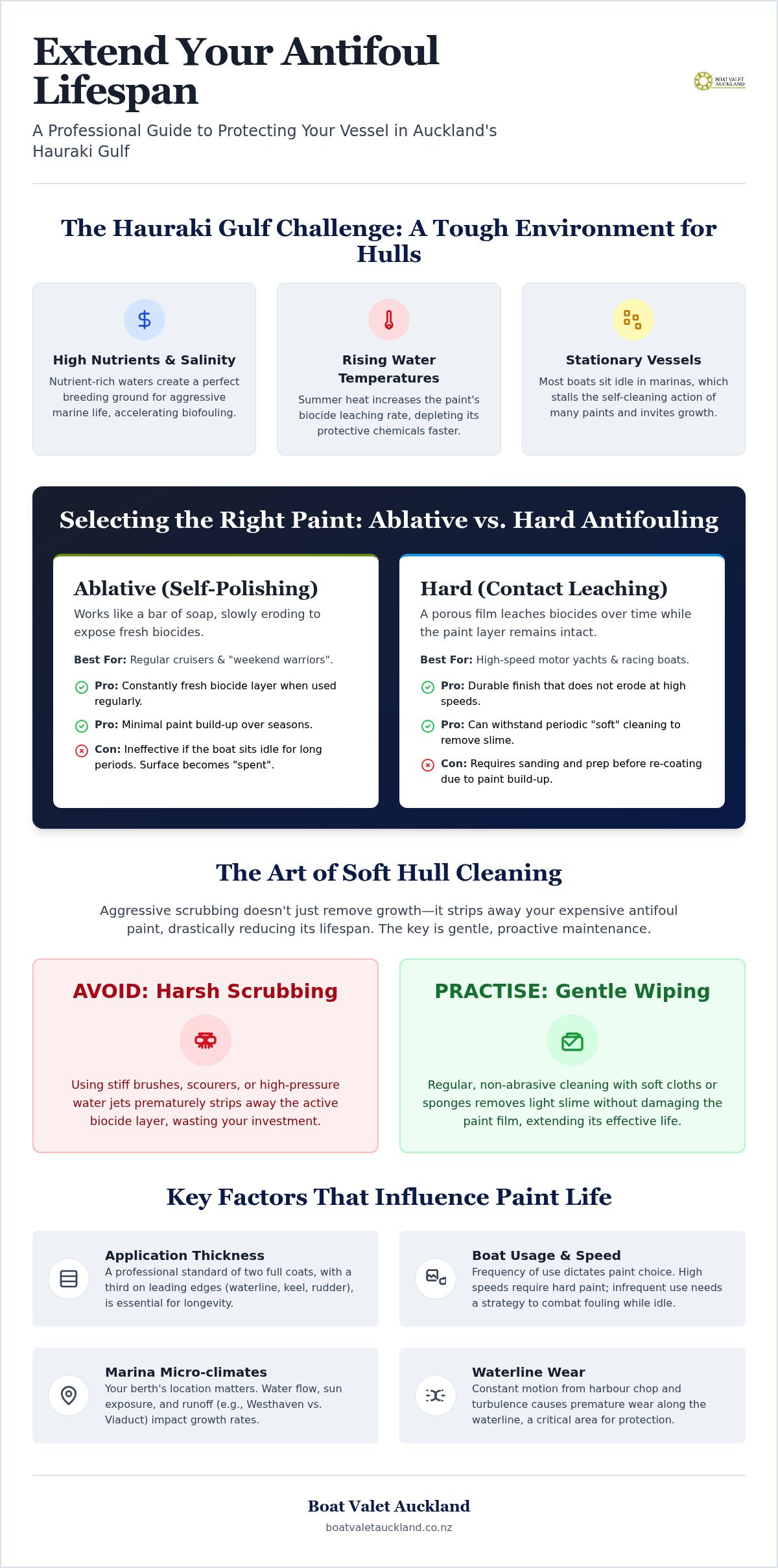
Anti-fouling paint acts as a sacrificial barrier for your vessel. It’s designed to leach biocides that discourage marine organisms from making your hull their home. Beyond just stopping growth, a high-quality application protects your gelcoat from osmotic blistering by providing an additional seal against water ingress. In Auckland, the effectiveness of this barrier is constantly under siege. The Hauraki Gulf is a biological powerhouse where high nutrient levels and fluctuating salinity create a perfect breeding ground for aggressive marine life.
Most boats in Auckland spend the vast majority of their lives sitting idle in a marina. This lack of movement is a major hurdle for extending the life of antifoul paint. Without the friction of moving water, the chemical process that keeps the hull clean can stall, leading to "antifoul exhaustion." You can spot this when the paint begins to look chalky or when a light green fuzz appears that doesn't easily brush away. Catching these early signs is the difference between a simple groom and a full, expensive haul-out.
The Hauraki Gulf Factor: Why Local Waters are Tough
Auckland boat owners face a unique cocktail of marine challenges. We deal with everything from stubborn acorn barnacles to the invasive Mediterranean fanworm. Biofouling is the biological accumulation on wet surfaces that increases drag. When water temperatures rise during the New Zealand summer, the leaching rate of your paint naturally increases. The paint works harder to repel growth, but this means its reservoir of protective chemicals depletes faster. If your maintenance isn't tailored to these seasonal shifts, your protection will fail prematurely.
Marina Dynamics: Westhaven vs. Viaduct Harbour Conditions
Your choice of berth significantly impacts your paint’s lifespan. Westhaven’s sheer scale means water flow varies wildly between the inner piers and the more exposed outer arms. In contrast, the Viaduct Harbour is more enclosed and often traps urban runoff. These pollutants and freshwater silts can react with your paint, causing it to lose its potency or flake away. Light levels also play a role; shallower berths with high sun exposure see much faster weed growth. It’s vital to work with a service that understands these specific marina micro-climates and the local regulations governing hull cleaning.
Selecting the Right Paint: Ablative vs. Hard Antifouling
Choosing the correct chemical composition is the first real step in extending the life of antifoul paint. If the paint doesn't match your boat's speed or usage, it will either fail to prevent growth or wash away months too early. In the Hauraki Gulf, where conditions vary between sheltered marinas and choppy open water, this decision determines whether you get one season or two out of your haul-out.
Ablative (Self-Polishing) Paints for the Regular Cruiser
Ablative paints work like a bar of soap. As you cruise, the outer layer of paint slowly erodes, constantly exposing fresh biocides to repel barnacles and slime. This is the ideal choice for the Auckland "weekend warrior" who takes their boat out to the islands regularly. The movement of the boat through the water refreshes the biocide layer, making it highly effective for active vessels. However, these coatings operate on a "use it or lose it" basis. If your vessel sits idle in a Westhaven or Gulf Harbour berth for months, the surface can become "spent," allowing biofouling to take hold without the friction of movement to clear it.
Hard Antifouling for High-Speed Vessels and Racing
Hard paints do not wear away. Instead, they have a porous structure that allows biocides to leach out over time while the film remains intact. Fast motor yachts and racing yachts prefer this finish because it won't erode at high speeds. A significant benefit is that hard paints can withstand periodic professional cleaning to remove light slime without stripping the entire coating. If you aren't sure what is currently on your hull, rub a small patch with a wet cloth; if the colour comes off easily, it's likely an ablative coating.
Longevity is also a product of film thickness. Applying a single coat is a false economy that leads to early failure. Professional standards usually require two full coats, with a third "heavy" coat applied to leading edges, rudders, and the waterline where turbulence is highest. This is often detailed in a comprehensive boat maintenance guide to ensure total hull integrity. Without a high-quality primer to act as a "tie-coat," even the best antifoul will eventually flake off. If you want to ensure your vessel gets the precision it deserves, a professional antifouling application is the best way to secure a long-lasting bond.
The Art of Soft Hull Cleaning: Extending Protection Without Damage
Maintaining a clean hull doesn't mean attacking it with a stiff brush every few months. In fact, aggressive scrubbing is often the primary reason boat owners fail at extending the life of antifoul paint. When you use abrasive pads, you aren't just removing growth; you are stripping away the expensive biocides you paid for during the last haul-out. Professional hull grooming follows a "little and often" approach. By removing slime before it hardens into a calcareous secondary layer, you preserve the chemical integrity of the coating. This proactive care is a core component of high-quality marine detailing services nz, ensuring the entire vessel stays in peak condition from the masthead to the keel.
Industry data suggests that improper, heavy-handed cleaning can shorten the effective life of your paint by up to 50%. Most Auckland boaties wait until they notice a drop in boat speed before they think about cleaning. By that stage, the fouling is usually well-established. Professionals use specialised tools, such as soft sponges and low-impact microfiber pads, designed to lift biofilm without disturbing the underlying paint layers. This delicate balance keeps the hull smooth, which is your best defence against the aggressive organisms found in the Hauraki Gulf.
Why "Soft Grooming" is the Secret to Extra Seasons
Soft grooming focuses on the primary layer of biofouling, which is usually a thin film of algae and bacteria. If you let this slime sit, it becomes a welcome mat for barnacles and tubeworms. Once those organisms attach, removing them requires mechanical force that inevitably damages the paint surface. Every millimetre of paint saved is another month of protection. Keeping the surface perfectly smooth also reduces the microscopic drag that allows larvae to settle, effectively tricking the marine environment into leaving your hull alone for longer.
Avoiding the Pitfalls of DIY Hull Scrubbing
DIY owners often reach for a standard deck brush or a heavy-duty scouring pad. This is a significant mistake, especially on ablative paints that are designed to wear away. If you see a "paint plume"—a cloud of pigment swirling in the water whilst you scrub—you are literally watching your maintenance budget wash away. Professional mobile groomers are a much safer bet for high-value hulls because they understand the leaching rates of different brands. They know exactly how much pressure to apply to clean the surface whilst leaving the biocide reservoir intact. This level of precision is what allows a well-maintained boat to skip an entire haul-out cycle.
Operational Habits and Secondary Factors Influencing Paint Life
Even the most meticulous application won't save your hull if external forces are working against you. In Auckland's busy marinas, secondary factors like stray current and harbour chop are often the silent killers of a good paint job. Focusing on these environmental and operational habits is essential for extending the life of antifoul paint between your scheduled haul-outs. It isn't just about the chemicals in the paint; it's about how you manage the vessel's daily environment.
Auckland’s harbour is notoriously choppy, especially during spring and autumn gusts. This constant movement creates a high-friction zone at the waterline where paint is most vulnerable to erosion. If the gelcoat above the paint line is porous or oxidised, it can allow moisture and salt to creep behind the antifoul edge, causing it to flake. Investing in a boat cut and polish auckland service provides a protective, hydrophobic seal that keeps this transition zone intact. A smooth, waxed surface above the water prevents salt crusting and significantly reduces the mechanical wear on the paint edge.
Electrolysis and Sacrificial Anodes
Anodes are your first line of defence against localised paint failure. When sacrificial anodes are spent, electrolysis begins to attack the metal fittings on your hull. This process creates an alkaline environment around through-hull fittings, leading to what we call "alkaline burn." You’ll notice this as bubbling or peeling paint that seems to lift away in sheets, even if there is no biofouling present. During our mobile grooming visits, we prioritise checking these critical points. Ensuring your anodes are healthy prevents electrical issues from sabotaging your hull protection.
Cruising Frequency and Speed
Your boating schedule also dictates the health of your coating. Ablative paints are designed to be used; they rely on movement to "self-polish" and shed the outer layer of spent biocide. Vessels that sit idle for months at Westhaven or Viaduct Harbour often suffer from a dormant surface layer that no longer repels growth. If your boat has been stationary for a long period, it often requires a gentle professional refresh to reactivate the coating. A short run at cruising speed can help, but a soft manual wipe is sometimes necessary to clear the "chalking" that occurs during inactivity.
If you have noticed bubbling near your fittings or thinning paint at the waterline, it is time to take action. Contact Steve at Boat Valet Auckland for a professional assessment and mobile grooming service that keeps your hull in peak condition.
Expert Antifouling and Grooming: The Boat Valet Auckland Advantage
Professional hull maintenance is a specialised trade that requires more than just a brush and a tin of paint. Since 1998, Steve Kellie has been at the forefront of the Auckland marine industry, providing owner-operated expertise that faceless corporations simply cannot match. With over 25 years of experience in the Hauraki Gulf’s unique conditions, Boat Valet Auckland understands that extending the life of antifoul paint starts long before the boat returns to the water. We focus on a "total care" approach, ensuring your vessel is protected from the masthead to the keel.
The secret to a long-lasting finish lies in the preparation. Our professional boat antifouling auckland service prioritises the mechanical bond between the hull and the coating. We don't just slap on a new layer; we assess the existing film, treat any osmotic issues, and apply premium materials designed specifically for New Zealand’s high-fouling waters. By getting the application right the first time, we help you push out the intervals between expensive haul-outs, saving you thousands in the long run.
The Mobile Advantage for Auckland Marinas
Logistics shouldn't be a barrier to quality maintenance. Our mobile boat grooming auckland service is designed to fit around your lifestyle. Whether your vessel is berthed at Westhaven, the Viaduct, Gulf Harbour, or Orakei, we come to you. This on-site presence allows for more frequent, low-impact "soft grooms" that keep slime at bay without damaging your paint. Having a single point of contact for both your above-water polishing and below-water protection ensures nothing is overlooked. We treat your high-value asset with the respect it deserves, providing a responsive service that keeps your boat ready for the next tide.
Steve Kellie’s Commitment to Quality
When you work with Boat Valet Auckland, you are dealing directly with the owner. This personal accountability is why our clients have trusted us for over two decades. Steve Kellie’s commitment to quality means using only the best marine-grade compounds and biocides. We understand the luxury aspect of the industry and balance hard manual labour with a precision finish. Don't leave your hull to chance or let a DIY mistake ruin your season. Contact Steve today to organise a consultation and secure a maintenance schedule that doubles your protection. Let’s get your boat looking its best and keep it that way for years to come.
Secure Your Hull’s Future in Auckland Waters
Maintaining a clean hull in the Hauraki Gulf shouldn't be an annual battle against the elements. Success comes from matching your paint type to your cruising habits and adopting a "soft" approach to maintenance that preserves your biocide reservoir. By managing secondary factors like anode health and waterline protection, you move away from reactive repairs toward a proactive strategy for extending the life of antifoul paint. These small adjustments in care lead to significant long-term savings and better performance on the water.
Steve Kellie has been a trusted partner for Auckland boat owners since 1998. With over 25 years of local expertise and a mobile service that covers all major marinas, Boat Valet Auckland provides the precision care your vessel requires. We specialise in high-end teak and gelcoat restoration, ensuring that every inch of your boat reflects your pride of ownership. Don't wait for the next haul-out to discover a problem that could have been prevented whilst your boat was at its berth.
Book a professional hull assessment with Steve Kellie today and enjoy the peace of mind that comes with a truly expert finish. We look forward to helping you get the most out of your lifestyle on the water.
Frequently Asked Questions
How long should antifoul paint typically last in Auckland?
Standard antifouling applications in the Hauraki Gulf usually provide effective protection for 12 to 18 months. However, vessels that undergo regular professional soft grooming can often extend this interval to 24 months. Factors such as your marina’s water flow, light exposure, and how often you use the boat will ultimately dictate the exact lifespan of the coating.
Can I clean my own hull to extend the paint life?
You can perform basic maintenance, but you must be extremely careful with your tool choice. Using a stiff deck brush or abrasive scourer will strip the biocide layer and ruin the finish. Stick to a soft sponge or microfiber cloth to wipe away light slime. If you see a cloud of colour in the water, stop immediately, as you are scrubbing away your protection.
Does a boat cut and polish help the antifoul last longer?
A professional cut and polish is highly effective at protecting the transition zone at the waterline. By sealing the gelcoat above the paint, you prevent salt and moisture from migrating behind the edge of the antifoul. This reduces the risk of the paint lifting or flaking away due to the choppy conditions often found in Auckland’s harbour and marinas.
What are the signs that my antifoul has reached the end of its life?
The most obvious sign is the appearance of hard growth, such as barnacles or tubeworms, that cannot be easily wiped away. You might also notice the paint looks "chalky" or powdery, indicating the biocide reservoir is depleted. If you see patches of primer or the underlying gelcoat showing through, your sacrificial barrier has completely worn away and requires urgent attention.
Is it worth paying for a premium antifoul paint in the Hauraki Gulf?
Investing in premium paint is almost always a better financial decision for Auckland boaties. The Hauraki Gulf is a high-fouling environment with aggressive marine pests. Cheaper paints often lack the biocide density required to last a full season here. Premium coatings offer a more controlled leaching rate, which is the foundation of extending the life of antifoul paint effectively.
How does the water temperature in Auckland affect my boat’s hull?
Auckland’s warm summer water temperatures significantly accelerate the metabolic rate of marine organisms, leading to rapid growth. Simultaneously, warmer water causes the biocides in your paint to leach out more quickly. This double-edged sword means your hull is under the most pressure from December through to March, making a proactive spring grooming schedule essential for year-round protection.
Can a mobile grooming service help with antifoul maintenance?
A mobile service is the most convenient way to manage your hull’s health without the cost of a haul-out. By performing regular, non-abrasive underwater wipes, a professional can remove the primary biofilm before it hardens. This "little and often" approach is the most reliable method for extending the life of antifoul paint whilst keeping your vessel’s fuel efficiency at its peak.
What happens if I leave my boat in the water too long without fresh antifoul?
Leaving a boat unprotected leads to heavy calcareous growth that creates immense drag and sky-high fuel bills. Beyond performance, large barnacles can physically damage the gelcoat when they are eventually removed. In extreme cases, the lack of a sacrificial barrier can lead to osmotic blistering, turning a simple maintenance task into a very expensive structural repair job.
Comments