
Caring for a Polished Boat: The Ultimate Guide

What if the very first wash you give your vessel after a professional cut and polish is the one that actually ruins the finish? It's a common fear for owners across Auckland marinas who are unsure about how to care for a freshly polished boat without causing permanent damage. You've just seen your boat transformed into a mirror-like masterpiece, and now you're worried that the wrong sponge or a harsh detergent will undo all that hard work. You want to protect your investment and keep that deep shine reflecting off the Waitemata Harbour without turning your weekends into a chore.
I've spent over 25 years perfecting these finishes, and I know that the right approach makes all the difference. I'll share the professional secrets to maintaining a high-gloss finish while protecting your gelcoat from New Zealand's extreme UV levels. We will look at the specific products that won't strip your sealant, the tools that prevent micro-scratches, and a simplified routine that preserves your resale value. Let's get your maintenance sorted so you can enjoy the results for the full season and keep your vessel looking its best.
Table of Contents
The Science of the Shine: What Happens After a Professional Polish
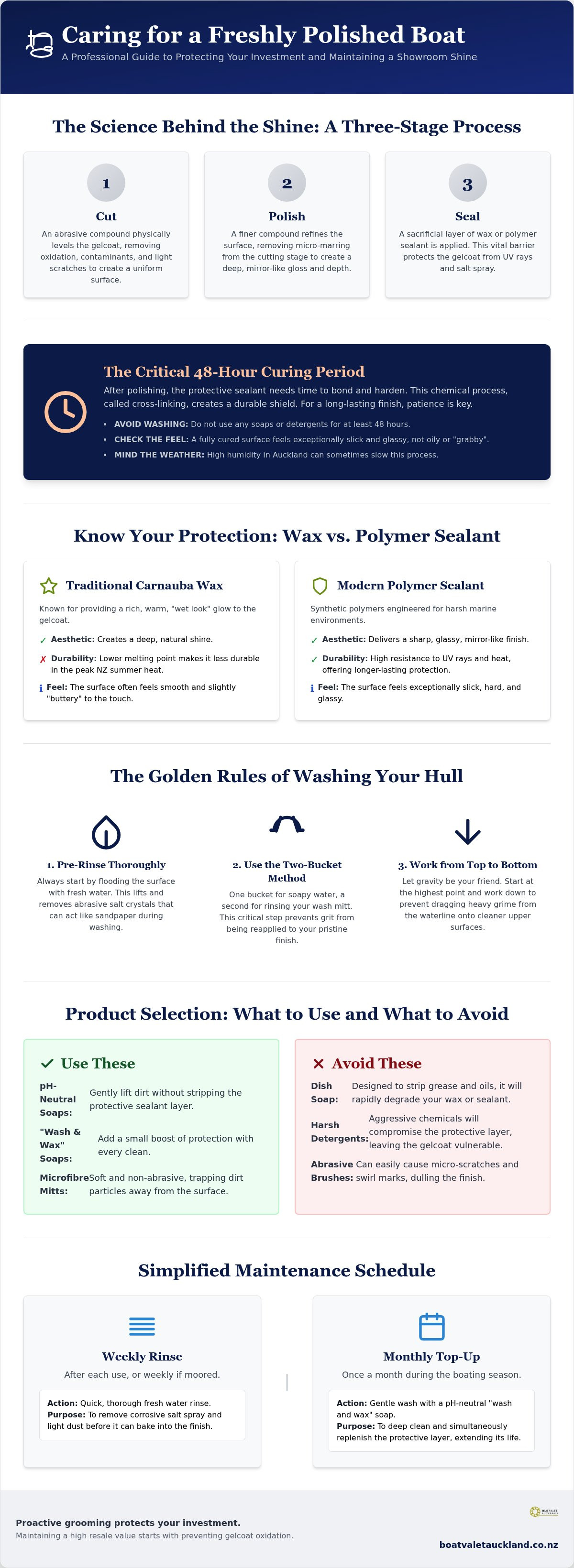
A professional finish involves two distinct stages that many owners often confuse. A "cut" uses abrasive compounds to physically level the gelcoat, removing oxidation and light scratches. A "polish" follows this, refining the surface to create that deep, mirror-like depth. Once the surface is perfect, we apply a sacrificial layer of wax or sealant. Understanding how to care for a freshly polished boat begins with protecting this thin, vital barrier. This layer takes the brunt of the environmental assault so your gelcoat stays shielded from the elements.
Whilst the visual results are stunning, The Science of the Shine involves a complex chemical bond. This sacrificial layer creates hydrophobic properties, meaning it actively repels water. For Auckland boaties, this is your best defence against salt spray. When water beads and rolls off the hull, it carries away salt crystals before they can bake into the finish under the midday sun. If you lose this hydrophobic effect, your gelcoat is once again vulnerable to the corrosive Hauraki Gulf environment.
Understanding the Curing Process
The first 48 hours after application are critical for the bonding of marine-grade polymers. These chemicals need to cross-link to form a durable shield. Avoid washing your boat with any soap or detergents for at least 24 hours. Auckland’s high humidity can occasionally slow this hardening process, whilst extreme heat can cause some products to flash too quickly. You'll know the coating has fully set when the surface feels exceptionally slick to the touch rather than "grabby" or slightly oily. Give the finish space to breathe and harden before you introduce any cleaning agents.
Wax vs. Polymer Sealants: Different Care Needs
The type of protection on your vessel dictates your maintenance approach. Traditional Carnauba waxes provide a rich, warm glow, but they have a low melting point. In the peak of a New Zealand summer, these waxes can soften, making them less durable than modern alternatives. Synthetic polymer sealants are engineered specifically for high UV environments and typically offer much longer protection. If you aren't sure which was used, check the surface texture. Waxes often feel buttery, whilst polymers feel glassy and smooth. Knowing this helps you determine how to care for a freshly polished boat effectively, as polymers can handle slightly more frequent washing than soft waxes.
Sacrificial Layer: The wax or sealant that protects the underlying gelcoat.
Hydrophobic: The ability of the surface to repel water and prevent salt adhesion.
Cross-linking: The chemical process where polymers bond together for strength.
Protecting this chemical bond is the secret to a season-long shine. Treat the first few days with care, and your boat will reward you with a finish that's easier to clean and harder to damage.
The Golden Rules of Washing a Freshly Polished Hull
Washing your vessel isn't just about appearance; it's about preservation. After the professional work is done, the biggest threat to that mirror finish is improper technique. Many owners wonder how to care for a freshly polished boat during that first month on the water. The answer starts with a thorough fresh water rinse. Salt crystals act like microscopic sandpaper. If you start scrubbing before rinsing, you're effectively grinding those crystals into your new finish. Take the time to flood the surface with water to lift the abrasive salt away.
Use the "two-bucket" method to keep your wash water clean. One bucket holds your soapy solution, whilst the other is for rinsing your mitt. This ensures that any grit you pick up from the hull stays in the rinse bucket, not back on your gelcoat. Always work from the top down. Gravity is your friend here. By starting at the highest point, you avoid dragging heavy grime from the waterline up onto the cleaner upper surfaces. It’s a simple shift in habit that prevents micro-marring and keeps the polish looking deep and clear.
Selecting pH-Neutral Marine Soaps
Never reach for the dish soap under the kitchen sink. Household detergents are designed to strip grease, which means they'll aggressively remove the protective oils and waxes we've just applied. Look specifically for pH-neutral marine soaps. These lift dirt without compromising the sacrificial layer. For regular upkeep, "wash and wax" soaps are excellent as they add a tiny boost of protection with every clean. Just be careful with degreasers. Keep them well away from your polished hull, as they'll leave the surface dull and unprotected in seconds. Your 2026 Maintenance Calendar should reflect these gentle habits to ensure the gelcoat remains healthy throughout the year.
Essential Tools for a Scratch-Free Finish
Throw away the old yellow sponges. Sponges trap grit on their surface, which causes unsightly swirls. Instead, invest in high-GSM microfibre wash mitts. These have deep piles that pull dirt away from the surface. When it's time to dry, a dedicated microfibre drying towel beats a chamois every time. Chamois can "grab" the surface, whereas a plush towel absorbs water without friction. Auckland’s water can be surprisingly hard, so drying the hull immediately is vital to prevent permanent water spotting. If you need a hand with the heavy lifting, our mobile exterior wash and wax service can keep things looking sharp between professional polishes.
For non-skid deck areas, a soft-bristled brush is acceptable, but never let it touch your polished vertical surfaces. Precision matters. By following these golden rules, you ensure that your boat doesn't just look good for a week, but maintains that deep lustre for the entire season. It's about working smarter, not harder, to protect your investment.
Battling the Auckland Elements: UV and Salt Protection
Auckland’s maritime environment is beautiful but brutal. New Zealand experiences some of the highest UV levels in the world, which accelerates the degradation of boat surfaces. When learning how to care for a freshly polished boat, you must account for this local intensity. Salt spray is your second enemy. When left to bake on a polished hull in the Viaduct or Westhaven, it creates a corrosive crust. This crust doesn't just dull the shine; it physically eats into your sealant. If your vessel has already suffered from severe oxidation, you should refer to our Professional Boat Cut and Polish Auckland: The 2026 Restoration Guide for deep restoration advice.
The Impact of the Hauraki Gulf Environment
The Hauraki Gulf has a high salt content that demands respect. When salt water dries on your gelcoat, the remaining crystals act like tiny magnifying glasses. These crystals concentrate UV rays directly into the surface, which speeds up the breakdown of your wax or sealant. This eventually leads to "chalking," where the gelcoat becomes porous and white. To prevent this, adopt a quick-rinse routine. A five-minute spray with fresh water after every outing will wash away these minerals before they can do damage. If you're moored in a marina, use your covers whenever possible. Physical barriers remain the most effective defence against the combined assault of sun and salt.
Using UV-Inhibitor Spray Detailers
Effective maintenance is built on layers. Whilst your professional polish provides the core protection, monthly "top-ups" with UV-inhibitor spray detailers are essential in our climate. These sacrificial spray waxes act as a temporary shield for your primary sealant. They are engineered to be applied quickly after a wash without removing the base polish. Focus your efforts on high-exposure zones such as the flybridge and cowlings. These horizontal surfaces receive the most direct sunlight and will be the first to show signs of wear. Simply spray onto a clean microfibre cloth and buff the surface to keep the UV blockers active and the finish glowing.
Rinse Daily: Remove salt crystals before the sun can bake them on.
Use Covers: Protect vertical and horizontal surfaces from direct UV exposure.
Spray Detailers: Apply monthly to replenish the sacrificial layer.
By staying proactive with these simple steps, you can significantly extend the life of your polish. It’s about creating a routine that works with the environment rather than against it.
Your 2026 Maintenance Calendar: Timing Your Top-ups
Consistency beats intensity when it comes to maritime preservation. Many owners make the mistake of a "once and done" approach, but learning how to care for a freshly polished boat requires a structured schedule. A well-timed routine prevents the need for aggressive cutting compounds in the future. By following a predictable calendar, you ensure that the sacrificial layers we've discussed remain intact through the roughest Hauraki Gulf conditions.
Weekly: Perform a fresh water rinse. Check vertical surfaces for bird lime or environmental fallout. These can etch into a new finish if left for more than seven days.
Monthly: Conduct a full wash using the pH-neutral marine soaps mentioned previously. Apply a spray sealant top-up to horizontal surfaces to replenish the UV blockers.
Quarterly: Inspect the waterline and high-wear areas like the bow and transom. These zones face constant friction from waves and docking, which wears down protection faster.
Bi-Annually: Schedule a professional assessment. A light machine polish may be needed to refine the surface before the next major season begins.
Spotting the Signs of Protection Failure
You don't need expensive equipment to check your boat's health. The "beading vs. sheeting" test is the industry standard. When you rinse the hull, water should form tight, round beads. If the water "sheets" or flattens out across the surface, your wax or sealant has likely failed. Another early warning sign is a loss of depth in colour. If your navy or black hull starts to look slightly cloudy, oxidation is beginning to take hold. Finally, try the finger squeak test on a clean, dry section of the gelcoat. A protected surface should feel slick and silent. A "squeak" often indicates that the protective oils are gone.
Seasonal Adjustments for the NZ Climate
Auckland’s seasons demand different strategies. In December, you must prepare the finish for the peak summer sun. This usually involves a heavier application of polymer sealant to handle the extreme UV index. During winter, boats kept on trailers or in dry stacks face different challenges, such as dust and industrial fallout. Ensure you have a solid winter protection plan to prevent the finish from dulling whilst the vessel is out of the water. For a professional hand with your seasonal prep, explore our mobile boat grooming Auckland resources to keep your vessel in peak condition year-round.
Maintaining a mirror finish shouldn't be a guessing game. If you're ready to put your vessel on a professional maintenance schedule, book your exterior wash and wax today to secure your boat's long-term value.
Professional Preservation: How Boat Valet Auckland Maintains Your Investment
Maintaining a showroom finish is a partnership between the owner and a specialist. Whilst the daily rinses and monthly top-ups we have discussed are vital, professional oversight ensures that small issues don't become expensive repairs. Steve Kellie has spent over 25 years working across Auckland marinas, from Westhaven to the Viaduct. He understands how to identify the earliest signs of gelcoat failure before they become visible to the untrained eye. By choosing professional preservation, you move away from the cycle of heavy oxidation and aggressive cutting. Instead, you focus on gentle, consistent maintenance that keeps the surface level and the gloss deep.
The convenience of a mobile service is a game-changer for busy owners. We bring the equipment and expertise directly to your berth or property, saving you the logistical headache of moving the vessel. This proactive approach offers a significant return on investment. A boat that looks "just-polished" year-round holds its resale value far better than one that undergoes a panic-polish every few years. It's about protecting the physical integrity of the gelcoat so that the vessel remains an asset rather than a liability.
The Boat Valet Auckland Maintenance Package
Our professional maintenance package is designed for owners who value precision. We don't just "wash" a boat; we groom it. This includes the use of industrial-grade, eco-friendly marine cleaners that are specifically formulated to lift salt and grime without stripping your sacrificial wax layer. These products are biodegradable, ensuring your maintenance routine doesn't harm the Hauraki Gulf ecosystem. Every session includes a thorough check of the hull and top-sides, providing you with expert oversight that ensures your protection layers are performing as they should. It removes the guesswork from how to care for a freshly polished boat and replaces it with a proven system.
Ready to Keep Your Boat Looking New?
Establishing a regular grooming schedule is the most effective way to manage your vessel's aesthetics. It ensures you never miss a critical UV top-up and keeps the finish in peak condition for every outing. If you want to simplify your routine and guarantee a mirror finish, contact Steve Kellie directly for a customised quote. We can organise a schedule that fits your boating lifestyle and the specific needs of your vessel. Remember that pre-sale boat grooming nz starts with good daily care. Don't wait until you're ready to list the vessel to restore its pride. Maintain that high-gloss finish from day one and enjoy the confidence of owning the best-looking boat in the marina.
If you're ready to secure your vessel's future, book your exterior wash and wax today. Let us handle the technical details whilst you enjoy the water.
Secure Your Vessel's Long-Term Lustre
Maintaining a professional finish doesn't have to be a burden. By choosing pH-neutral soaps and following a disciplined rinsing schedule, you can keep the harsh Hauraki Gulf elements at bay. We've seen how the right tools and a structured calendar prevent the need for aggressive restoration in the future. Knowing exactly how to care for a freshly polished boat ensures your gelcoat remains protected and your resale value stays high. It's about working with the environment to preserve that deep, mirror-like depth we've worked hard to achieve.
As an Auckland-owned and operated specialist since 1998, I provide an expert mobile service at all major Auckland marinas. We specialise in high-end marine detailing and restoration, bringing professional results directly to your berth or property. This local expertise means we understand the specific challenges posed by New Zealand's intense UV radiation and high salt content. Contact Steve at Boat Valet Auckland for a Professional Maintenance Plan today. Let's work together to keep your boat looking its absolute best for the entire season and beyond.
Frequently Asked Questions
How long should I wait to wash my boat after it has been polished?
Wait at least 24 hours before your first fresh water rinse and 48 hours before using any marine soap. This window allows the protective polymers to cross-link and fully bond with the gelcoat. If you introduce friction or chemicals too early, you risk stripping the sacrificial layer before it has hardened. Auckland’s humidity can occasionally slow this curing process, so patience is vital for a long-lasting finish.
Can I use a pressure washer on a freshly polished boat hull?
Avoid using high-pressure washers directly on your new finish. The concentrated force can physically lift the wax or sealant right off the surface, especially near the waterline or around decals. Use a standard garden hose with a soft spray nozzle instead. This provides enough volume to rinse away salt and grime without compromising the integrity of the protective barrier you've just applied.
What is the best soap to use for maintaining a polished gelcoat?
Use a pH-neutral marine soap that is specifically designed for gelcoat surfaces. These products are engineered to lift contaminants whilst leaving the protective wax or sealant intact. When you are learning how to care for a freshly polished boat, steer clear of household detergents or citrus-based cleaners. A "wash and wax" soap is a great choice for interim maintenance as it adds a tiny boost of protection with every wash.
How often should I re-apply wax or sealant to my boat in Auckland?
Plan to re-apply your protective layer every three to four months in the Auckland climate. Our extreme UV levels and high salinity degrade sacrificial coatings much faster than in other parts of the world. If your vessel is used frequently on the Hauraki Gulf, a quarterly top-up ensures the gelcoat remains shielded. Use the water beading test as your primary indicator that a new coat is required.
Will salt water ruin my new boat polish immediately?
Salt water won't ruin the polish instantly, but the damage starts once it is left to dry in the sun. As the water evaporates, it leaves behind abrasive salt crystals that concentrate UV rays and bake into the finish. This process quickly dulls the shine and eats through your sealant. Always perform a fresh water rinse after every outing to remove these minerals before they can cause permanent damage.
Is it better to store my boat covered or uncovered after polishing?
Store your boat under a breathable cover whenever it is not in use. Physical protection is the most effective way to prevent UV degradation and stop bird lime or industrial fallout from etching the finish. If you are moored in a marina like Westhaven, a cover shields the horizontal surfaces that face the most direct sunlight. Ensure the cover is clean to avoid scratching the polished gelcoat during fitting.
Can I polish my boat myself or should I always hire a professional?
You can polish a boat yourself, but achieving a mirror finish requires specialised machinery and experience with gelcoat thickness. Professionals use rotary and dual-action polishers with varied pad densities that most owners don't have. If your hull has heavy oxidation, a professional can safely "cut" the surface without burning the gelcoat. Whilst DIY is fine for basic washing, the initial restoration is best handled by an expert.
Why does my boat look dull only a few months after polishing?
Dullness is usually a sign that the sacrificial layer has been stripped by harsh chemicals or degraded by Auckland’s intense UV index. If you've used dish soap or aggressive degreasers, you've likely removed the protection, leaving the gelcoat vulnerable. This highlights the importance of how to care for a freshly polished boat correctly. Without a monthly top-up of spray sealant, the gloss will naturally fade under the relentless summer sun.
Comments