
Boat Cleaning for Family Safety: Why a Pristine Vessel is a Safer Vessel

What if the greatest risk to your family on the Hauraki Gulf isn't a sudden southerly, but the invisible layer of grime building up beneath your feet? It's easy to focus on lifejackets and flares, but professional boat cleaning for family safety is just as critical for a secure day on the water. A pristine vessel isn't about vanity; it's about removing the hazards that salt, mould, and grease hide from view.
We understand that your boat is your pride and joy, but it's also the place where your children and friends should feel most protected. You want to spend your weekends enjoying the Hauraki Gulf without the constant worry of someone slipping on a greasy deck or breathing in musty, mould-spoiled cabin air. This guide explains how professional marine grooming eliminates hidden health risks and identifies mechanical issues before they leave you stranded. We'll show you how a hygienic cabin environment and properly maintained surfaces provide the ultimate peace of mind for your next family adventure.
Table of Contents
Beyond the Polish: Why Boat Cleaning is a Pillar of Family Safety
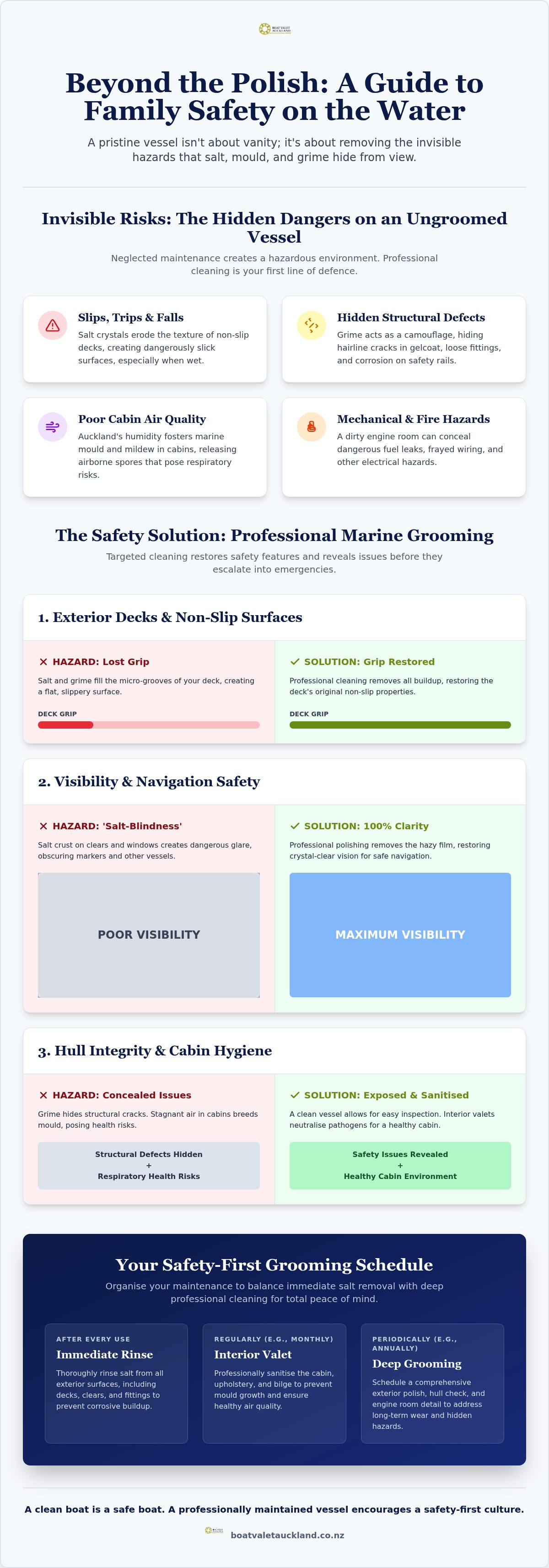
Safety on the water is often discussed in terms of lifejackets and VHF radios. However, experienced skippers know that boat cleaning for family safety is a fundamental layer of protection. A vessel covered in salt and grime isn't just an eyesore; it's a liability. Grime acts as a camouflage for structural defects, hiding hairline cracks in the gelcoat or loosening deck fittings that could fail under pressure. When a boat is clean, these issues become obvious before they turn into emergencies.
Professional grooming does more than just make the fibreglass shine. It clears the way for informal vessel safety surveys every time you step on board. If you can't see the state of your stanchion bases or the integrity of your railings because of salt crust, you're operating with a dangerous blind spot. Removing corrosive salt prevents safety equipment from seizing and ensures that every handrail is secure when your family needs it most. A well-maintained vessel naturally encourages a safety-first culture amongst the crew and family, setting a standard for how the boat is handled and respected.
The 'Slippery Slope' of Neglected Maintenance
Salt buildup is a progressive hazard. Over time, salt crystals fill the microscopic valleys of your non-skid surfaces, effectively turning a textured deck into a flat, slippery plane. This is particularly dangerous for children who might be moving quickly across the cockpit or side decks. Steve Kellie has led Boat Valet Auckland since 1998 with a focus on functional cleanliness. He knows that a mobile valet isn't just about aesthetics; it's about restoring the physical grip of the vessel's surfaces to prevent falls.
There is also a strong psychological component to a well-maintained boat. A clean, organised cockpit encourages a focused mindset for the skipper. When the environment is tidy, navigation becomes more deliberate and less prone to error. It creates an atmosphere where the family feels secure, knowing that the vessel is cared for by a professional who values precision over shortcuts.
Visibility and Navigation Safety
Auckland boaties know the challenge of returning to Westhaven or the Viaduct Harbour as the sun dips low. If your clears or windows are crusted with salt, the resulting glare can cause 'salt-blindness', making it nearly impossible to spot channel markers or smaller craft. Professional window polishing restores 100% clarity to these surfaces, removing the hazy film that develops from constant exposure to salt spray. Maintaining crystal-clear vision is the most effective way to identify markers and avoid collisions in the high-traffic waters of the Waitematā Harbour.
Sanitising the Cabin: Protecting Your Family from Marine Mould
Auckland’s humid climate makes confined boat cabins a primary breeding ground for marine mould and mildew. Whilst the exterior takes the brunt of the salt spray, the interior traps moisture and stagnant air. This creates an environment where fungal spores can proliferate rapidly. Prioritising boat cleaning for family safety means looking beyond the surfaces you can see and addressing the air quality inside your vessel.
Airborne spores in upholstery and headliners pose significant respiratory risks, particularly for children and elderly guests. These microscopic particles can trigger asthma attacks or allergic reactions long before the mould becomes visible to the naked eye. Additionally, bacteria buildup in the galley and bilge can lead to gastrointestinal issues whilst at sea. A simple DIY hosing won't cut it. Professional interior valeting uses specialised, marine-safe sanitisers that neutralise pathogens at the source, ensuring your cabin is a healthy sanctuary rather than a health risk.
The Hazards of Marine Mildew
That familiar "old boat smell" isn't a sign of a seasoned vessel; it's the scent of active fungal growth. When mould takes hold in soft furnishings, it embeds itself deep within the fibres. Regular vacuuming is insufficient for removing these allergens. Boat Valet Auckland’s Interior Valet targets these hidden colonies with deep-cleaning techniques that restore both hygiene and freshness. By sanitising the living areas, we ensure that your boat cleaning for family safety covers every corner where your loved ones relax.
Bilge Hygiene and Air Quality
The bilge is often the most neglected part of a boat, yet it directly impacts the air quality of the lower cabin. A dirty bilge can collect a cocktail of stagnant water, oil, and fuel residues. These emit toxic fumes that rise into the sleeping quarters, leading to what many call "bilge breath." Maintaining a clean engine room and bilge is the first line of defence against these harmful vapours. This is especially vital when planning overnight stays at Waiheke or Great Barrier Island, where you want to wake up to the smell of the ocean, not the engine room.
According to the EPA boating safety guidelines, keeping internal walkways and living spaces clear of contaminants is essential for passenger wellbeing. If your cabin is starting to feel less than fresh, it might be time to book a professional valet to reset your environment and protect your crew.
Preventing Slips and Trips: Exterior Detailing for Onboard Safety
Decks that look clean aren't always safe. On the water, the difference between a secure footing and a dangerous fall often comes down to the microscopic state of your vessel's surfaces. When salt residue and algae are allowed to accumulate, they turn non-slip fibreglass into a literal ice rink. This is a primary concern for boat cleaning for family safety, as children and guests often move around the boat with less caution than an experienced skipper. A professional exterior valet focuses on removing these invisible hazards to ensure every step on board is a confident one.
Bird droppings and fish scales are more than just an eyesore; they are major trip hazards that become incredibly slick when wet. If left to bake in the Auckland sun, they can also permanently damage your gelcoat. Our approach to exterior maintenance involves a thorough decontamination process. We remove these organic slips before they cause an accident or require costly repairs. It's about maintaining the functional integrity of your vessel so you can focus on the horizon rather than your feet.
Restoring Non-Skid Surfaces
The science of a slippery deck is simple but often misunderstood. Salt crystals are jagged and abrasive, but as they build up, they fill the 'pores' and textures of your non-skid gelcoat. This levels out the surface, stripping away its ability to provide friction. A professional exterior wash and wax uses specialised cleaners that dissolve these crystals without leaving behind the greasy, silicone-based residues found in many cheap supermarket products. We ensure that your textured surfaces remain sharp and effective, providing the grip you need during a heavy swell or a busy docking manoeuvre.
Handrails and Boarding Safety
Handrails are your family's first line of defence when moving between the cockpit and the bow. Stainless steel polishing is essential to remove 'tea staining', which is actually a form of localised corrosion. If ignored, this can eventually weaken welds and fittings. Smooth, polished rails are easier to grip and won't harbour the sharp salt deposits that can cause small cuts or irritations. We also pay close attention to swim platforms. These areas are prone to developing a thin layer of slime that makes water access treacherous for young swimmers.
Teak decks require a specific touch to remain safe. Over time, teak can become silvered and splintery, or worse, develop a mossy film that is dangerously slick. Our teak restoration service deep-cleans the grain to bring back the wood's natural non-slip properties without making the surface abrasive to bare feet. This is a vital step for improving footing for children who spend their summers jumping off the transom.
Maintaining a clean exterior is part of a broader commitment to maritime responsibility. Resources like this Clean Boating Guide highlight how keeping a tidy vessel, from the bilge to the bow rails, prevents environmental contamination and physical hazards. By integrating these habits into your boat cleaning for family safety routine, you ensure your vessel remains a safe, high-performance asset for years to come.
Engine Room Detailing: The Key to Mechanical Reliability
Mechanical failure at sea is more than an inconvenience; it's a significant safety risk when you have your family on board. Whilst most owners focus on the engine's internal service, the external condition of the engine room is equally vital. A clean engine space is a diagnostic tool. It allows you to spot issues like frayed belts or weeping gaskets before they escalate into a breakdown in the middle of the Hauraki Gulf. Professional boat cleaning for family safety must include the heart of the vessel to ensure total reliability.
Grease, oil, and salt spray shouldn't be part of your engine bay's environment. These residues are flammable and can hide developing faults from the skipper's eye. By removing these contaminants, you create a safer operating environment and ensure your vessel remains dependable for every outing. A detailed engine room reflects a skipper who takes safety seriously and understands that precision maintenance starts where the power is generated.
Early Detection of Fluid Leaks
Most modern marine engine rooms feature white gelcoat for a specific reason. This bright surface is designed to highlight even the smallest drip of oil, coolant, or fuel immediately. In a neglected, greasy engine bay, these leaks blend into the grime, remaining invisible until a system fails and you're left stranded. When the surfaces are pristine, a single drop of red transmission fluid or green coolant stands out like a flare. Maintaining a clean bilge ensures that any water discharged overboard is free from oil and fuel, helping you avoid the hefty environmental fines enforced by the Auckland Council. Regular detailing ensures you catch leaks early, protecting both your family and the local environment.
Fire Prevention and Electrical Safety
Fire is one of the most dangerous scenarios on a boat, and many onboard fires start in the engine room. Salt spray often finds its way into the engine compartment, settling on battery terminals and electrical junctions. This salt buildup can lead to arcing and short circuits, which are common fire starters. Keeping these components clean and free of debris is essential for electrical integrity. Additionally, air intakes must remain clear of dust and salt to ensure the engine receives optimal cooling during long summer cruises. By prioritising boat cleaning for family safety in the engine room, you eliminate the flammable residues that often lead to onboard fires. Steve Kellie recommends an annual engine room deep clean for all family boats to manage these risks effectively. This proactive approach ensures that your mechanical systems are as safe as they are powerful. If your engine room has been neglected, book an Engine Room Cleaning to restore your vessel's mechanical safety today.
Organising Your Safety-First Grooming Schedule in Auckland
Maintaining a vessel is a continuous cycle. You can't rely on a single annual scrub to keep your loved ones secure. A structured approach to boat cleaning for family safety ensures that no hazard remains hidden for long. By breaking your maintenance into daily habits and professional milestones, you create a safety net that protects your investment and your passengers. It's about building a routine that makes safety the default state of your boat.
Start with the "Safety Wash". This isn't a full detail; it's a targeted rinse performed after every outing on the Hauraki Gulf. Use fresh water to flush salt from the clears, windows, and stainless steel rails. As discussed earlier, salt is the primary enemy of visibility and grip. Removing it immediately prevents the corrosive buildup that leads to seized equipment and hazy windows. This simple habit keeps your vessel ready for the next spontaneous trip to Tiritiri Matangi.
Beyond the daily rinse, schedule a professional interior valet every six months. This frequency is essential for managing the mould and bacteria that thrive in Auckland's humidity. Combine this with a pre-season engine room and exterior detail. This annual deep clean allows a professional to verify the integrity of the hull, fittings, and mechanical systems before your busiest season begins. It's the best way to ensure that your boat cleaning for family safety protocol is actually working.
The DIY Safety Checklist
While professional grooming handles the deep work, your own observations are the first line of defence. Incorporate these steps into your post-trip routine to keep things in check between professional visits:
Flush the anchor locker and windlass with fresh water to prevent salt crystals from seizing the mechanism during an emergency.
Inspect all navigation lights and clears for salt-blindness; ensure you have 360-degree clarity for those late-night returns to the marina.
Wipe down high-traffic handrails and the galley area with a marine-safe sanitiser to eliminate bacteria and keep the environment hygienic.
Why Choose Boat Valet Auckland for Your Family?
Since 1998, Steve Kellie has been more than just a groomer; he's a safety-conscious expert who knows where hazards hide. With over 25 years of experience, Steve identifies the "red flags" that most owners miss, from hairline cracks in the gelcoat to salt-damaged electrical terminals. This level of personal accountability ensures your vessel is in safe hands. When you book a valet, you aren't just getting a clean boat; you're getting an expert eye on your pride and joy.
We bring our specialist equipment directly to your berth. Whether you're at Westhaven, Orakei, or Half Moon Bay, our mobile service fits into your lifestyle without the hassle of moving the boat. Our goal is to provide you with a hygienic cabin, non-slip decks, and total peace of mind for your next family outing. Contact Steve today for a safety-focused grooming quote and ensure your boat is truly safe for those who matter most.
Secure Your Next Adventure on the Hauraki Gulf
A pristine boat is more than just the pride of the marina; it's a vessel where every component is primed for performance and passenger protection. By prioritising boat cleaning for family safety, you eliminate the invisible risks of slippery decks, poor visibility, and toxic cabin air. Whether it's restoring the natural grip of your teak or ensuring your engine room is free of flammable residues, every detail contributes to a more secure environment for your loved ones.
Don't leave your family's wellbeing to chance. Steve Kellie has provided expert care across all Auckland marinas since 1998, specialising in everything from interior hygiene to critical mechanical detailing. Our mobile service brings professional accountability directly to your berth, ensuring your high-value asset is always in safe hands. Take the guesswork out of your maintenance and focus on making memories at sea.
Book a safety-focused valet with Steve Kellie today and enjoy total peace of mind on your next outing.
Frequently Asked Questions
Is professional boat cleaning really necessary for safety?
Yes, professional cleaning is vital for identifying hidden hazards and maintaining the functional integrity of your vessel. Professional boat cleaning for family safety goes beyond aesthetics to restore non-slip surfaces and ensure clear navigation views. DIY washing often misses corrosive salt in hinges or mould in upholstery that can compromise passenger health. A specialist eye catches these issues before they become emergencies at sea.
How often should I have my boat's interior valeted to prevent mould?
You should schedule a professional interior valet at least every six months to manage Auckland's high humidity. Mould spores thrive in confined cabins and can trigger respiratory issues for children or elderly guests. Regular deep cleaning ensures that soft furnishings and headliners remain hygienic, preventing the "old boat smell" and protecting the air quality your family breathes whilst on board.
Can a dirty hull affect my boat's safety on the water?
Yes, excessive fouling increases drag and reduces manoeuvrability, which can be dangerous in heavy weather or tight marina spaces. Under Auckland Council regulations, hull fouling must not exceed "light fouling" to protect marine biosecurity. A clean hull ensures your vessel handles predictably and remains fuel-efficient, reducing the strain on your engine during long crossings to Great Barrier or Waiheke.
What are the most dangerous areas on a boat if not kept clean?
The most hazardous zones are the side decks, swim platforms, and the engine room. Salt-slicked fibreglass and algae-covered platforms are prime spots for falls, while a greasy engine bay hides fire risks and mechanical leaks. Prioritising boat cleaning for family safety in these areas ensures stable footing and mechanical reliability, which are the foundations of a secure day on the water.
Is it safe to use household cleaning products on my boat's deck?
No, many household soaps contain silicones or waxes that leave surfaces dangerously slippery when wet. These products can also strip the protective UV coating from your gelcoat, leading to premature chalking and degradation. Always use pH-neutral, marine-specific cleaners that remove salt and grime without compromising the natural grip of your non-skid surfaces or teak decks.
How does engine room detailing help prevent fires?
Detailing removes flammable oil residues and salt spray that can lead to electrical arcing. Salt buildup on battery terminals is a common cause of short circuits, while grease acts as fuel for any accidental spark. A clean engine room allows for the immediate detection of fuel leaks, which is the most effective way to prevent a catastrophic fire whilst at sea.
What should I look for in an Auckland boat grooming service?
Look for personal accountability and deep local experience. A service like Boat Valet Auckland, owner-operated by Steve Kellie since 1998, provides the expert eye needed to spot safety red flags. Ensure they offer mobile service across all major marinas, such as Westhaven and Orakei, and use marine-safe sanitisers that protect both your family and the Hauraki Gulf ecosystem.
Can salt buildup actually cause mechanical failure?
Yes, salt is highly corrosive and can seize critical safety equipment like windlasses, stanchion bases, and engine components. If salt is allowed to crystallise in moving parts, it can cause them to jam or fail exactly when you need them most. Regular professional grooming removes these deposits from hard-to-reach areas, ensuring your vessel's mechanical systems remain fully operational and dependable.
Comments