
Polishing Boat Railings and Stanchions: A Practical Guide

Updated: Oct 4
The right polish may be the last thing your boat’s railings need. Before polishing boat railings and stanchions, check whether salt deposits and tea staining are surface marks or signs of deeper corrosion, and make sure each fitting is secure.
It’s tempting to reach for metal polish as soon as stainless steel loses its shine. But the wrong product or abrasive cloth can mark the finish, while polishing over corrosion or a loose stanchion can hide a problem that needs attention. Start by checking the metal, not by choosing a compound.
This guide explains how to assess staining, choose suitable cleaning materials and follow a careful polishing process. You’ll also learn what to check around joints and fixings, how to care for the finish after cleaning, and when extensive staining, difficult access or an uncertain surface makes professional stainless steel polishing a better option. Boat Valet Auckland provides mobile marine maintenance across greater Auckland, including stainless steel polishing.
Table of Contents
Polishing Boat Railings and Stanchions Starts with a Condition Check
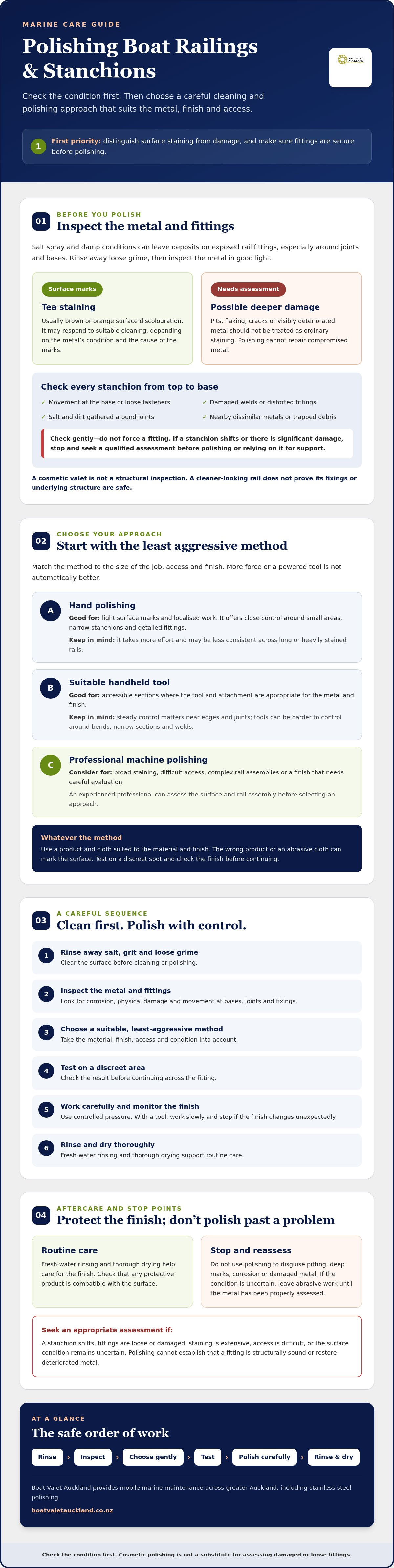
A dull railing may need cleaning, but not every mark is cosmetic. Before polishing boat railings and stanchions, check for corrosion, physical damage and loose safety fittings. Auckland’s salt spray and damp conditions can leave deposits on exposed rail fittings, particularly around joints and bases. Rinse away loose grime first, then inspect the metal in good light.
Stainless steel resists corrosion through a thin protective surface layer. The passivation process helps explain why preserving a clean, intact surface matters. Polishing may improve the appearance of surface discolouration, but it can’t confirm that a fitting is structurally sound or restore deteriorated metal.
How to tell tea staining from deeper corrosion
Tea staining usually appears as brown or orange surface discolouration. It may respond to appropriate cleaning, depending on the condition of the metal and the cause of the marks. Look more closely if you see pits, flaking, cracks or areas where the metal appears visibly deteriorated. These signs shouldn’t be treated as ordinary staining. Don’t assume polishing will remove corrosion or repair compromised metal.
What to check before working on a stanchion
Inspect each stanchion from top to base before choosing a cleaning or polishing method. Check for movement at the base, loose fasteners, damaged welds or distorted fittings. Pay particular attention to joints, where salt and dirt can collect. Note any nearby dissimilar metals or trapped debris that may be contributing to surface contamination.
Check gently for movement rather than forcing a fitting. If a stanchion shifts or you find significant damage, stop and seek a qualified assessment before polishing or relying on it for support. A cosmetic valet isn’t a structural inspection. Polishing can make a rail look cleaner, but it can’t establish whether its fixings or underlying structure are safe.
If the fittings appear secure and the marks look superficial, move on to selecting a suitable polishing approach. If the condition remains uncertain, leave abrasive work until the metal has been properly assessed.
Choose a Safe Polishing Method for Boat Railings and Stanchions
Once you understand the metal’s condition, match the method to the size of the job, access and finish. For polishing boat railings and stanchions, begin with the least aggressive approach likely to suit the surface. More force or a powered tool isn’t automatically better. The Marine Corrosion Handbook provides background on how marine conditions contribute to corrosion, but the right treatment still depends on the fitting in front of you.
When hand polishing is the sensible starting point
For a small area with light surface marks, hand polishing is often a practical first step. It lets you control pressure and keep the work local, which is useful on narrow stanchions or around joints. Test your chosen method on a discreet spot and check the finish before continuing. Hand polishing takes more effort, however, and can be less consistent across long or heavily stained rails.
When machine polishing or professional help makes sense
Powered tools can be harder to control around bends, narrow sections, welds and edges. They may also catch neighbouring boat surfaces. Work slowly, keep the tool appropriately positioned and stop if the finish changes unexpectedly. Don’t use a machine to disguise pitting, deep marks or damaged metal.
Broad staining, complex rail assemblies or an uncertain surface condition are good reasons to seek professional assessment before choosing a method. For wider vessel-care context, see this marine detailing services guide. Boat Valet Auckland provides stainless steel polishing across greater Auckland. Explore its stainless steel polishing service if the job looks beyond careful routine maintenance.
How to Polish Boat Railings and Stanchions Step by Step
A careful sequence helps prevent salt and grit from scratching the finish and makes it easier to spot a problem before polishing. Follow this order: inspect the fittings, rinse away loose contamination, clean and dry the metal, test a discreet area, polish small sections, wipe off residue and review the result.
Prepare the railings without spreading grit
Before you begin polishing boat railings and stanchions, protect nearby gelcoat, glass, canvas and painted surfaces from polish residue or accidental contact. Use clean, soft cloths. Set used cloths aside rather than dragging them over freshly cleaned metal. Follow the product directions and confirm it’s suitable for the railing’s metal and finish.
Inspect: Check the fittings and finish. If you find movement or damage, stop rather than treating it as a polishing job.
Rinse: Gently rinse away loose salt, sand and grit first. Removing particles before wiping reduces the chance of rubbing them into the surface.
Clean: Clean the metal as directed by the product manufacturer, then allow it to dry. Don’t apply polish over grime or rinse water.
Polish small sections and check the finish
Work methodically, especially around narrow stanchions, bends and joints. These areas need controlled, localised work rather than rushed strokes across the whole rail. A small test helps you see how the surface responds before moving on to a more visible section.
Test: Apply the selected method to a discreet spot, following the product instructions. Check the appearance before continuing.
Polish: Work on a manageable section at a time. Use light, controlled pressure and the recommended application method. Don’t increase force or switch to a more aggressive method simply because a mark remains.
Wipe: Remove residue with a clean cloth, changing cloths if they become dirty. Keep used cloths away from areas you’ve already finished.
Review: Inspect the railing in natural light. Look for residue, an uneven appearance or newly visible marks. Stop if the finish changes unexpectedly.
If you plan to apply a protective coating afterwards, confirm that it’s compatible with the surface and follow its instructions. The ABS Guidance Notes provide wider context on marine coating systems, but don’t replace the instructions for a specific product.
If the rail assembly is difficult to reach or the finish is uncertain, Boat Valet Auckland offers stainless steel polishing across greater Auckland. Learn more about its stainless steel polishing service before deciding how to proceed.
Protect the Finish and Know When to Stop Polishing
Once the railings are clean, keep aftercare simple. Fresh-water rinsing helps remove salt deposits, while drying areas where water collects can reduce lingering moisture. Optional surface-protection products may suit some fittings, but they aren’t a substitute for routine cleaning or a remedy for corrosion. Check that any product is compatible with the metal and finish, and follow its directions.
Build a practical railing-care routine for Auckland conditions
Salt spray can settle on exposed rails around the cockpit, bow and side decks. When practical, rinse the fittings with fresh water after salt exposure, then dry around bases, joints and other spots where moisture tends to sit. Include these areas in your regular vessel clean, even if the rails still look bright.
Protection varies with the material, surface finish, exposure and product compatibility. Don’t assume a wax, sealant or coating is suitable for every stainless fitting. If you’re unsure, check the product guidance or ask a suitable marine professional before applying it. Keep a brief record of stains that return, where they appear and any visible changes. This makes it easier to notice whether a mark is recurring or the condition is worsening.
When polishing will not solve the underlying problem
Polishing boat railings and stanchions can improve appearance, but it can’t fix structural faults. Stop and seek an appropriate assessment if you find persistent pitting, recurring rust marks, damaged fittings or metal whose condition you can’t confidently judge. Pause too if a mark remains after suitable cleaning, deepens or returns quickly. Repeated abrasive polishing may remove more surface material without resolving the cause.
Persistent pitting: Don’t keep polishing in an attempt to make the surface level.
Recurring rust marks: Have the cause assessed rather than repeatedly treating the visible stain.
Loose or damaged fittings: Don’t rely on cosmetic work to establish whether a fitting is safe.
If the issue is limited to the finish, a careful cleaning routine may be enough. For extensive staining or an uncertain surface, professional stainless steel polishing can provide a practical next step. Boat Valet Auckland offers mobile stainless steel polishing across greater Auckland. Arrange professional stainless steel polishing when the work looks beyond routine care.
When to Arrange Professional Boat Railing Polishing in Auckland
Consider professional polishing if staining covers large areas, the rail assembly is awkward to reach, or you’re unsure how the finish will respond to cleaning. A specialist can assess the surface before choosing an approach. This can be useful around tight bends, complex fittings and places where access makes controlled hand polishing difficult.
There’s an important limit: polishing boat railings and stanchions is cosmetic care, not a repair for a loose or damaged fitting. If a stanchion moves, a weld looks compromised or the metal shows serious deterioration, arrange an appropriate assessment before booking a valet. A polisher shouldn’t be asked to confirm that a safety fitting is structurally sound.
What to discuss before booking a mobile service
Help the service provider understand the job before arranging a visit. Describe which rail sections are affected, what the marks look like and whether any areas are difficult to access. Clear photographs can show the location and extent of visible staining, but images alone may not establish the metal’s condition or confirm what work is suitable.
Also confirm the vessel’s location and explain the scope of stainless steel polishing you have in mind. For example, say whether you’re concerned about a few fittings or staining along several rail sections. This gives both sides a clearer starting point for discussing the next step.
Keep the rest of the vessel presentation in view
Clean railings help a vessel look cared for, particularly alongside tidy windows, deck surfaces and other visible fittings. That’s a presentation benefit, not a promise of improved resale value. If you are also looking to complement your polished exterior fittings with custom marine accessories, visit Tower Flags for custom flag brackets and poles. If you’re planning broader on-site care, the mobile boat grooming Auckland guide offers further context.
Boat Valet Auckland provides mobile stainless steel polishing at marinas and private properties across the greater Auckland region. Owner-operator Steve Kellie has been running the business since 1998. If the railings need professional attention, share the vessel’s location, affected areas and any access concerns to discuss a suitable next step. Discuss stainless steel polishing with Boat Valet Auckland.
Keep Your Boat’s Stainless Fittings Looking Their Best
Good results start with a careful condition check, not a stronger polish. Remove salt and grit before working, test your chosen method on a discreet area and polish in controlled sections. Most importantly, stop if you find pitting, recurring rust marks, movement or damage. A clean finish can improve appearance, but it can’t confirm that a stanchion is structurally sound.
When polishing boat railings and stanchions, choose an approach that suits the metal, finish and access. Fresh-water rinsing and drying support routine care, whilst persistent staining or an uncertain surface may call for professional attention.
Boat Valet Auckland provides mobile marine grooming and stainless steel polishing across greater Auckland. Owner-operated by Steve Kellie, the business has been established since 1998. If your boat’s railings need professional attention, discuss mobile stainless steel polishing for your Auckland boat.
Assess first, polish with care, and keep your fittings looking shipshape.
Frequently Asked Questions
How do you polish stainless steel boat railings and stanchions?
Start by checking that fittings are secure and the metal has no serious damage. Rinse off salt and grit, clean and dry the surface, then test a suitable marine stainless steel polish on a discreet spot. If the finish responds well, work in small sections using the product directions and light pressure. Wipe away residue with a clean cloth and review the result in natural light. Stop if pitting or damage becomes apparent.
Can you use metal polish on boat stanchions?
Yes, if the polish is suitable for the specific metal and finish. Choose a product intended for marine stainless steel, read its instructions and test it on an inconspicuous area first. Don’t assume a general-purpose metal polish is appropriate for every fitting. Keep polish off nearby gelcoat, glass, canvas and painted surfaces, and wipe away residue as directed. If you can’t confirm product compatibility, ask a suitable marine professional before applying it.
What causes tea staining on stainless steel boat railings?
Tea staining is brown or orange discolouration on the surface of stainless steel. Salt deposits and damp marine conditions can contribute, particularly where moisture or dirt sits around joints and fittings. The marks may respond to appropriate cleaning, but their appearance alone can’t confirm the metal’s condition. Inspect the affected area closely. Pits, flaking or visibly deteriorated metal suggest a concern beyond simple surface staining and should be assessed before polishing.
Can polishing remove rust from boat railings?
Polishing may improve the appearance of some superficial marks, but it isn’t a reliable fix for corrosion. A rust-coloured stain can have different causes, and persistent marks, pitting or deteriorated metal need assessment rather than increasingly abrasive polishing. Clean gently with a product suitable for the surface, then check whether the mark remains or returns. If it does, pause and seek appropriate advice instead of repeatedly polishing the same area.
How often should boat railings be cleaned and polished?
There’s no single polishing schedule that suits every boat. Exposure, location, finish and the amount of salt and moisture on the fittings all affect how often care is needed. In Auckland, rinse railings with fresh water after salt exposure when practical, dry areas where water collects, and check bases and joints during routine vessel cleaning. Polish only when the surface needs it and the metal’s condition makes polishing appropriate.
Is it safe to polish loose or corroded stanchions?
No. Don’t polish a stanchion that moves, has damaged fasteners or welds, or shows significant corrosion as though the issue were cosmetic. Polishing can’t establish whether a fitting is structurally sound and may distract from a safety concern. Stop work and seek an appropriate assessment before relying on the fitting. Once any underlying concern has been addressed, consider a suitable cleaning or polishing approach for the appearance of the metal.
Should I polish boat railings by hand or use a machine?
Hand polishing is often a sensible starting point for a small area or light surface marks because it allows close control. It can take more effort and may be less consistent across long rails. Powered tools can cover accessible sections more quickly, but require care around bends, joints, edges and nearby boat surfaces. Start with the least aggressive suitable method. Consider professional stainless steel polishing for extensive staining, awkward access or an uncertain finish.
Comments