
Preparing a Boat for a Survey in Auckland: Safety, Cleaning and Wear

A clean, accessible boat is easier to inspect. Preparing a boat for a survey in Auckland means clearing clutter, making safety equipment accessible, opening compartments and giving the surveyor room to assess key systems. Tidy cosmetic wear where practical, but don’t hide damage or faults that need attention.
It’s natural to want your boat looking its best before an inspection. Preparation is about more than appearance: clear access and organised records help the surveyor assess the vessel without avoidable obstacles. This guide covers cosmetic wear, cleaning, safety gear, paperwork and access to the engine compartment, bilge, tanks and electrical panels. Use it as a practical checklist to prepare methodically and know what to leave for the surveyor to assess.
Table of Contents
Addressing cosmetic wear
Scratches, dents and mould can affect a boat’s perceived value. Inspect the finish in good light and decide what needs cleaning, what needs repair and what should remain visible. A tidy presentation helps, but hiding a defect can make an accurate assessment harder. Preparing a boat for a survey in Auckland starts with seeing its condition clearly, not disguising marks.
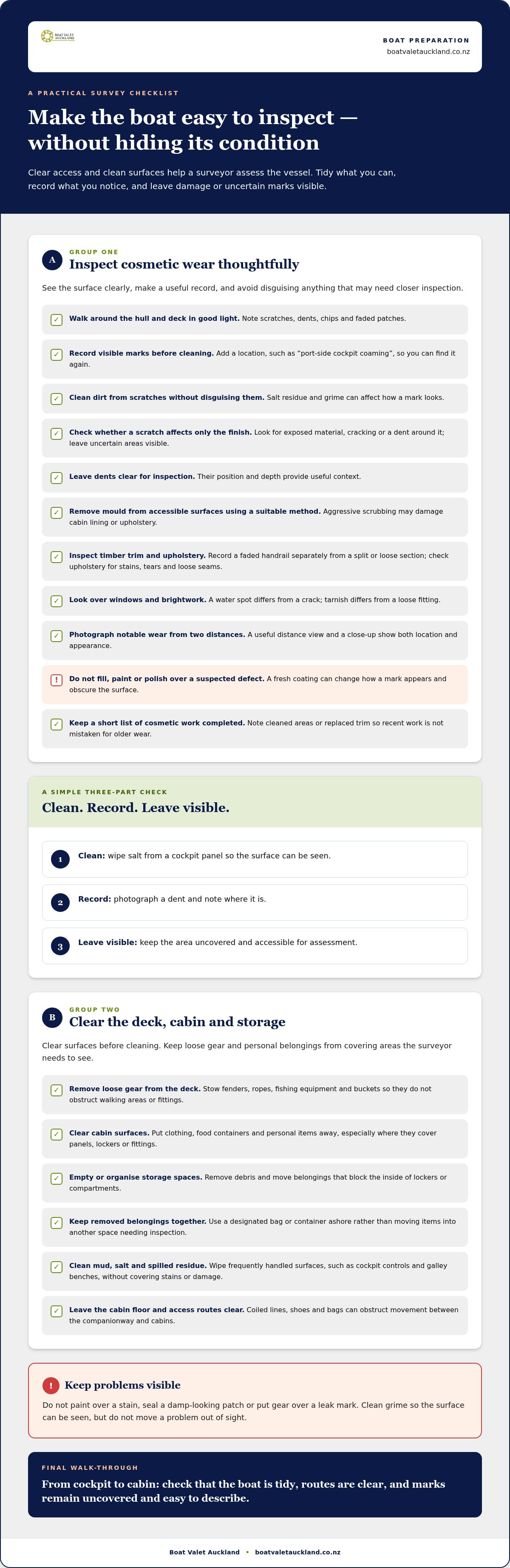
Walk around the hull and deck in good light. Note scratches, dents, chips and faded patches. This helps separate surface marks from damage needing closer inspection.
Record visible marks before cleaning. Add a location, such as “port-side cockpit coaming”, so you can find the mark again.
Clean dirt from scratches without disguising them. Salt residue and grime can affect how a mark looks; a clean surface shows its edges.
Check whether a scratch affects only the finish. Look for exposed material, cracking or a dent around it. Leave uncertain areas visible.
Leave dents clear for inspection. A dent on a locker lid or cockpit panel may be cosmetic, but its position and depth provide useful context.
Remove mould from accessible surfaces using a suitable cleaning method. Mould on cabin lining or upholstery affects presentation, whilst aggressive scrubbing may damage the material.
Inspect timber trim for worn or marked areas. A faded handrail and a split or loose section are different observations. Record them separately.
Check upholstery for stains, tears and loose seams. Clean surface dirt, but don’t place a cushion over a tear.
Look over windows and brightwork for obvious surface marks. Water spots differ from a crack; tarnish on stainless fittings differs from a loose fitting.
Photograph notable wear from a useful distance and close up. Two views help show both the location and appearance of a scratch or dent.
Avoid filling, painting or polishing over a suspected defect. A fresh coating can change how a mark appears and obscure the surface for assessment.
Keep a short list of cosmetic work completed. Note cleaned areas or replaced trim, so recent presentation work isn’t mistaken for older wear.
Use a simple three-part check: clean, record and leave visible. For example, wipe salt from a cockpit panel, photograph a dent, then leave the area unobstructed. This improves presentation without making cosmetic preparation look like an attempt to conceal the boat’s condition. It also gives you a useful record of what you noticed beforehand.
When preparing a boat for a survey in Auckland, make each mark easy to see and describe. A note such as “scratch below the starboard window” points the surveyor to a specific area. Keep the surrounding surface clean, leave the mark uncovered and note any cleaning or repairs already completed.
Cleaning the boat and clearing clutter
Clear surfaces before cleaning, then work from the deck towards the cabin. A surveyor can inspect more easily when loose gear, dirt and personal belongings aren’t covering the areas they need to see. Keep the boat tidy, but don’t move a problem out of sight.
Use this checklist to prepare the deck, cabin and storage compartments:
Remove loose gear from the deck. Stow fenders, ropes, fishing equipment and buckets so they don’t obstruct walking areas or fittings.
Clear cabin surfaces. Put clothing, food containers and personal items away, especially where they cover panels, lockers or fittings.
Empty or organise storage spaces. Remove debris and move belongings that block the inside of lockers or storage compartments.
Clean mud, salt and spilled residue. Wipe down frequently handled surfaces, such as cockpit controls and galley benches, without covering stains or damage.
Keep removed belongings together. Use a designated bag or container ashore, rather than moving items into another compartment that needs inspection.
Leave the cabin floor and access routes clear. Coiled lines, shoes and bags can obstruct movement between the companionway and cabins.
Cleaning should make surfaces visible, not make the boat look artificially untouched. For example, wipe grime from a locker edge so its condition can be seen. Don’t paint over a stain, seal a damp-looking patch or put gear over a leak mark. These details can help indicate where further inspection may be useful.
Should a boat be lifted out of the water for a survey in Auckland? Not every survey requires a lift; it depends on the inspection’s scope. An afloat inspection may not provide a clear view of every underwater area, so access needs depend on the survey’s scope.
What are common problems found during boat surveys in New Zealand? Concerns can include engine or fuel-system faults, battery and wiring issues, plumbing or bilge-pump problems, steering or propulsion defects, and visible wear. A survey may also identify mould or damage, so leave affected areas clean and accessible rather than concealing them.
What should buyers do after receiving a boat survey report? Read the findings alongside the photographs, then distinguish urgent safety or structural concerns from routine maintenance and cosmetic work. Use the report’s specific observations to plan further investigation, repairs or purchase discussions.
For cleaning, focus on access and visibility. Oil residue, dust and loose debris can make surfaces in the engine compartment harder to assess. Removing surface grime without disturbing components helps keep the area presentable. If the engine space needs a more thorough clean, Boat Valet Auckland’s Engine Room Cleaning can help clear residue from accessible surfaces before inspection.
Finish with a walk-through from the cockpit to the cabin. Check that the deck, cabin and storage areas are free of clutter, and that cleaning hasn’t covered signs of wear. This final pass helps keep the survey focused on the boat’s condition, not belongings that could have been moved beforehand.
How preparation supports an efficient survey
Good preparation gives the surveyor useful context and fewer avoidable obstacles. Gather the boat’s paperwork, make equipment easy to inspect and organise practical arrangements before the appointment. A maintenance log noting a repair, for example, can help explain why a component looks different from its manual or earlier records.
What documents and maintenance records should I prepare for a boat survey? Gather registration, title and ownership paperwork, maintenance logs, repair records, equipment manuals and warranties. Keep them together so details about a particular system are easy to find.
Use this checklist to get records and equipment ready:
Collect registration and ownership documents. These provide the boat’s identifying and ownership details in one place.
Put maintenance logs in date order. A clear sequence helps show what work has been completed and when.
Gather repair records beside the relevant log entries. Pairing a repair invoice or note with its maintenance entry makes the history easier to follow.
Keep equipment manuals together. A manual can help identify the intended operation of a fitted system or piece of equipment.
Include equipment warranties. Keep warranty documents with the relevant manual, so the paperwork is readily accessible.
Make life jackets accessible. Their location and condition are easier to assess when they aren’t buried beneath stored gear.
Locate fire extinguishers and flares. Keep both on board and accessible for inspection.
Check the horn and navigation lights. Have them on board and working, rather than packed away or obstructed.
Note questions beside the related record. For example, mark a maintenance entry if it refers to a repair whose outcome needs explaining.
Make a simple index on the first page of your folder. List headings such as “ownership”, “engine”, “electrical” and “repairs”, then file the relevant records behind each one. Keep details of any replaced components with the repair record. This saves time locating information during the inspection.
Check safety equipment before the survey appointment. Life jackets, fire extinguishers, flares, horns and navigation lights should be on board, accessible and working. Put each item where it can be seen without emptying a locker or moving unrelated belongings. This also makes it easier to spot anything missing, damaged or not functioning.
What Auckland marinas and boatyards allow survey haul-outs? Auckland marinas and boatyards with suitable lifting facilities can accommodate a haul-out when their equipment suits the vessel. The boat’s dimensions, weight, keel shape and lifting arrangement determine which facility can handle the lift.
Arrange a haul-out as part of the survey plan if the inspection requires the underwater hull to be viewed. Ensure the surveyor can access the lifted boat and that the facility’s lifting method suits its hull and fittings. Don’t assume every lift provides the same access to the keel or hull surfaces.
Before the appointment, put the paperwork somewhere it can be handed over easily and make a final equipment check. An organised folder, working safety gear and a suitable haul-out arrangement help avoid practical delays, leaving more time for the surveyor to inspect and record the boat’s condition.
Providing access to compartments and systems
A surveyor needs clear access to inspect the boat’s structure and equipment. Before the appointment, unlock every compartment and move items blocking inspection points. A clear route to the engine compartment, hull interior, bilge, tanks, electrical panels and storage spaces helps the surveyor examine these areas properly.
How should I prepare a boat engine and systems for a marine survey? Clear access to the engine and fuel system, batteries and wiring, plumbing and bilge pumps, steering and propulsion systems. Remove obstructions, but don’t dismantle equipment or conceal faults before inspection.
Use this access check around the vessel:
Open the engine compartment. Move spare lines, toolboxes and stored supplies so the surveyor can see around the engine.
Clear the bilge. Remove loose gear and debris, while leaving signs of leaks or residue visible for assessment.
Make tanks reachable. Shift items stored against tank access points, so the surveyor can inspect the surrounding area.
Expose electrical panels. Move bags or equipment that block the panel, switches or visible wiring routes.
Open storage lockers. Unlock each compartment and move belongings away from hinges, liners and accessible surfaces.
Clear the hull interior. Move cushions or stored equipment that prevent access to interior hull surfaces.
Leave steering and propulsion areas unobstructed. Stow loose gear away from visible linkages and accessible components.
Keep plumbing and bilge-pump access clear. Move cleaning supplies or containers that block the pump or pipework.
Make the fuel system accessible. Clear stored items around visible fuel-system components without disturbing fittings.
Keep battery areas reachable. Move gear away from batteries and visible wiring, but don’t disconnect or alter them.
Plan the inspection route as well as checking individual hatches. A clear companionway is of little use if a locker door cannot open fully. Move equipment ashore or place it in a space that doesn’t need inspection. Don’t solve one blocked area by filling another compartment the surveyor needs to access.
Leave equipment in place unless access requires moving a loose item. Don’t remove panels, disconnect wiring or start repairs just to improve access. A disconnected battery or disturbed fitting can change the condition the surveyor sees. If a hatch sticks, note its location and leave it for the surveyor to assess.
For the engine compartment, remove loose debris and clear stored items from accessible surfaces. Avoid wiping away residue that may indicate a leak. A clean, open space helps distinguish visible components from clutter. If the area needs cleaning before inspection, arrange engine room cleaning to address accessible grime without making mechanical changes.
Finish with a compartment-by-compartment walk-through. Test each locker handle, open each accessible hatch and check that stored items don’t block the engine, bilge, tanks or electrical panels. This final pass gives the surveyor a practical route through the boat and leaves its systems ready for assessment.
Extend the clearing routine beyond the access points already listed: remove debris, personal items and clutter from the deck, cabin and storage compartments before a marine survey. Work through those spaces deliberately, taking away loose belongings and clearing clutter rather than shifting it into another area. Include the deck and cabin in the same preparation pass as the storage compartments, so each named area is addressed. Keep the instruction straightforward: remove debris, personal items and clutter before the survey, and leave the spaces ready to be viewed.
The scope of a survey can differ. A participant said their insurance survey used a two-page form, compared with a multi-page inspection report with many photographs for a pre-purchase survey. That comparison is a reminder not to assume every survey uses the same format. Regardless of which format applies, the preparation listed here is to clear the deck, cabin and storage compartments of debris, personal items and clutter. Attend to those areas as part of the access check, without turning the task into a broader rearrangement of the boat.
Boat Valet Auckland: Boat Cut and Polish
Boat Valet Auckland’s Boat Cut and Polish can refresh a weathered exterior before a survey. It suits owners addressing surface oxidation, faded gelcoat or visible marks, not those seeking to conceal damage that needs assessment. Leave repairs and faults visible for the surveyor.
Choose the service that matches the work your boat needs. Antifouling addresses the hull’s underwater coating, while Teak Restoration focuses on worn teak surfaces. An Interior Valet can help tidy and refresh cabin spaces before inspection. These grooming services support presentation, but don’t replace a survey or mechanical assessment.
Make a short list of areas needing attention and identify any marks that must remain visible. Contact Boat Valet Auckland to discuss suitable grooming work for your boat.
Make the survey a starting point
Use the survey as a practical reference for your next maintenance decisions. Once you have the report, distinguish work that improves presentation from repairs or faults that need specialist attention. This keeps cosmetic grooming in its place and helps you plan the boat’s care around its actual condition.
If you’re preparing a boat for a survey in Auckland, decide which visible surfaces would benefit from grooming without covering marks the surveyor should assess. Boat Valet Auckland offers Boat Cut and Polish, Antifouling and Teak Restoration for owners caring for exterior finishes, underwater coatings or timber. These services support presentation and maintenance, but don’t replace the surveyor’s inspection or a mechanical assessment.
Choose the work that fits your boat and timing. For help planning suitable grooming, contact Boat Valet Auckland. A clear plan lets you approach the survey with confidence and make informed decisions about what comes next.
Frequently Asked Questions
How to prepare a boat for a pre-purchase survey in Auckland?
For preparing a boat for a survey in Auckland, arrange access with the seller and surveyor, and make sure the boat is afloat or hauled out as agreed. Have keys, maintenance records and manuals ready; charge the batteries and ensure systems can be operated. Clear lockers, bilges and engine-room access so the surveyor can inspect them. Don’t conceal faults or freshly cover damage. If presentation needs attention, Boat Valet Auckland can help with an Exterior Wash and Wax.
Comments