
How to Clean Boat Upholstery and Vinyl: A Safe, Practical Guide

What if a stronger cleaner is more likely to damage your boat seats than shift the grime? If you’re wondering how to clean boat upholstery and vinyl without harming the surface or stitching, start with a gentle, repeatable routine.
It’s understandable to be cautious. Marine vinyl has to cope with regular use, Auckland sun, salt and damp conditions, but harsh chemicals and aggressive scrubbing can take their toll. Bleach may weaken stitching, while alcohol-based cleaners can dry out vinyl and contribute to cracking.
This guide covers how to identify the surface, choose a suitable cleaner and tool, remove everyday dirt, and limit residue and runoff. You’ll also learn how to set a care routine around your boat’s use and recognise when grime or marks need more than a routine clean. If the interior needs broader attention, Boat Valet Auckland provides mobile Interior Detailing at marinas and private properties across greater Auckland. Owner Steve Kellie has been grooming boats since 1998.
Table of Contents
Boat upholstery and vinyl: what you are cleaning and why gentle care matters
Boat seats can look similar at a glance, but their surfaces may need different care. Marine vinyl is a common upholstery finish. Unlike woven fabric, its smooth, coated surface can often be wiped clean, while fabric inserts may absorb moisture and soil differently. Some vinyl upholstery uses Polyvinyl chloride (PVC), but construction and finishes vary. Follow the boat or upholstery maker’s guidance rather than assuming every seat is made or treated alike.
Boat-vinyl cleaning means removing soil without unnecessary abrasion to the surface, seams or finish. Identify what you’re cleaning before choosing a method. Loose grit, salt residue and everyday marks are different problems: grit can scratch when rubbed across the surface, salt may leave a film, and sunscreen or body oils may need a different approach. A stronger cleaner or harder scrub isn’t automatically the answer. Much like professional upholstery care providers such as Carpet Cleaner In Manchester emphasise using gentle, surface-specific methods to protect delicate materials, marine seating demands a measured approach rather than aggressive treatment.
How to identify the upholstery surface before cleaning
Start with the maker’s care instructions. Check the boat manual, upholstery documentation or labels before applying a cleaner, then follow the product label. If the guidance isn’t to hand, identify the material and test a suitable method on a small, discreet area before cleaning the full surface.
Look closely at the seats and the materials around them. Vinyl cushions, fabric inserts, clear windows and painted or plastic fittings are separate surfaces, even when they sit side by side. Don’t assume a cleaner or technique that suits one will suit another. Inspect seams, perforations and piping too. These details can hold dirt and moisture, while tears, loose stitching or exposed areas call for extra care. Avoid soaking damaged spots or pushing liquid into openings.
Why boat seating needs careful, regular attention
Each trip can add soil to the upholstery: sunscreen on seat backs, body oils on armrests and grime where people sit or handle cushions. In Auckland, sun and salt exposure are good reasons to inspect seating regularly, particularly after use or when marks appear. A quick check can help you spot a new spill or change before treating an entire cushion as one cleaning problem.
Keep the goal clear. Cleaning removes soil from the surface; it doesn’t restore material that has physically deteriorated. Extra scrubbing or a more concentrated cleaner won’t reverse cracking, peeling, fading or failed stitching. If you’re unsure how to clean boat upholstery and vinyl on a particular surface, pause and check its care guidance. The right method depends on the material, the type of soil and the condition of the upholstery.
How to clean boat upholstery and vinyl step by step
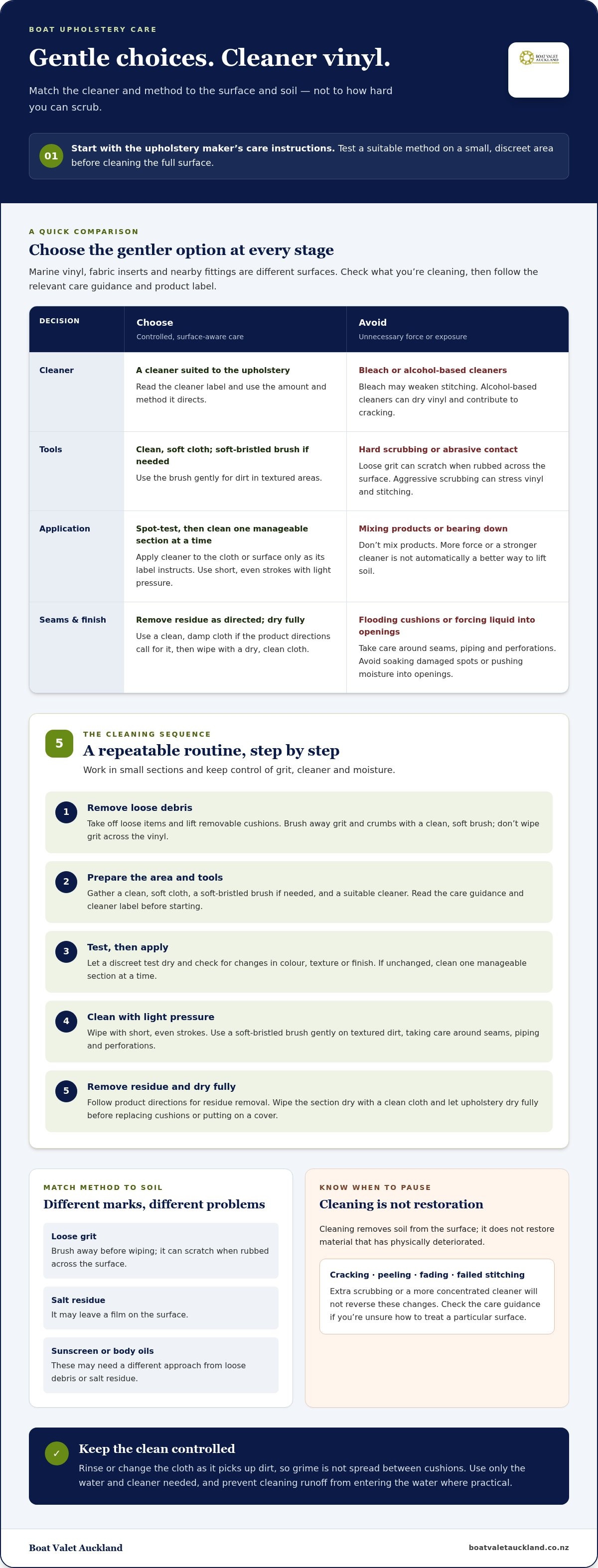
A reliable clean is about control, not force. Prepare first, use a suitable cleaner as directed and work in small sections so you can remove residue before it dries. If you’re learning how to clean boat upholstery and vinyl, follow this sequence and stop if the surface reacts unexpectedly.
Check the upholstery care instructions and spot-test your method before cleaning the full surface. Test on a discreet area, let it dry, then look for changes in colour, texture or finish. This simple step helps prevent a small mark from becoming a larger problem.
Remove loose debris. Take off loose items and lift cushions if they’re designed to be removed. Brush away grit, crumbs and other dry debris with a clean, soft brush. Don’t wipe grit across the vinyl, as it can act like an abrasive.
Prepare the area and tools. Gather a clean, soft cloth, a soft-bristled brush if needed, and a cleaner suited to the upholstery. Read the care guidance and cleaner label before starting. Use the amount and method directed, and don’t mix products.
Test, then apply the cleaner. Once a discreet test has dried and looks unchanged, clean one manageable section at a time. Apply the cleaner to the cloth or directly to the surface only as its label instructs. Keeping the application controlled makes it easier to clean the section before the product dries.
Clean with light pressure. Wipe gently using short, even strokes. For dirt in textured areas, use a soft-bristled brush without bearing down. Take care around seams, piping and perforations. Aggressive scrubbing can stress the surface and stitching without lifting soil more effectively. Mercury Marine’s guide to cleaning boat vinyl also offers practical care advice; follow your upholstery maker’s instructions if guidance differs.
Remove residue and dry fully. Use a clean, damp cloth to remove cleaner residue if the product directions call for it. Don’t flood the cushion or force moisture into seams and perforations. Wipe the section with a dry, clean cloth, then let the upholstery dry fully before replacing cushions or putting on a cover.
Keep the process tidy. Rinse or change your cloth as it picks up dirt, so you don’t spread grime from one cushion to another. Use only the water and cleaner needed, and prevent cleaning runoff from entering the water where practical.
If you’ve followed the care directions but the interior still needs broader attention, professional boat Interior Detailing is a practical next step for Auckland boat owners. Boat Valet Auckland provides mobile service at marinas and private properties across greater Auckland.
Which boat-vinyl cleaners and tools are suitable, and what should you avoid?
Choose the least aggressive tool and cleaner that suit both the surface and the soil. A basic wipe-down usually needs less than a mark worked into textured vinyl. Start with the upholstery maker’s care guidance, then read the cleaner label. General advice can’t account for every vinyl finish, cushion construction or nearby surface on your boat.
Choose a cleaning product by label and surface
Look for directions that explicitly allow use on the type of upholstery you’re cleaning. A product described as suitable for boats or vinyl isn’t automatically right for every seat, insert or finish. Check the intended surface and application instructions, including dilution, removal and any limits on contact time. If the cleaner’s directions conflict with the upholstery maker’s instructions, follow the maker’s advice.
Don’t mix cleaners, use a stronger product just because a mark persists, or leave a solution on longer than its label directs. Untested household chemicals can affect colour or finish, and residue may be harder to remove if it dries. Avoid abrasive pads and forceful scrubbing. If you’re uncertain about a cleaner, don’t apply it across the cushion; test a discreet area first.
Match the tool to the dirt, not the other way round
Use a soft cloth for light surface soil and routine wipe-downs. If dirt sits in a textured pattern, a soft-bristled brush may reach it more effectively, but keep the pressure light. A pad that feels rough can scratch or dull the finish, so an abrasive pad shouldn’t be your default. The aim is to lift soil, not scour the surface.
Let the soil guide your choice. For a light mark, start with the gentlest suitable option rather than reaching straight for a brush or stronger cleaner. If a soft cloth doesn’t shift it, revisit the product directions and spot-test before moving to a soft brush. Similar principles are shared by domestic and commercial upholstery specialists at carpetcleaninginstockport.co.uk, where controlled, non-abrasive methods are favoured to preserve delicate finishes. This measured approach makes how to clean boat upholstery and vinyl easier to repeat without putting unnecessary stress on the finish.
Keep boat vinyl cleaner for longer in Auckland’s sun and salt
A practical care routine should fit the way you use your boat, not a fixed calendar. A vessel used often, left in full sun or exposed to spray may need closer attention than one used occasionally and kept under cover. In Auckland, check upholstery regularly for salt residue, spills and new marks, then deal with visible soil using the gentle method described above.
Build a realistic upholstery-care routine
After an outing, take a moment to look over the seats. Check high-use areas such as helm seats, armrests and cushion edges. Brush away dry debris and wipe up fresh spills promptly, following the care guidance for that surface. Salt residue may be easier to spot once it dries, so inspect exposed seating before putting the boat away.
When soil builds up, clean the affected upholstery rather than waiting for every seat to look dirty. Note recurring marks or areas that seem to collect grime. This can help you distinguish a fresh spill from a persistent stain and identify seams or seating areas that need closer inspection. Adjust the timing to your boat’s use and exposure. There’s no universal schedule for every Auckland boat.
Reduce avoidable sun, salt and storage stress
Where practical, park in shade or use a cover suited to the boat and upholstery. Follow the cover maker’s guidance and avoid covering seats while they’re damp. Trapped moisture can linger against the upholstery, so let it dry before covering. Fit the cover as intended rather than allowing it to press or rub against the seating.
Salt and spills don’t need a complicated response. Remove residue promptly with a suitable, gentle method and avoid letting visible soil accumulate between checks. Look under cushions or around their edges where accessible, as these spots are easy to miss during a quick wipe-down. Where your boat’s layout allows, good airflow around the seating makes it easier to inspect surfaces and notice changes. Avoid leaving cushions covered for long periods without checking them.
For broader care at the marina or on your property, the mobile boat grooming guide explains how on-site grooming can fit into boat ownership around Auckland. A consistent routine won’t prevent every change, but it helps you monitor your upholstery and respond to soil before it becomes harder to manage.
If your boat’s interior needs more than routine upkeep, Boat Valet Auckland provides professional Interior Detailing with mobile service across greater Auckland.
When routine cleaning is not enough: professional boat interior detailing
A careful clean should lift ordinary surface soil. If marks remain after you’ve followed the upholstery care instructions, or grime is widespread across the interior, pause before trying a stronger cleaner or scrubbing harder. Repeated attempts can put extra stress on the finish without addressing the cause of the mark.
Signs your upholstery needs more than a routine wipe-down
Look at the pattern as well as the mark. A small, fresh spill may respond to routine cleaning, while discolouration across several cushions, persistent odours or soil lodged in multiple areas may need a broader approach. Note where the problem appears and whether it returns after cleaning. This context helps distinguish removable soil from an issue that needs different care.
Check the material closely, too. Cracks, peeling, colour loss and failing seams point to physical deterioration, not simply dirt. Cleaning can remove soil, but it can’t repair damaged vinyl or restore lost colour. Don’t intensify scrubbing over a damaged area. Stop, protect the surface from further abrasion and consider whether professional interior care is the sensible next step.
What professional interior detailing can add
Boat Valet Auckland provides Interior Detailing for boat interiors that need attention beyond a regular wipe-down. It can be useful when multiple areas need attention or you’re unsure how to approach persistent grime safely. The work depends on the boat’s condition and the areas you want addressed. Detailing is not a repair for cracks, peeling or other material damage, so keep cleaning and restoration expectations separate.
Boat Valet Auckland has operated since 1998 and provides mobile service across greater Auckland, including at marinas and private properties. For a wider view of vessel upkeep, the marine detailing services guide explains how interior care fits into broader boat preservation.
If routine cleaning no longer feels like the right answer, talk with Boat Valet Auckland about your boat’s Interior Detailing. Share what you’ve noticed and which areas concern you. That gives the conversation a practical starting point without assuming every stain can be removed or every sign of wear can be reversed.
Make your next step a simple one
Good upholstery care doesn’t need to become another major job on your boating checklist. Make a quick inspection part of putting the boat away, then respond to what you actually see. This helps you decide whether the seats need routine attention or a closer look, rather than reaching for a stronger cleaner by default.
Use how to clean boat upholstery and vinyl as a practical routine, not a one-size-fits-all rule. Your boat’s surfaces, use and exposure shape the care it needs. If the interior needs broader attention than you can comfortably manage yourself, professional detailing is another way forward.
Boat Valet Auckland is owner-operated by Steve Kellie, who founded the business in 1998. Its mobile Interior Detailing service is available at marinas and private properties across greater Auckland. Talk with Steve about mobile Interior Detailing for your boat and take the next step towards an interior you’re happy to use and welcome aboard.
Frequently Asked Questions
Can I use household bleach on boat vinyl?
No. Avoid household bleach on marine vinyl because it can deteriorate stitching, particularly around seams that already see regular movement. Don’t use it as a shortcut for mildew or stubborn marks. Choose a cleaner whose label allows use on your upholstery, and follow the seat’s care instructions. If bleach has already been applied, stop using it and gently remove any residue according to the upholstery maker’s guidance.
Can I use a pressure washer to clean boat upholstery?
Avoid using a pressure washer on upholstery. Concentrated water pressure can force moisture into seams, perforations and cushion edges, and may stress the surface or stitching. Use a cloth or soft brush with controlled moisture instead, especially around stitched joins and fitted cushions where water can be difficult to remove. Repeated high-pressure passes aren’t a safe substitute for a suitable cleaning method on heavily soiled upholstery.
How do I remove sunscreen marks from boat vinyl?
Start with the upholstery maker’s care guidance and a cleaner labelled as suitable for that surface. Test it discreetly, then work on the mark with a soft cloth and light pressure. Remove product residue as its label directs, and let the area dry before judging the result. Sunscreen marks may not lift completely with routine cleaning. Don’t keep scrubbing or switch to a harsher chemical if the vinyl’s colour or finish changes.
Why does my boat vinyl feel sticky after cleaning?
A sticky feel may come from cleaner residue, particularly if too much product was used or it wasn’t removed as directed. Try wiping the area with a clean, damp cloth if the upholstery guidance permits, then dry it and reassess. Don’t add another cleaner on top or mix products. If the tackiness remains, or the surface feels different from nearby vinyl, stop cleaning and check the maker’s care advice.
How often should boat upholstery and vinyl be cleaned?
There isn’t one schedule that suits every boat. A frequently used open boat may need attention sooner than a lightly used vessel kept under cover. Check seats after outings, especially following spills or exposure to spray, and clean when you see residue or soil building up. A quick inspection also helps you spot new marks early. Let the upholstery’s condition and your boat’s use guide the routine rather than cleaning unnecessarily often.
Can boat vinyl upholstery be cleaned while it is still fitted?
Yes, fitted vinyl can generally be cleaned in place, provided the upholstery maker’s instructions allow your chosen method. Use controlled moisture and protect nearby fabric, clear windows or fittings from cleaners not intended for them. Pay attention to cushion edges and seams, where liquid can collect. Avoid soaking the seat, and let it dry before putting on a cover or using the boat.
Comments