
How to Polish Boat Railings: A Safe, Practical Guide

Updated: Oct 18
The best way to make boat railings shine isn’t to polish harder. It’s to assess the surface first. If salt deposits, dullness or marks have taken the sparkle off your stainless steel, learning how to polish boat railings safely starts with gentle cleaning, not abrasive pads or extra pressure. The wrong tool can leave fresh scratches, and polishing alone won’t repair every kind of damage.
When railings make the whole boat look tired, a quick fix can be tempting. A careful sequence gives you a better chance of improving the finish without creating more work. This guide covers how to clean railings, choose suitable polishing materials and work methodically with the grain. You’ll also learn how to judge whether a mark is suitable for DIY attention or needs an experienced assessment. The aim is a brighter, easier-to-maintain finish, with realistic expectations about persistent marks, pitting and corrosion.
Table of Contents
Why boat railings lose their shine, and what to assess first
Polishing refines a clean metal surface; it isn’t a repair for every kind of damage. Salt residue, grime and water marks can leave stainless steel cloudy or spotted. Marine exposure can also contribute to surface discolouration. A rinse and wipe may be enough to clear residue, while scratches, pitting or corrosion need a more careful assessment before you choose a polishing method.
Stainless steel is valued for its use in marine settings, including railings. A general overview of boat construction materials can help explain why metals are used aboard, but the railing’s actual condition should guide its care.
How to tell residue, dullness and damage apart
Start with a gentle clean, then let the railing dry completely. A clean, dry surface makes it easier to distinguish residue from marks that remain. Check the tubes in good light, including the undersides, joints, bends and areas around fittings. Don’t rub a mark hard to test it. That can cause more work before you’ve chosen a suitable approach.
Look at the pattern. Isolated spots may be residue or water marks, while an even, cloudy appearance across several sections suggests broader surface dullness. A scratch is a visible line that remains after cleaning. Pitting appears as small depressions in the metal, and corrosion may show as persistent discolouration or surface deterioration. These issues don’t all respond to routine polishing in the same way.
Routine dullness affects the finish; deep pitting, substantial corrosion and damaged fittings need a different assessment. Stop before polishing if you find deep pits, significant corrosion, a loose or damaged fitting, or you’re unsure about the condition. Polishing won’t necessarily remove deep scratches or repair compromised metal, and force can make a surface mark worse.
Why Auckland boat railings need considered maintenance
Salt spray and damp conditions can leave deposits on exposed railings, especially around joints and other hard-to-reach areas. Boats kept around Hobsonville Marina or Westhaven face the same practical challenge: deposits can build up between washes, but no single polishing interval suits every boat. Let the condition of the railings, how the boat is used and where it is kept guide your routine.
Focus this inspection on the metal. Rinse away visible deposits, clean gently and note any marks that return or remain after drying. That gives you a clearer starting point for how to polish boat railings without mistaking residue for damage. Keep this railing assessment separate from care for other boat surfaces, which may need different cleaning and maintenance methods.
How to polish boat railings safely, step by step
A careful hand polish is often a sensible starting point for a modest job. Keep grit away from the metal, use a product intended for stainless steel and work in small sections. Cleaning away grit before polishing helps reduce avoidable surface scratching. Set out clean cloths before you begin, and replace one if it picks up dirt.
Prepare railings before applying polish
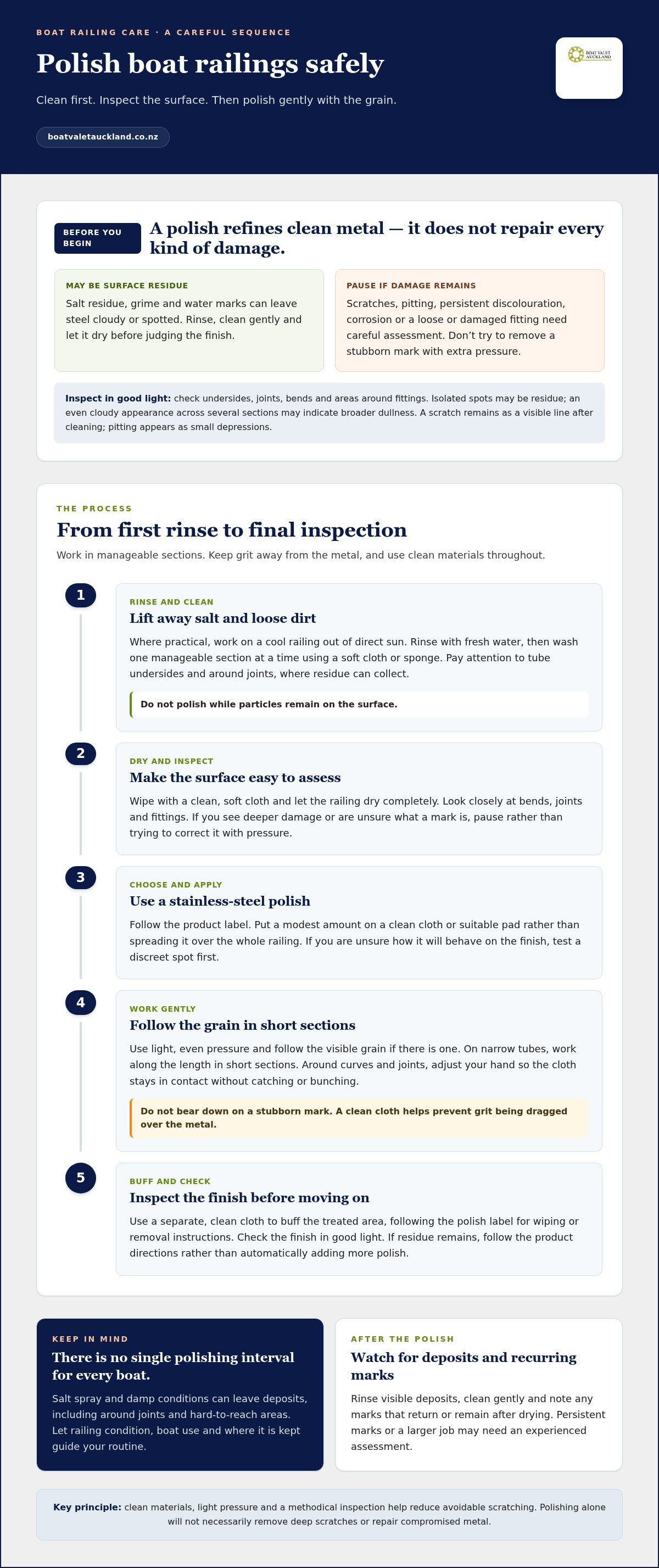
Where practical, work on a cool railing out of direct sun so the polish doesn’t dry too quickly. Start with a fresh-water rinse and a soft cloth or sponge to lift loose dirt and salt residue. Don’t apply polish while particles remain on the surface.
Rinse and clean. Wash one manageable section at a time. Pay attention to the underside of tubes and around joints, where residue can collect. Use a clean cloth or sponge, not one that has been used on a gritty surface.
Dry and inspect. Wipe the railing with a clean, soft cloth and check that it’s dry. Look closely at bends, joints and fittings. If you notice damage or a mark that appears deeper than surface discolouration, pause rather than trying to correct it with extra pressure.
Choose and apply polish. Use a metal polish intended for stainless steel and follow its label directions. Put a modest amount on a clean cloth or suitable pad rather than spreading it over the entire railing. If you’re unsure how it will behave on the finish, test a discreet spot first.
Apply, work and buff the polish
Keep the application controlled. Railing shapes call for small movements and close attention, not one broad, fast pass. Clean materials matter throughout: a cloth that has picked up grit can drag it over the metal and leave marks.
Work gently. Use light, even pressure and follow the visible grain if the surface has one. On a narrow tube, work along its length in short sections. Around curves and joints, adjust your hand position so the cloth stays in contact without catching or bunching. Don’t bear down on a stubborn mark.
Buff and inspect. Use a separate, clean cloth to buff the treated area, following the polish label for wiping or removal instructions. Check the finish in good light before moving on. If residue remains, follow the product directions rather than adding more polish automatically.
Check your cloths and pads between sections. A clean applicator and a separate buffing cloth help keep the work controlled from start to finish. For persistent marks or a larger job, Boat Valet Auckland provides mobile Stainless Steel Polishing at marinas and private properties across greater Auckland.
Hand polishing or a machine: choose the method that suits the railing
The right method depends on the job, the railing’s shape and your confidence with the tool. A powered polisher isn’t automatically safer, quicker or better. Stainless steel railings have narrow tubes, curves, joins and fittings that can be awkward to reach. Those details often favour control over speed. For light dullness or a small area, hand polishing is a practical place to start. A machine may suit a suitable, accessible surface when handled carefully.
When hand polishing is the sensible starting point
For a small patch, isolated dullness or a railing with lots of joints, hand work lets you adjust pressure and movement as you go. It takes more effort, and the finish may be less consistent across a large area, but you can pause easily to inspect each section. If a mark remains, stop and reassess rather than leaning into the cloth or making repeated forceful passes.
When powered polishing calls for extra care
A powered tool may help on a suitable, broad and accessible surface, but it still needs steady control. Narrow tubes, curved sections and fittings leave less room to move without catching an edge or spending too long on one spot. There’s no single speed or setup that suits every railing. If you’re inexperienced with the tool, hand polishing may be easier to manage.
Persistent scratches, pitting or uncertainty about the metal’s condition are good reasons to stop DIY work. Don’t move straight to sanding or aggressive abrasion because a mark hasn’t disappeared. Deeper correction needs a suitable assessment, and polishing can’t be relied on to remove deep scratches or repair pitting and corrosion. Where hard surfaces or stainless-steel items have suffered deeper scratches or physical impact, specialist restoration firms like DovRepairs illustrate how professional surface repairs can renew damaged fittings rather than risking further harm with aggressive abrasives.
To decide how to polish boat railings, consider the section’s size, access and condition before choosing a tool. If you can keep a cloth or pad controlled across the surface, hand polishing may be enough. If the job calls for powered equipment or the marks remain unclear, avoid experimenting on a visible area. Careful judgement matters more than choosing the fastest method.
How to maintain polished railings around Auckland marinas
Polishing is a finishing task, not a routine washing method. Around Auckland, salt spray and general marine exposure can leave deposits on railings, whether your boat is kept at Westhaven, Hobsonville Marina or elsewhere in the region. A simple cleaning routine helps prevent residue from sitting on the metal. Let the condition of the railings and how the boat is used guide your care, rather than relying on a fixed polishing interval.
A simple between-polish routine for marine stainless steel
Build a quick visual check into your usual boat-care routine. Look along the rails and around joints and fittings for salt residue, fresh marks or changes in the finish. Rinse deposits away with fresh water, then clean gently with materials and products suited to stainless steel. Follow the cleaner’s label directions and don’t use abrasive polishing as a substitute for washing.
Rinse off deposits. Use fresh water to remove loose salt and dirt before wiping, so particles are less likely to be dragged across the metal.
Clean gently. Use a soft cloth or sponge and a cleaner suitable for the surface. Follow the product directions, especially around joints and fittings.
Dry where practical. A clean, soft cloth can help remove water left on the rail and make recurring spots easier to notice.
Inspect as you go. Keep track of marks that return or changes around fittings. A repeated mark may need closer attention, not a more abrasive wash.
Cleaning deposits before they build up can make later polishing less demanding. It also helps distinguish routine residue from marks that remain on the metal. If you’re considering how to polish boat railings again, first check whether a gentle clean has refreshed the finish. Polishing should be occasional surface care, not an automatic step every time the boat is washed.
Recognise when polishing is no longer the next step
A brighter appearance is one aim of polishing, but it isn’t a repair for deep scratches, pitting or significant corrosion. If a mark stays unchanged after gentle cleaning, don’t keep working it aggressively. Repeated pressure or abrasive treatment can create additional surface damage without resolving the underlying issue. Stop and have the condition assessed before choosing a more intensive approach.
Pay attention to fittings, too. If one is loose or appears damaged, treat that as a separate concern rather than trying to disguise it with polish. The same applies when corrosion or pitting is extensive, or you’re unsure what the surface marks indicate. A careful assessment helps set realistic expectations and avoids turning appearance maintenance into a bigger problem.
Boat Valet Auckland provides mobile Stainless Steel Polishing at marinas and private properties across greater Auckland. If the railings need experienced attention, you can arrange the service where your boat is kept. Learn about mobile Stainless Steel Polishing for your boat’s railings.
When to call an Auckland boat railing polishing specialist
DIY care makes sense when the railings are accessible, the job is modest and the marks appear limited to surface dullness or residue. Consider experienced help if the rails cover a large area, have awkward curves and joins, or are difficult to reach without losing control of your tools. Your confidence matters too. If you’re unsure how the metal will respond, pause before trying a more aggressive method.
Condition should guide the decision. Persistent marks, extensive dullness or a finish that remains uneven after careful cleaning may benefit from an experienced assessment. Deep scratches, pitting and significant corrosion are different: polishing can’t be promised to remove or repair them. An experienced assessment can help clarify what polishing may achieve without treating every mark as a polishing problem.
What professional railing polishing can make easier
Long rail runs and tightly shaped sections take patience to work evenly. Experienced polishing can make a larger or awkwardly configured job more manageable, with attention to the railing’s condition and access. Boat Valet Auckland provides mobile Stainless Steel Polishing at marinas and private properties across greater Auckland, so the service comes to where the boat is kept.
Owner-operator Steve Kellie has personally polished boats for over 27 years. He founded Boat Valet Auckland in 1998, bringing long-standing hands-on experience to stainless steel care. That experience is useful when you want a considered view of persistent surface marks and realistic expectations about what polishing may achieve. It doesn’t change the limits of the process: deep scratches, pitting or corrosion may need a different assessment.
Arrange mobile Stainless Steel Polishing in Auckland
When requesting a tailored quote, describe the boat, the railing’s condition, the size of the area and its location. Mention any difficult-to-reach sections or marks that remain after cleaning. Hobsonville Marina is Boat Valet Auckland’s primary hub, and mobile work also takes place at other Auckland marinas, including Westhaven, and at private properties across greater Auckland.
If you’re deciding how to polish boat railings yourself, a brief conversation can help you judge whether the job suits DIY or calls for experienced attention. Boat Valet Auckland offers a free, no-obligation consultation or quote, tailored after considering the boat, its condition, the service, location and your preferences. Request your free, no-obligation quote and tell Steve where your boat is based.
Keep your next maintenance step simple
Use your next railing check to learn how your boat’s conditions affect its finish. Note where marks return and whether they appear after a particular outing or time in the marina. A quick photo can help you compare the same area over time and describe what you’re seeing if you want advice. This gives you a clearer basis for deciding how to polish boat railings next time, rather than reaching straight for a stronger product or tool.
Careful maintenance is about making a considered choice, not chasing every mark with more pressure. If a persistent blemish leaves you unsure, Steve can talk through the railing’s condition and help set realistic expectations for the work. You’ll receive a quote tailored to your boat and the job, so you can decide on a practical next step.
Call Steve to arrange a free, no-obligation consultation or quote. Take the next step with confidence and keep your boat looking cared for.
Frequently Asked Questions
How often should I polish boat railings?
There’s no single interval that suits every boat. Exposure, use, the railing’s condition and cleaning between polishing sessions all influence when it’s needed. Check the rails after outings or periods of heavy salt spray, and rinse deposits away before they dry on. If cleaning restores the appearance, polishing can wait. Let what you observe guide how to polish boat railings, rather than polishing automatically to a calendar and adding unnecessary abrasive work.
Can I use household metal polish on stainless steel boat railings?
Only use a household metal polish if its label says it’s suitable for stainless steel and the particular surface. “Metal polish” can refer to products intended for different materials or finishes, so don’t assume they’re interchangeable. Test a discreet spot, use a clean cloth and follow the manufacturer’s instructions. Avoid mixing cleaners or polish, and rinse or wipe away residue as directed. If the finish changes unexpectedly, stop using the product.
Is stainless steel on a boat rust-proof?
No. Stainless steel resists corrosion, but marine exposure doesn’t make it immune to rust-coloured marks or corrosion. A mark may be surface staining, while pitting or damage indicates a different concern. Clean a small affected area gently and see whether the mark lifts. If it remains, spreads or appears as tiny depressions in the metal, don’t treat it as ordinary dirt. Have the condition assessed rather than relying on polish alone.
Can polishing remove rust spots from boat railings?
It may improve light surface staining, but the result depends on what caused the mark and whether the metal beneath it is affected. First clean the area so you can see whether the spot lifts with residue. If it persists, looks pitted or returns after cleaning, avoid repeated hard rubbing or more abrasive treatment. Those signs may point to damage rather than a removable deposit, and polishing can’t be relied on to repair corrosion.
Should I polish boat railings by hand or with a machine?
Hand polishing gives you more control on small areas and around close-set fittings, though it takes effort on long rail runs. A machine may suit a broad, accessible surface, but narrow tubes and curved joins are harder to handle safely. Choose according to the railing’s condition and your experience with the tool. If you’re uncertain how the surface will respond, don’t experiment with powered polishing or increase abrasion to chase a mark.
What should I do if polishing leaves the railings streaky?
Pause and check whether residue, moisture or a soiled cloth is affecting the finish. On a small section, use a fresh cloth and follow the polish label’s directions for buffing or removal. Don’t add another product to cover the streaks, as residues can interact or become harder to clear. If the surface still looks uneven once clean and dry, stop and reconsider the product and method before treating the rest of the railing.
Comments