Cleaning a Boat After a Long Trip: A Practical Step-by-Step Guide

Updated: Oct 15
What if the best way to protect your boat after a long trip is to clean it in the right order, rather than simply give it a quick rinse? Salt, grit and water marks can linger on the hull, fittings and interior, while high-use areas and engine spaces may need a closer look. Cleaning a boat after a long trip is easier when you know what to tackle first and how to avoid damaging finishes or equipment.
It’s tempting to focus on the most visible marks, but a practical routine starts by removing salt and loose dirt, then moves through the exterior, interior and key checks. Use methods suited to each surface, and follow the vessel and engine manufacturer’s guidance around equipment.
This guide takes you through a manageable post-trip clean, from the first rinse to spotting wear or maintenance issues before they grow. You’ll learn where to prioritise attention, what to check after an outing, and when professional grooming can help with accumulated grime or tired finishes. In Auckland, Boat Valet Auckland provides mobile grooming at marinas and private properties.
Table of Contents
Cleaning a Boat After a Long Trip: What to Tackle First
After a long voyage, you may be tired and keen to leave the boat for another day. Start with a manageable reset instead of trying to detail every surface at once. Around Auckland and the Hauraki Gulf, salt spray and marina grime can leave residue on exposed surfaces, though conditions vary from trip to trip. Salt, loose grit, fish residue and dampness need different attention, so begin with a freshwater rinse and a basic tidy before slower inspection or polishing.
This first pass is practical preventive maintenance: removing residue and noticing changes early helps you decide what needs follow-up. Rinse salt from exposed surfaces, clear away debris without rubbing grit into finishes, and deal with fish residue before it dries. Leave restoration work for another session, when you can assess the surface properly.
Which areas need attention straight after docking?
Start with the areas that have had the most exposure or handling: rails, stainless fittings, deck surfaces, steps and grab points. Remove loose sand, grit, leaves and organic debris before wiping or scrubbing. Rinse with freshwater to shift residue, taking care around equipment and following the vessel manufacturer’s guidance where relevant.
As you unload, look for standing water, damp bags or cushions, and gear that needs airing. Note any obvious fresh damage, such as a loose fitting or new scrape. Record anything concerning rather than trying to fix it during a quick clean.
What belongs in a quick clean and what can wait?
Keep the immediate clean simple: rinse exposed areas, remove rubbish and fish residue, and set damp gear aside to dry. This limits the time salt and grime sit on surfaces without turning a tired end to the trip into a full grooming job. Clean interior areas where residue or moisture has collected, then ventilate the boat where practical.
Some marks need closer assessment. Persistent staining, chalky gelcoat, tired teak and damaged fittings are not the same as loose dirt, and repeated scrubbing may not be the answer. Set these aside for follow-up rather than reaching straight for abrasive methods or polishing products. For broader upkeep planning, see the boat maintenance schedule for Auckland marinas.
Think of cleaning a boat after a long trip as two stages: remove fresh residue now, then inspect and plan detailed work when you’re rested. This keeps the first clean achievable and helps you separate routine washing from jobs that need specialist grooming.
Cleaning a Boat After a Long Trip: Work from Top to Bottom
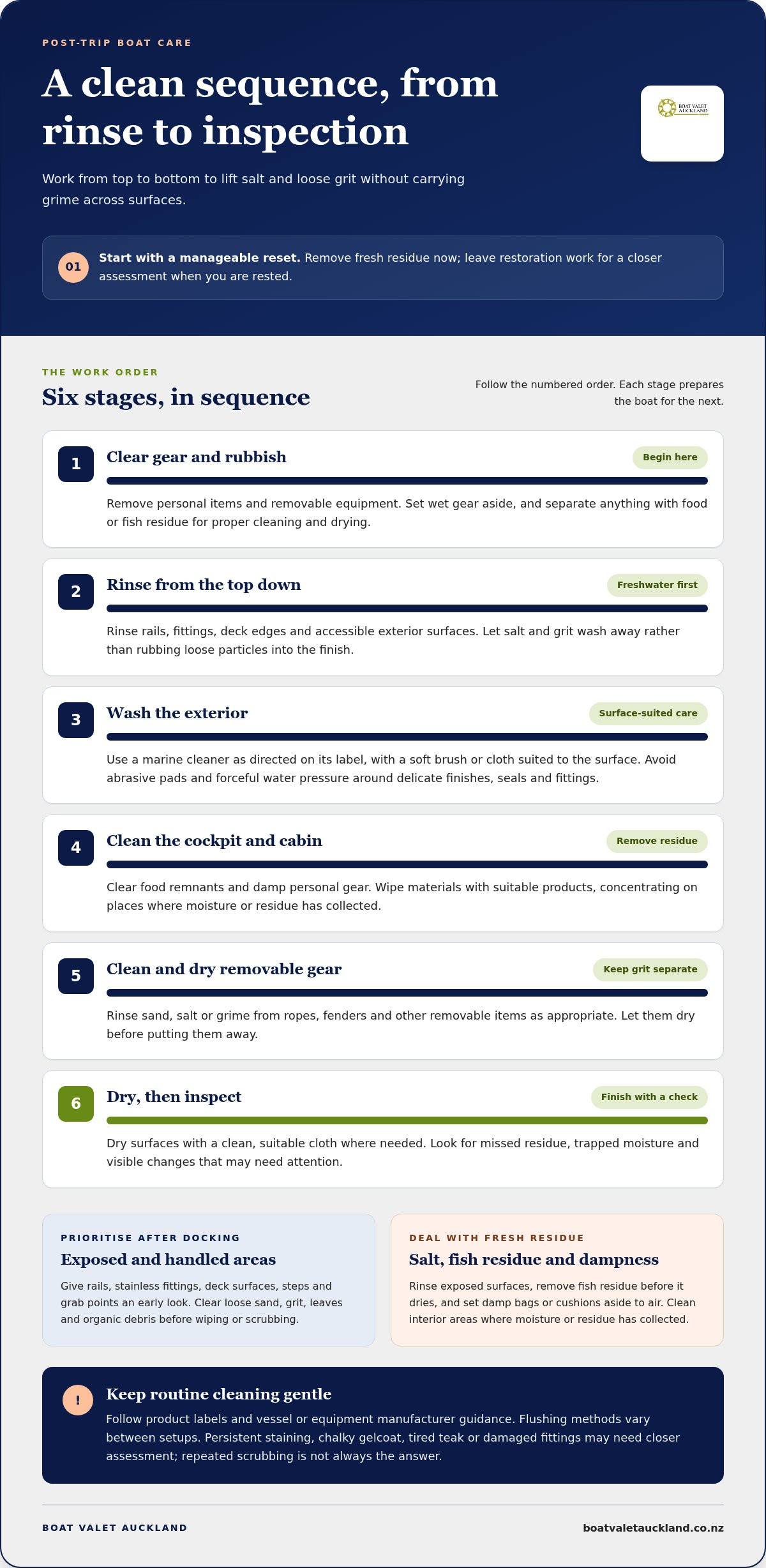
A clear sequence helps you clean the whole boat without carrying salt, sand or grime from one surface to another. Remove loose gear first, rinse before washing, then work from higher exterior surfaces down towards the deck. Use freshwater and marine-appropriate products, following each product’s label and choosing soft tools suited to the surface.
Remove gear and rubbish. Take off removable equipment and personal items, and clear away rubbish. Separate wet gear and anything with food or fish residue so you can clean and dry it properly.
Rinse from the top down. Use freshwater on rails, fittings, deck edges and accessible exterior surfaces to shift salt and loose debris before washing. Let grit rinse away rather than rubbing it into the finish.
Wash the exterior. Apply a suitable marine cleaner as directed on its label. Use a soft brush or cloth appropriate to the surface, and avoid abrasive pads or forceful water pressure around delicate finishes, seals and fittings.
Clean the cockpit and cabin. Remove food remnants and damp personal gear first. Wipe surfaces with products suited to their materials, paying attention to areas where moisture or residue has collected.
Clean and stow removable gear. Rinse sand, salt or grime from ropes, fenders and other removable items as appropriate. Let them dry before putting them away.
Dry and inspect. Dry surfaces with a clean, suitable cloth where needed, then look for missed residue, trapped moisture or visible changes that may need attention.
How should you rinse and wash the exterior?
Start at higher surfaces and move down, so dirty rinse water does not run over areas you’ve already cleaned. Work methodically across rails, fittings, deck edges and accessible exterior surfaces. Choose a marine cleaner suited to the material and follow its directions, rather than increasing the concentration or scrubbing harder to tackle a mark. For background on salt exposure, see Fighting Saltwater Corrosion.
How do you clean the cockpit, cabin and equipment?
Match interior cleaning to the material. A soft cloth and suitable cleaner can lift routine dirt from compatible surfaces, while excess moisture should be removed from damp areas. Clean ropes, fenders and removable equipment separately so grit does not transfer back to the deck. For engines and other equipment, follow the vessel and equipment manufacturers’ instructions. Flushing methods vary between setups.
If accumulated grime or tired finishes need more than a routine wash, professional mobile boat grooming can help with detailed cleaning and specialist surface care.
What to Inspect While Cleaning After a Long Boat Trip
Once the boat is clean enough to see its surfaces clearly, note any changes from the trip. Conditions around Auckland and the Hauraki Gulf vary, so let what you can see guide your checks rather than assuming every outing leaves the same marks. Separate residue that rinses away from changes that remain, and photograph anything notable so you can compare it later.
A cleaning check can flag a change, but it can’t diagnose a mechanical fault. Record what you observe, then treat warning indicators, leaks or unusual noises as reasons to seek qualified attention.
Which exterior signs are worth noting?
Look over the hull, deck, fittings and stainless-steel surfaces after rinsing. A new scuff, loose fitting, persistent stain or change in gelcoat or paint may need a closer look. Check stainless steel for residue or visible discolouration. A mark that remains after appropriate cleaning is different from loose dirt, so avoid aggressive scrubbing or polishing until you understand what you’re seeing.
What should you check around the engine and cabin?
Inspect only areas you can access safely, without dismantling components. Look for water, residue or debris, and note unusual smells in the cabin or accessible engine area. Follow the vessel and engine manuals for inspection, flushing and operating procedures. Do not assume one cleaning or flushing method suits every setup.
Keep the record simple: note the date, location and what changed, then add a photo where useful. During cleaning a boat after a long trip, this habit helps distinguish routine dirt from a developing issue and gives you a clearer starting point for further assessment.
Auckland Post-Trip Boat Cleaning: Salt, Drying and Common Mistakes
A trip around Auckland or the Hauraki Gulf can leave salt spray, marina grime, sand or other residue, depending on the route and conditions. There is no single clean-up that suits every outing. Rinse exposed surfaces thoroughly with freshwater to remove loose residue, then dry them where practical. This helps limit leftover deposits and water marks, but a routine wash will not restore a worn finish or guarantee protection from future damage.
Take care with run-off, too. Use cleaning products as directed and follow any instructions that apply at your marina or property. Products suited to the surface help avoid unnecessary residue and reduce the risk of harming a finish.
How can you avoid damaging finishes during a post-trip wash?
Rinse grit away before wiping. Even a soft cloth can drag sand across a surface and leave scratches if loose particles have not been cleared first. Match the cleaner and cloth to the material: a product suitable for one surface may not be appropriate for another. Read the label, test cautiously on an inconspicuous area when appropriate, and avoid abrasive pads or forceful scrubbing.
Do not mistake a wash for restoration. A basic clean can remove surface dirt, but it will not necessarily correct oxidation, dullness or persistent staining. For more guidance on Auckland grooming options, read this mobile boat grooming Auckland guide.
What cleaning jobs are better handled separately?
Polishing and oxidation removal need a different approach from routine washing. If gelcoat looks dull or chalky after cleaning, avoid repeated scrubbing in an attempt to restore its finish. A professional boat cut and polish in Auckland may be more suitable. Persistent discolouration or wear on teak is also a restoration job, not simply another wash step.
Dry removable gear before stowing it. Wet ropes, fenders or personal gear packed away can trap moisture and develop musty smells. Check lockers and cushions, too, and air damp areas where practical. These small steps make cleaning a boat after a long trip more effective without turning a quick post-voyage tidy into a full restoration project.
If grime has built up or the finish needs specialist attention, explore professional boat grooming in Auckland. Steve Kellie provides mobile grooming at marinas and private properties across greater Auckland. For teak that needs more than routine cleaning, teak restoration in Auckland is a specialist option.
When to Finish Cleaning or Get Boat Grooming Help
A post-trip clean does not have to become a restoration project. For routine care, rinse away loose salt and debris, clean accessible surfaces with suitable materials, dry damp areas and tidy removable gear. The aim is to leave the boat clean and dry enough for its next use, while noting anything that needs a closer look.
Which post-trip jobs are manageable as routine care?
Stick to tasks you can do confidently: remove rubbish, rinse surfaces, clear loose debris and let wet gear dry before stowing it. Follow the vessel and equipment manuals for care instructions, especially around engines and onboard systems. If you spot a leak, damaged fitting or unfamiliar issue, record its location and arrange appropriate follow-up rather than attempting a repair you are unsure about.
When can professional mobile boat grooming help?
Consider specialist grooming when grime has built up beyond a routine wash, exterior surfaces remain dull, or teak has discolouration or wear that needs restoration. The right work depends on the surface and its condition. Boat Valet Auckland provides boat cut and polish, teak restoration and interior valet, as well as detailing for boats that need more than a routine clean.
Boat Valet Auckland provides mobile boat grooming and detailing at marinas and private properties across greater Auckland. Owner-operated by Steve Kellie, the business has served boat owners since 1998. Professional grooming is useful when a job needs more time or specialist surface care, but it is not compulsory after every trip.
Finish your routine clean, note any follow-up jobs, and decide whether the remaining work is manageable yourself. If accumulated grime or tired finishes call for specialist care, explore Boat Valet Auckland’s services.
Keep Your Boat Ready for the Next Trip
A simple routine makes cleaning a boat after a long trip easier to manage. Rinse salt and loose debris first, work methodically from exterior to interior, then dry surfaces and gear. Use the final check to note anything that needs attention, and keep polishing or restoration separate from routine washing.
You do not need to tackle every mark at once. Take care of the immediate clean, follow your vessel and equipment manuals, and use specialist grooming when grime has built up or finishes need more than a wash.
Boat Valet Auckland is owner-operated by Steve Kellie and has been established since 1998. Mobile boat grooming and maintenance are available at Auckland marinas and private properties. If your boat needs a more detailed clean or attention to tired surfaces, explore Boat Valet Auckland’s mobile boat grooming services.
With a little care after each outing, you can keep your boat looking shipshape and ready for the next trip.
Frequently Asked Questions
Can I leave cleaning my boat until the next day?
Yes, but remove loose salt and debris as soon as practical, particularly before residue dries. If you’re tired or a full wash is not possible, do a manageable freshwater rinse and take wet gear, food and other perishable items off the boat promptly. Complete a more thorough wash when convenient. There is no single deadline that suits every vessel or trip, so prioritise residue and anything that could stay damp or spoil.
How do you clean a boat after a saltwater trip?
Start by removing gear and rubbish, then rinse the boat with freshwater from top to bottom. Wash suitable surfaces with a marine cleaner that matches the material, following its label. Clean interior areas, dry surfaces and removable gear, then inspect for residue or visible changes. For engines and other equipment, follow the manufacturer’s instructions. Care methods vary between vessels and systems, so do not assume one procedure suits every boat.
Should I flush my boat engine after every trip?
Flushing requirements depend on the engine type and its manufacturer’s guidance. Check the owner’s manual for the correct procedure and connection points rather than applying one method to every engine. If you’re unsure, do not improvise. A warning indicator, leak or unusual noise also calls for qualified attention. Cleaning around an engine is not the same as diagnosing or servicing it, so stick to the checks described in the manual.
What is the best way to remove salt from boat fittings?
Rinse fittings with freshwater first to wash away salt and loose grit. Then clean gently with a suitable product and a soft cloth or brush that will not scratch the surface. Avoid abrasive tools, which can mark finishes. Dry the fittings after cleaning, and follow the manufacturer’s care instructions for sensitive materials. If discolouration remains after routine cleaning, treat it as a separate surface-care issue rather than scrubbing harder.
Can I use household detergent to wash my boat?
It depends on the product and the surface, so do not assume every household detergent is suitable for marine use. Choose a cleaner labelled for the material you’re washing and follow its directions. Where appropriate, test it on an inconspicuous area first. Keep cleaning products and their run-off away from waterways in accordance with the product label and any relevant site instructions. Use separate, material-appropriate products for surfaces that need different care.
What should I check on my boat after a long trip?
Look over accessible surfaces and fittings for fresh scuffs, residue, loose items, standing water and visible changes. Check engines and other equipment only as directed by the relevant manual. A visual check during cleaning is not a mechanical inspection. Make a note of anything unusual, especially leaks, warning indicators or unfamiliar noises, and seek qualified attention rather than attempting repairs beyond your experience.
When should I book professional boat grooming after a trip?
Routine rinsing, drying and tidying are manageable owner tasks. Specialist grooming can suit a boat with extensive grime, dull exterior surfaces or teak that needs restoration, but it is not required after every trip. Boat Valet Auckland provides mobile grooming at marinas and private properties across greater Auckland. If your boat needs more than a routine wash, explore Boat Valet Auckland’s services.
Comments