
Boat Hull Sanding and Preparation: Practical Guide for 2026

More sanding isn’t always better. The right approach to boat hull sanding and preparation depends on the coating already on the hull, how well it is attached and what needs to happen before antifouling. Remove too little and the new coating may not bond as intended; take off too much and you risk damaging the surface.
Old antifoul, uneven patches and concerns about dust or gouging can make it difficult to know where to start. Begin with a close assessment, then choose preparation that suits the hull rather than following a one-size-fits-all sanding plan.
This practical guide explains how to assess the surface, decide what needs removing and prepare for antifouling, including how to contain dust and debris. You’ll also learn when sanding is appropriate and when broader removal may be needed. For Auckland boat owners, on-site help can make the work more manageable. Boat Valet Auckland provides mobile antifoul removal using garnet blasting, sanding and sealing, as well as antifouling at marinas and private properties across greater Auckland.
Table of Contents
Boat hull sanding and preparation: what the work is meant to achieve
Assess the hull before sanding: identify coating condition and preparation needs
Boat hull sanding methods compared: hand sanding, machine sanding and blasting
Prepare a boat hull for antifouling: a practical sequence and safety checklist
Arrange mobile boat hull sanding and preparation across Auckland
Boat hull sanding and preparation: what the work is meant to achieve
Below the waterline, preparation means getting the hull ready for a compatible coating. Start by inspecting the surface and cleaning away contamination. Depending on what you find, the next step may be targeted sanding, removal of loose coating or more extensive treatment. The aim is a clean, sound surface suited to the next coating, not automatically to strip every layer back to bare material.
The right approach depends on the hull material, coating history and visible condition. A method that suits one hull may be unnecessary or damaging on another. This guide focuses on preparation below the waterline before antifouling, rather than comparing antifouling products. General background on the structure and varieties of a hull (watercraft) can help explain why the surface beneath a coating matters.
Which hull surfaces and coatings need different preparation?
Fibreglass hulls commonly have a gelcoat surface, while below-waterline areas may also carry layers of primer and antifouling. These surfaces need different treatment. Sanding gelcoat for a cosmetic finish above the waterline is not the same as preparing existing antifouling for a new application. Removing too much from gelcoat can expose or damage the material beneath, so don’t treat it like a coating that needs stripping.
Check for records of previous coatings. Knowing what was applied and when can inform the next preparation step. If the history is unclear, don’t assume every visible layer should come off. Check the intended coating system’s instructions and assess the surface itself. Flaking, lifting or uneven areas may need a different response from coating that remains firmly attached.
There’s no single sanding method for every substrate or condition. Choose between hand sanding, machine sanding or a more extensive removal process based on the material, existing layers and preparation goal. The abrasive also needs to suit the job. Don’t choose a grade or method simply because it worked on another boat.
What can a careful preparation process help prevent?
Good preparation helps create a more consistent base for the next coating step. Dirt, slime and other visible contamination can interfere with even preparation. Loose coating can leave weak areas beneath new work. Cleaning and inspecting the hull help show where the surface is sound and where it needs attention.
First decide whether the job is to prepare sound coating, address localised failures or remove more extensive layers. Sanding alone can’t correct every underlying problem, and it doesn’t guarantee how long a coating will last or how it will perform. Let the coating system’s instructions and the hull’s observed condition guide the preparation. If you’re unsure how much material to remove, an experienced assessment can help avoid unnecessary sanding and an inconsistent finish.
Assess the hull before sanding: identify coating condition and preparation needs
Before choosing an abrasive or removal method, inspect the hull closely. A visual check can help distinguish coating that appears sound from areas that may need more attention. It won’t reveal every hidden issue, but it gives you a practical starting point for planning the work.
Assess the substrate and existing coating before selecting sanding or removal. Note what you see, where it is and how extensive it appears. Use a checklist to make the assessment consistent:
Note areas where the coating looks firmly attached, even and consistent.
Mark visible flaking, lifting, cracks, blisters or uneven patches without assuming what caused them.
Look for damage to the hull surface and distinguish it from damage to the coating.
Identify visible slime, staining, growth, dirt or other contamination that may need cleaning.
Record previous coating details if known, including product information or maintenance records.
How to recognise different hull-preparation needs
Coating that looks even and remains attached may need less preparation than an area that is visibly flaking or lifting. Mark the affected edges and compare them with nearby sections. Staining or marine growth can make a hull look tired, but neither automatically proves that the coating has failed. Clean the surface and reassess what remains visible. If the coating history is unclear, or you can’t tell whether damage is limited to the coating or involves the hull, get a professional assessment before sanding.
When does preparation become antifoul removal?
Localised sanding addresses specific areas or prepares an existing surface for the next coating step. Broader antifoul removal is a different job, considered when the existing layers or their condition make routine surface preparation unsuitable. It isn’t automatically needed across the whole hull. The decision depends on the visible condition, coating history and intended next system. Boat Valet Auckland’s Antifoul Removal uses garnet blasting, sanding and sealing, with the approach guided by the boat and the work involved.
Use the coating manufacturer’s guidance to inform preparation and compatibility. Keep notes and photographs of areas that concern you, so you can describe the condition clearly. If you’re uncertain how much coating should be removed, an experienced assessment can help define the next step. Boat Valet Auckland provides a hull preparation assessment for owners considering sanding or antifoul removal.
Boat hull sanding methods compared: hand sanding, machine sanding and blasting
There’s no single best method for every hull. Choose based on the substrate, coating layers and goal, whether that’s preparing a sound surface or removing existing antifoul. With boat hull sanding and preparation, more aggressive work isn’t automatically more effective. If the method doesn’t suit the hull, it can remove sound material or damage the surface.
When is sanding a suitable preparation method?
Sanding may suit targeted preparation, such as addressing a local area or preparing an existing coating where the coating maker’s instructions allow it. That’s different from stripping every layer. Check the product guidance for surface compatibility, then match the abrasive to the substrate, coating and intended result. Don’t rely on a universal grit number: the right choice depends on the job.
Dust control is essential. New Zealand guidance identifies antifouling sanding as work for a Controlled Work Area, with waste contained, collected and disposed of appropriately. Dry sanding antifouling isn’t permitted; wet sanding or a vacuum-integrated sander must be used. Use suitable personal protective equipment and follow the coating product’s safety information. Containment and extraction help manage debris, but they don’t replace safe work practices.
When might garnet blasting or specialist removal be appropriate?
Garnet blasting may be appropriate when the coating layers or their condition point to broader antifoul removal rather than local surface work. It’s one method used in Boat Valet Auckland’s Antifoul Removal service, alongside sanding and sealing. The hull and its existing layers guide the approach; blasting isn’t the default for every boat. An assessment helps define the work without assuming all antifoul must come off.
Whichever method you choose, plan how to contain dust and removed coating before work begins. The right decision balances the preparation outcome with care for the hull and work area. If the coating history is uncertain or the surface is compromised, get experienced input before choosing between sanding and removal.
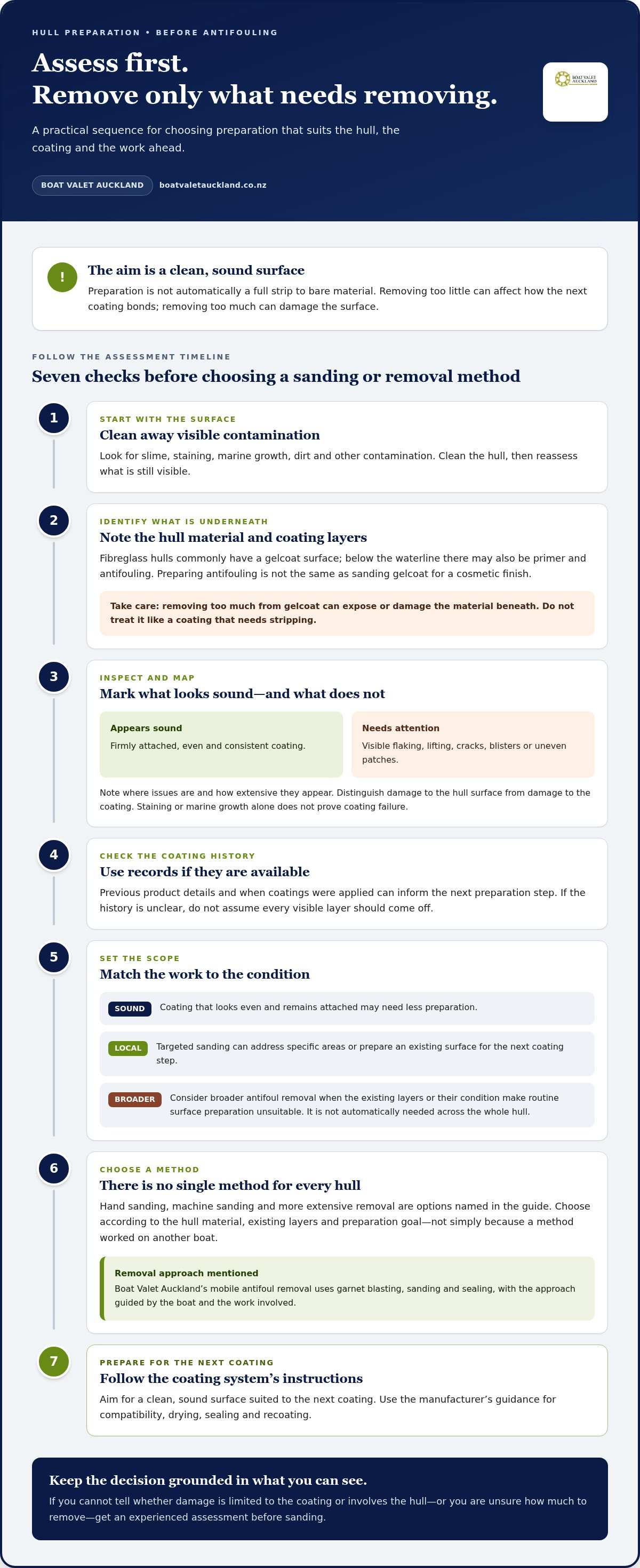
Prepare a boat hull for antifouling: a practical sequence and safety checklist
A reliable preparation routine depends on the hull’s material, visible condition and existing coating. Follow the coating manufacturer’s instructions throughout, particularly for compatible surfaces, drying, sealing and recoating. The steps below help organise the work without assuming every hull needs the same treatment.
What should happen before sanding begins?
Start with a clear view of the surface. Remove dirt and visible contamination, then note loose coating, damage or unevenness. Don’t sand over contamination or damage you haven’t assessed. Identify the substrate and record previous coating details where possible. If the coating history is unknown, pause before choosing a preparation method. The aim is an informed decision, not material removal by default.
Inspect and record. Photograph the hull and mark areas that look different. Distinguish visible coating issues from suspected damage to the hull itself.
Clean the surface. Remove surface dirt and contamination using an approach suitable for the hull and coating. Recheck the surface once it’s clean.
Assess the existing coating. Use its visible condition and any available coating records to decide whether targeted preparation or broader removal may be needed.
Prepare only as directed. Select a suitable method and abrasive for the substrate, coating and intended outcome. Follow the coating maker’s preparation guidance.
Confirm readiness. Check that the surface meets the coating system’s requirements before moving on. Drying, sealing and application steps depend on that system’s instructions.
How can owners prepare for a safe, tidy job?
Plan dust control, debris containment and suitable personal protective equipment before work starts. New Zealand guidance identifies antifouling sanding as work for a Controlled Work Area, with dust and other waste contained, collected and disposed of appropriately. Dry sanding antifouling isn’t permitted; wet sanding or a vacuum-integrated sander must be used. Follow the product safety information and the worksite’s requirements.
Set up the work area to contain dust, removed coating and washings.
Use protective equipment suited to the task and the coating’s safety information.
Have collection and clean-up arrangements ready before sanding begins.
Follow site-specific directions for maintenance work and waste handling.
Coating choice and preparation go together. The Marine Antifouling Auckland hull protection guide provides further context on the next coating stage. For a condition-led approach, arrange a hull-preparation consultation with Boat Valet Auckland. Its mobile team carries out antifoul removal and antifouling at marinas and private properties across greater Auckland.
Arrange mobile boat hull sanding and preparation across Auckland
Hull work doesn’t have to mean moving your boat to a different location for every stage. Boat Valet Auckland brings marine grooming and antifouling to marinas and private properties across greater Auckland. Hobsonville Marina is the primary hub, and the mobile service also works at locations such as Westhaven.
This mobile approach helps owners plan around where their vessel is kept. Preparation remains condition-led: the visible surface, coating history and requested work shape the scope. Antifoul Removal may involve garnet blasting, sanding and sealing, but not every hull needs complete removal or the same process. The broader mobile boat grooming Auckland resource explains more about arranging on-site care for a vessel.
What information helps plan hull preparation?
A few practical details make an initial conversation more useful. Share the vessel’s approximate size, location, what you can see on the hull and any coating information you have. Photos of flaking, uneven patches or other areas of concern can also help describe the work. An assessment will establish the appropriate scope.
Vessel size and current location, such as a marina or private property.
Visible hull condition, including areas that appear loose, damaged or heavily coated.
Known details of previous antifouling or other coatings.
The work you’re considering, such as preparation for antifouling or broader antifoul removal.
These details don’t lock the job into a set method. The work is tailored after assessing the boat and what you want done. That matters when coating layers are unclear or the hull’s condition suggests that more than routine surface preparation may be needed.
What to expect from an Auckland mobile service
Work at a marina or private property needs to be planned around the vessel’s location and the site’s requirements. Share relevant access or maintenance information so the work can be organised appropriately. Boat Valet Auckland provides a mobile service across greater Auckland’s boating locations. Owner Steve Kellie has operated the business since 1998, bringing a personal, experienced approach to each assessment.
For boats hauled out at Hobsonville Marina, Boat Valet Auckland contributes 10% towards haul-out fees. This contribution applies at Hobsonville Marina and is separate from preparation or antifouling costs.
If you’re considering boat hull sanding and preparation, arrange a free, no-obligation consultation or request a tailored quote. Book your hull-preparation consultation with Boat Valet Auckland to discuss your vessel, location and intended work.
Make your next hull-care decision with confidence
Use your next haul-out or maintenance window to make a plan for the hull before choosing a sanding method. Current photographs and any coating records you have can help start a practical conversation about preparation, removal or antifouling. It’s a useful first step towards boat hull sanding and preparation that suits your vessel, without assuming every coating layer must come off.
Ready to decide what happens next? Talk through the hull’s condition and your plans with Steve. Call Steve for a free, no-obligation hull preparation consultation. A clear assessment helps you move ahead with a considered, manageable plan.
Frequently Asked Questions
How do you prepare a boat hull for sanding?
Make sure the hull is accessible and clean enough to inspect. Remove loose equipment or belongings from the work area, and take clear photographs of visible damage or coating changes before they’re disturbed. Note the hull material and any coating records you can find. For boat hull sanding and preparation, this information helps distinguish a small maintenance task from work that needs a closer assessment.
What grit sandpaper should I use on a boat hull?
There isn’t one grit that suits every boat hull. The right abrasive depends on the hull material, the coating and whether you’re keying a surface or removing material. Check the coating manufacturer’s preparation instructions before choosing an abrasive, and avoid starting with an aggressive grade on an unfamiliar surface. If you’re unsure what the existing layer is, a small test area won’t replace an assessment of the hull and coating system.
Can I sand antifouling paint myself?
You can undertake hull maintenance yourself only if you can manage the work safely and contain its waste. Antifouling dust and debris need careful control. In New Zealand, dry sanding antifouling isn’t permitted; wet sanding or a vacuum-integrated sander must be used. Wear protective equipment suited to the coating and follow its safety information, as well as the worksite’s requirements. If you can’t provide suitable controls, leave the sanding to experienced help.
Do I need to remove all old antifouling before applying a new coat?
No, complete removal isn’t automatically needed before every new coat. If the existing antifouling appears sound, the coating maker’s instructions may allow preparation over it. Flaking, lifting or an unknown coating history can change the decision. Don’t apply a new layer simply to cover visible problems. Identify the existing system where possible and use its compatibility guidance to decide whether surface preparation or wider removal is appropriate.
Is garnet blasting suitable for every boat hull?
No, garnet blasting isn’t suitable or necessary for every hull. It’s a method used for antifoul removal, but the boat’s substrate, coating layers and condition need to inform the decision. A hull that needs limited surface preparation may not call for broad removal. Boat Valet Auckland uses garnet blasting as part of its Antifoul Removal approach, alongside sanding and sealing where appropriate. Assessment helps establish the suitable scope.
How long does boat hull sanding and preparation take?
The time required varies with the boat’s size, the hull’s condition, access and the amount of preparation or removal involved. Preparing a localised area is different from addressing extensive coating layers across the hull. Drying and recoating intervals can also affect the overall schedule, so follow the coating system’s instructions rather than relying on a sanding estimate alone. A boat-specific assessment is the best way to plan the work realistically.
Can Boat Valet Auckland prepare my boat hull at its marina berth?
Boat Valet Auckland provides mobile work at marinas and private properties across greater Auckland. The work is planned around the berth and the site’s requirements, including suitable dust and debris controls for antifouling sanding. Share your berth location and the work you’re considering so the project can be organised around the site.
Comments