
Boat Engine Room Cleaning: Expert Maintenance Tips 2026
- Steve Kellie

- Aug 1
- 12 min read
What if the most expensive asset on your vessel is currently hiding a disaster behind a thick layer of oil and salt? Most Auckland boaties admit that cleaning boat engine room areas is the job they dread most. You're likely worried about causing an electrical short in a cramped corner or struggling to handle oily bilge water while staying compliant with 2026 maritime discharge rules. It's a difficult, messy task that often feels impossible to get right without the proper gear.
I'm Steve Kellie, and since 1998, I've tackled the grimiest bilges across Westhaven and the Viaduct. I know that a spotless engine bay is more than just a luxury; it's a vital diagnostic tool. In this guide, you'll discover how to professionally clean and protect your engine room to halt corrosion, spot leaks early, and maintain your vessel's market value. We'll show you how to eliminate diesel odours and reach those impossible spaces safely. Let's turn that dark, greasy hold into a pristine workspace that makes your maintenance routine a breeze.
Table of Contents
Why Cleaning Your Boat Engine Room is Critical for Performance
Essential Preparation: Protecting Sensitive Components and Electrics
The Cleaning Process: Degreasing, Scrubbing, and Bilge Management
Post-Clean Protection: Preventing Corrosion in Saltwater Environments
Professional Detailing: Why Auckland Owners Choose Boat Valet
Why Cleaning Your Boat Engine Room is Critical for Performance
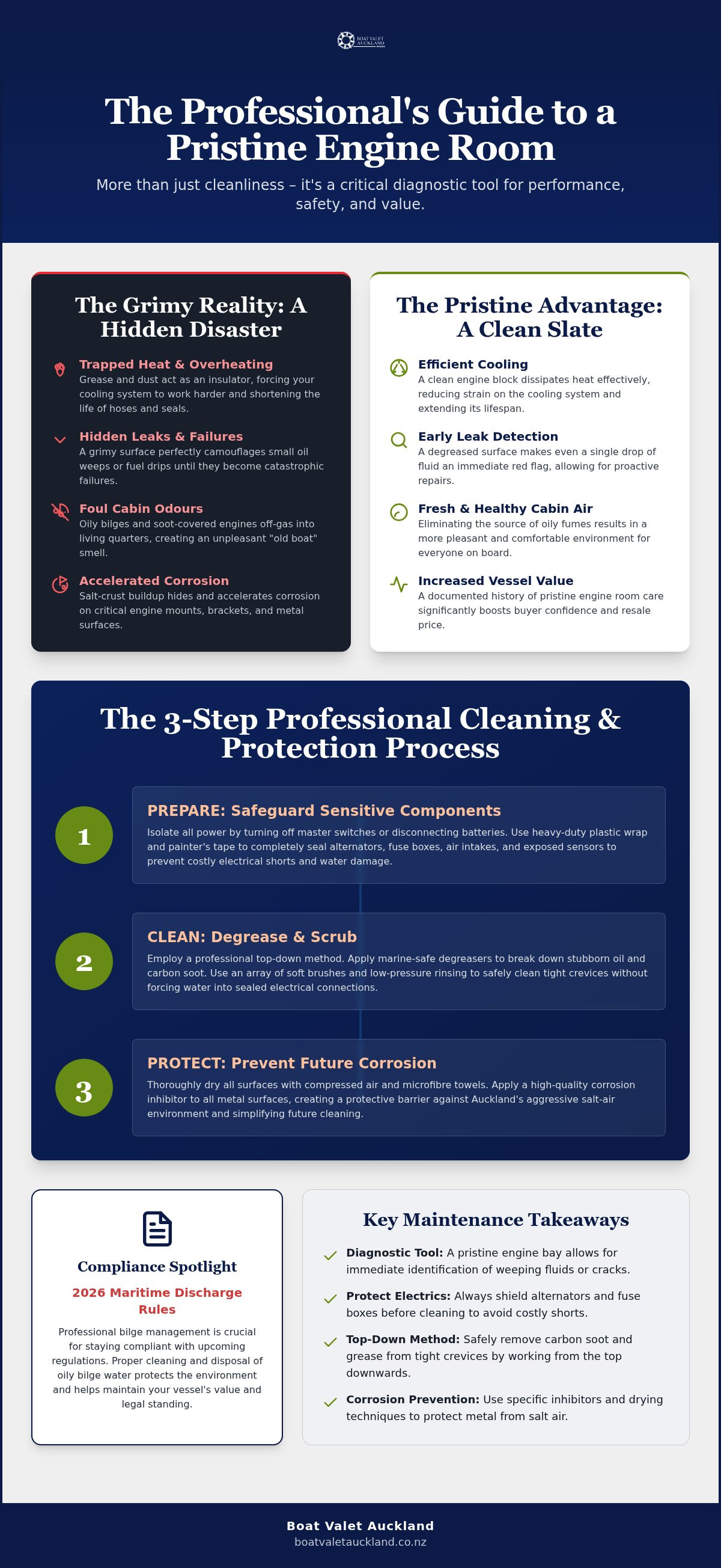
Professional engine room detailing is the methodical removal of salt spray, oil mist, and carbon soot from your machinery space. It's often overlooked in favour of a shiny hull, but cleaning boat engine room surfaces is what keeps your vessel reliable. When your engine block is caked in a cocktail of grease and dust, it acts as an insulator. This traps heat and makes your cooling system work harder than it should, potentially shortening the life of sensitive seals and hoses.
Beyond temperature control, a clean bay changes how you interact with your boat. There's a massive psychological benefit to a spotless workspace. If the area is bright and oil-free, you're far more likely to perform regular inspections. You'll actually want to get down there and check the oil levels or coolant hoses rather than dreading the mess. In the competitive Auckland resale market of 2026, a documented history of engine room care can add thousands to your final sale price. I've seen it hundreds of times at Westhaven; a buyer walks into a clean engine room and their confidence in the vessel's history immediately spikes.
The Diagnostic Advantage: Spotting Leaks Early
A grimy engine block is a master of disguise. Small oil weeps or fuel drips are virtually invisible when they blend into a background of old sludge. Once the surfaces are degreased and dried, even a single drop of fluid becomes an immediate red flag. This allows you to nip a problem in the bud before it turns into an expensive tow-home situation.
Salt-crust buildup is another silent killer. In our high-humidity Auckland environment, salt can accumulate on engine mounts and brackets, hiding structural cracks or severe corrosion. By keeping these areas clear, you ensure that a quick torch-light inspection actually reveals the truth about your boat's condition. A deep dive into understanding the boat's bilge shows that this lowest point is where all your boat's secrets collect. Engine room hygiene is the preventative maintenance cornerstone of every reliable vessel.
Improving Air Quality and Reducing Cabin Odours
That distinctive "old boat" smell isn't inevitable. It's usually the result of oily bilges and soot-covered engines off-gassing into the hull. These foul odours naturally waft into the living quarters whilst you're underway, especially when the engine room heats up and the air expands. It's enough to ruin an Auckland summer cruise for guests or family members who might already be feeling a bit green.
Eliminating these smells requires more than just a spray of air freshener. You need to remove the source of the odour. A thorough valet removes the stagnant oil and diesel residue that clings to the acoustic insulation and bulkheads. The result is a fresh-smelling cabin and a much more comfortable environment for everyone on board during those long hauls out to the Hauraki Gulf islands.
Essential Preparation: Protecting Sensitive Components and Electrics
Preparation is the fine line between a successful valet and a dead engine. Before you even think about cleaning boat engine room surfaces, you must isolate the power. Turn off the master switches or disconnect the batteries entirely. This isn't just a safety precaution for you; it protects the vessel's delicate electronics from accidental surges or shorts if moisture finds a path into a terminal. Organise your workspace by laying out a non-slip mat near the hatch. Place your soft brushes, microfibre towels, and cleaning agents within reach so you aren't constantly climbing in and out of the hold. Dropping a tool into a deep, dark bilge is a frustration you'll want to avoid.
Waterproofing the Vulnerable Parts
You need a physical barrier between your cleaning agents and the engine's "brain." Use heavy-duty plastic wrap and painters tape to seal off alternators, fuse boxes, and any exposed sensors. Painters tape is preferable to duct tape as it won't leave a sticky residue on your components once removed. Don't forget the air intake; moisture ingestion here can lead to catastrophic internal engine damage. While some amateur guides suggest using a high-pressure washer, this is dangerous advice for modern marine engines. High pressure forces water past weather-tight seals and directly into wiring harnesses. Stick to low-pressure rinsing or damp microfibres for a safer result. Following a professional checklist for expert engine room cleaning ensures you don't miss these critical shielding steps before the water starts flowing.
Choosing the Right Marine Degreasers
Not all cleaners are created equal, and the wrong choice can cause more harm than good. Solvent-based degreasers are heavy hitters for thick, baked-on sludge, but they can be aggressive on certain finishes. For most maintenance jobs in Auckland's marinas, a high-quality citrus-based marine degreaser is the smarter choice. It's effective on carbon soot and oil whilst being far kinder to the environment and your own lungs. Avoid harsh household chemicals like bleach or ammonia at all costs. These substances can dry out and degrade rubber hoses and plastic fittings, leading to premature failure and leaks. Ensure your chosen product is specifically labelled as safe for aluminium and painted surfaces to prevent permanent etching or dulling of the engine's finish. If the technical nature of these preparations feels overwhelming, you can always book a professional engine room valet to ensure the job is done safely and correctly.
The Cleaning Process: Degreasing, Scrubbing, and Bilge Management
When you begin the actual task of cleaning boat engine room surfaces, always follow the rule of gravity. Start at the top of the engine and work your way down. This ensures that as the degreaser breaks down carbon soot and oil, it flows toward the bilge rather than over already-cleaned surfaces. Apply your marine-grade degreaser liberally to the upper components, allowing it to dwell for five to ten minutes. Don't let it dry completely; you want the chemicals to remain active whilst you prepare to scrub. If you're working in a tight Auckland marina berth, ensure you have adequate ventilation to manage any fumes from the cleaning agents.
Once the degreaser has had time to penetrate the grime, use soft-bristled brushes to agitate the stubborn areas. Focus on the crevices where oil tends to pool, such as around bolt heads and gasket lines. After scrubbing, rinse the surfaces with a gentle mist of fresh water. Never use a heavy stream or high-pressure hose. You want just enough water to carry away the emulsified oil without forcing moisture into sealed connectors or pooling in areas that are difficult to dry. It's a precise job that requires patience and a steady hand to get right.
Step-by-Step Engine Scrubbing
Concentrate your efforts on the "hot spots" where heat and oil often collide. Rocker covers, heat exchangers, and the areas around oil filters are prime candidates for carbon buildup. Whilst you're scrubbing, take the opportunity to inspect the engine mounts. Look for signs of rust amongst the bolts or any perishing of the rubber vibration dampeners. Clean the pipework and hoses thoroughly; removing the film of oil allows you to feel for soft spots or see chafing marks that could lead to a burst hose in the middle of the Hauraki Gulf. This methodical approach turns a simple clean into a comprehensive visual health check.
Environmental Compliance: Bilge Water and Oil Disposal
Auckland's marine environment is precious, and the 2026 regulations regarding bilge discharge are incredibly strict. It's illegal to pump oily water directly into our marinas. Before you begin rinsing the engine, place oil-absorbent "pigs" or pads in the bilge. These specialised products are designed to capture hydrocarbons whilst repelling water, ensuring that the liquid at the bottom of your boat remains clear.
Managing waste is just as important as the clean itself. Follow these steps to stay compliant:
Capture: Use absorbent pads to soak up any floating oil before the water level rises.
Contain: Place all contaminated rags, brushes, and used "pigs" into heavy-duty, leak-proof bags.
Dispose: Never throw oily waste into standard marina bins. Use the designated hazardous waste facilities found at major hubs like Westhaven or the Viaduct.
Verify: Ensure your bilge pump is switched to manual during the process to prevent accidental discharge of grey water.
By following these steps, you protect both your vessel's machinery and the local ecosystem. A clean bilge is the final signature of a professional cleaning boat engine room project, making it easy to spot any new leaks the moment they occur.
Post-Clean Protection: Preventing Corrosion in Saltwater Environments
A clean engine room is a vulnerable engine room. Once you've finished cleaning boat engine room components, you've stripped away not just the grime, but also any residual oily film that might have been providing a meagre barrier against Auckland's aggressive salt air. Immediate drying is essential to prevent flash rusting. I always recommend using a high-powered leaf blower to blast water out of recessed bolt holes, cooling fins, and electrical connectors where a towel simply can't reach. Follow this with a thorough wipe-down using fresh microfibre towels. Leaving even a small amount of moisture to evaporate naturally in the humid Hauraki Gulf environment is an invitation for corrosion to take hold before you've even left the marina.
After the surfaces are bone-dry, you must apply a layer of protection. Dress your rubber hoses and plastic covers with a high-quality UV protectant to prevent them from becoming brittle and cracking over time. This is also the moment to re-lubricate any throttle linkages, hinges, or gear selectors. The degreasing process often strips away the specialised grease these moving parts need to operate smoothly. A quick application of marine-grade lithium grease ensures everything remains responsive when you're manoeuvring in tight berths at the Viaduct.
Applying Rust Inhibitors and Protective Coatings
Apply corrosion inhibitors to every exposed metal surface, focusing on the areas most prone to "sweating" in Auckland's temperature shifts. For electrical terminals and multi-plugs, a lanolin-based spray or a specialised marine dielectric grease provides a long-lasting barrier against moisture. Be selective with your dressings. Choose "dry" silicones or polymer-based protectants for the main engine block and components. Avoid sticky, oil-based dressings; these act like a magnet for dust and carbon soot, which will undo your hard work within weeks. Ceramic coatings can simplify future cleaning by creating a hydrophobic layer that prevents oil and salt from bonding to the engine block in the first place.
Inspecting Hoses and Belts After Cleaning
The post-clean phase is the best time for a final inspection because the sludge is no longer masking potential failures. With the surfaces pristine, you can finally see the true state of your hardware. Look closely at your hose clamps for "tea staining"-that light brown discolouration that signals early pitting corrosion. If left unchecked, these clamps can snap under the pressure of a cooling cycle. Check your drive belts for any accidental degreaser residue. If they feel slick or greasy, wipe them down with a clean, dry cloth to prevent slipping whilst you're powering through a swell. If the thought of detailing every bolt and wire seems daunting, book a professional engine room valet to ensure your vessel is fully protected against the elements.
Professional Detailing: Why Auckland Owners Choose Boat Valet
Cleaning boat engine room spaces is a job most owners would rather avoid. It's cramped, dirty, and requires a level of precision that's hard to achieve on your own. This is where Boat Valet Auckland steps in. Steve Kellie has been operating since 1998, which means he's spent over 25 years navigating the tightest, grimiest bilges in the city. He understands that your engine room is the heart of your vessel. When you hire a professional, you aren't just paying for a clean; you're investing in a specialist who knows exactly where salt hides and how to protect your high-value assets.
We provide more than just a quick wipe-down. Our marine detailing services nz offer a total preservation strategy for your boat. If you're preparing for a survey or looking to move your vessel on the market, our pre-sale boat grooming nz service ensures that the first thing a buyer sees is a meticulously maintained engine bay. A spotless engine room is the strongest evidence of a well-cared-for boat. It often makes the difference in a final sale price when buyers are comparing vessels in a competitive 2026 market.
Mobile Service Across Greater Auckland Marinas
We bring the expertise directly to your berth. Whether you're at Westhaven, the Viaduct, Orakei, or Half Moon Bay, our mobile unit is fully equipped for the task. We use professional-grade degreasers and high-capacity drying tools that most DIY owners don't have in their lockers. Most importantly, we handle the eco-friendly waste management. We ensure all oily residues and contaminated waste are disposed of at designated facilities, keeping you on the right side of 2026 environmental regulations. You get the peace of mind that comes from a professional, insured specialist who treats your boat like his own.
Custom Maintenance Packages
Every vessel has unique needs. We tailor our approach based on your specific engine type, whether you're running twin inboards or a modern high-horsepower outboard. We often combine engine detailing with stainless steel polishing to give your entire mechanical space a "shmick" finish that truly stands out. It's about aesthetic pride as much as it is about function. Contact Steve Kellie today for a direct consultation. Let's discuss a plan to get your engine room back to showroom condition and keep it there. We'll handle the dirty work so you can focus on enjoying the water.
Secure Your Vessel’s Performance and Resale Value
A pristine engine bay is the hallmark of a well-maintained vessel. It transforms a dark, greasy hold into a functional workspace where you can spot mechanical issues before they become expensive failures. By prioritising the systematic cleaning boat engine room process, you protect your investment against the harsh salt air of the Hauraki Gulf and ensure your cabin remains free from foul diesel odours. Whether you're prepping for a survey or simply staying on top of seasonal maintenance, the diagnostic and aesthetic benefits are undeniable.
Handling oily bilges and sensitive electrical components requires a specialist touch. Steve Kellie has provided expert care as a dedicated owner-operator since 1998, bringing professional-grade equipment directly to your berth. We offer a convenient mobile service at all Auckland marinas, from Westhaven to Half Moon Bay, ensuring your high-end asset is in safe hands. Book a Professional Engine Room Detail with Steve Kellie to experience the difference that 25 years of local expertise makes. Let’s get your engine room back to showroom condition so you can head out on the water with total confidence.
Frequently Asked Questions
Is it safe to use a pressure washer in my boat engine room?
No, it is generally unsafe to use a pressure washer in the engine bay. High-pressure water can force moisture past weather-tight seals and directly into sensitive wiring harnesses or sensors. This often leads to immediate electrical shorts or long-term corrosion within the plugs. Stick to a gentle mist from a garden hose or use damp microfibre towels for a much safer result.
What is the best degreaser for marine engines that won’t damage rubber?
A high-quality, citrus-based marine degreaser is the best option for protecting your vessel's rubber hoses and seals. Unlike harsh household chemicals or solvent-heavy cleaners, citrus-based products are effective on carbon soot whilst remaining gentle on plastic and rubber fittings. Always ensure the product is labelled as safe for aluminium to prevent etching on the engine block.
How often should I have my boat engine room professionally cleaned?
Most Auckland boaties should schedule a professional clean once a year or immediately following any major mechanical repairs. Regular cleaning boat engine room sessions prevent salt-crust buildup and ensure that small oil weeps don't turn into major failures. If you start noticing persistent diesel smells in the cabin, it is time to book a deep valet.
Can I pump my bilge water directly into the marina after cleaning?
No, it is illegal to discharge untreated, oily bilge water into New Zealand marinas under 2026 maritime regulations. You must use oil-absorbent pads or "pigs" to capture hydrocarbons before any water is removed. All contaminated waste must be taken to designated hazardous waste facilities at major hubs like Westhaven or the Viaduct for proper disposal.
Will cleaning my engine room help me sell my boat faster in Auckland?
Yes, a pristine engine bay is one of the most effective ways to build buyer confidence and secure a faster sale. In the competitive Auckland market, a spotless engine room suggests a history of meticulous maintenance. It proves to potential buyers and surveyors that you haven't been hiding leaks or structural issues behind layers of old grease.
How do I protect my electrical sensors whilst cleaning the engine bay?
You should protect electrical sensors, alternators, and fuse boxes by wrapping them in heavy-duty plastic and securing them with painters tape. This creates a physical barrier against accidental splashes. Always ensure the master battery switches are turned off before you begin to prevent any risk of electrical surges whilst working near terminals.
What should I do if I find rust on my engine mounts during cleaning?
If you find rust on your engine mounts, you should treat the area immediately to prevent structural degradation. Use a wire brush to remove any loose flakes, apply a specialised rust converter, and finish with a coat of marine-grade paint. This prevents Auckland's humid salt air from further weakening the mounts that hold your engine in alignment.
Does a clean engine room actually improve the performance of my vessel?
A clean engine room improves performance by allowing for better heat dissipation and making it easier to perform critical diagnostic checks. Removing thick layers of oil and soot helps the engine surfaces shed heat more efficiently. It also ensures that you can spot a developing leak or a frayed belt instantly, preventing a catastrophic breakdown whilst you are underway.
Comments