
Stainless Steel Rust Removal for Boats in Auckland

Updated: Nov 3
The right method for stainless steel rust removal on a boat in Auckland depends on the size of the affected area and the finish you want to preserve. For a very small spot, a suitable rust treatment may be enough; a reasonably large area may need a more thorough approach, such as soda blasting. Use a method suited to stainless steel rather than assuming every rust-removal technique will leave the surface in good condition.
Rust marks can be frustrating, especially when they spoil the clean look of brightwork and fittings. The key is to deal with the deposit without damaging the metal’s surface. This guide explains how to assess the rust, choose an approach for small or larger areas, and consider drainage and ongoing care so you can make a practical decision for your boat.
Table of Contents
Stainless steel rust removal boat auckland
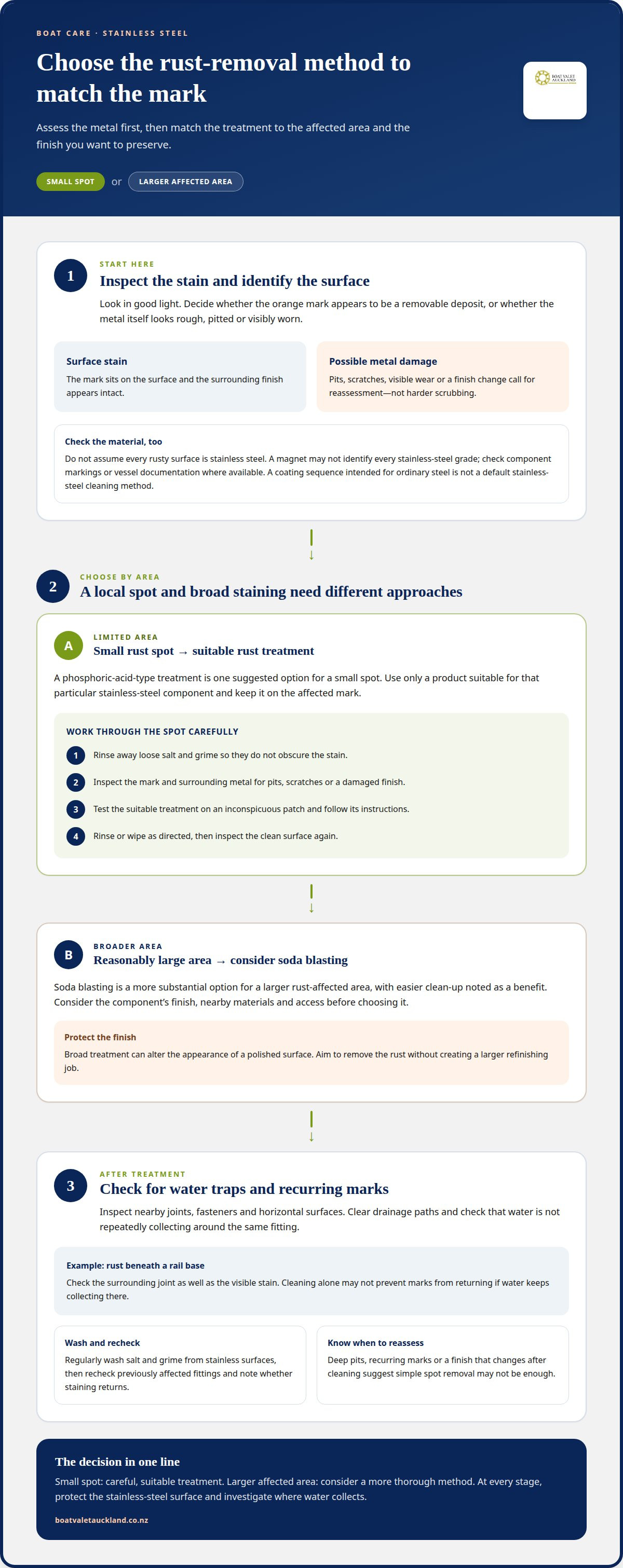
For stainless steel rust removal on a boat in Auckland, match the method to the size of the mark and the condition of the surface. A small orange spot calls for a different approach from widespread staining or deep pitting. First determine whether you’re dealing with a removable deposit or damage to the metal itself. This helps avoid unnecessary abrasion and guides the next step.
Stainless steel is corrosion-resistant, but that doesn’t mean every mark will disappear with routine washing. Ferritic stainless steels are corrosion-resistant materials, according to Brunel University. Rust-coloured staining can still appear on fittings and rails. Inspect the affected area in good light, noting whether the stain sits on the surface or whether the metal looks rough, pitted or visibly worn.
For a small rust spot, a rust treatment may be suitable. A phosphoric-acid type is one suggested option for limited areas. Follow the product instructions and test it on an inconspicuous patch first. Keep the treatment on the mark and remove residues as directed. A chemical suitable for one metal or finish may not suit every stainless-steel component.
Work methodically rather than scrubbing hard at the first sign of orange. A practical sequence for a small mark is:
Rinse away loose salt and grime so they don’t obscure the stain.
Inspect the mark and surrounding metal for pits, scratches or a damaged finish.
Use a suitable rust treatment in a discreet test area, following its directions.
Rinse or wipe the surface as directed, then inspect it again once clean.
For a reasonably large rust-affected area, soda blasting has been suggested as an option, with easier clean-up noted as a benefit. It is a more substantial treatment than spot cleaning. Consider the component’s finish, nearby materials and access before choosing it. Broad treatment can alter the appearance of a polished surface, so the goal should be removing the rust without creating a larger refinishing job.
Don’t assume every rusty boat surface is stainless steel. Advice for ordinary steel can involve removing rust to clean metal, then applying rust treatment, primer, undercoat and topcoat. That coating sequence is not a default method for stainless-steel cleaning. Identify the material first, especially around mixed-metal fittings, painted structures and fasteners. A magnet may not identify every stainless-steel grade, so check component markings or vessel documentation where available.
After removing a mark, inspect nearby joints, fasteners and horizontal surfaces for water traps. Check that drainage paths are clear and water is not repeatedly collecting around the same fitting. For example, a rust spot beneath a rail base warrants checking the surrounding joint as well as the visible stain. Cleaning without addressing where water collects may leave the area vulnerable to recurring marks.
Stainless steel is biologically as cleanable as glass and more cleanable than polymers, aluminium or copper, according to the National Center for Biotechnology Information. That comparison relates to cleanability, not a guarantee against rust or staining. Regularly washing salt and grime from a boat’s stainless surfaces makes new marks easier to spot. Recheck previously affected fittings after cleaning, and note whether staining returns in the same place.
Just as marine fittings require ongoing upkeep to counter harsh coastal conditions, on-shore properties such as workshops, boat sheds, and commercial facilities also benefit from routine care. For vessel owners who manage facilities across New Zealand, Service King Commercial provides comprehensive building maintenance, repair, and trade solutions.
Choose treatment according to the result you need. A localised spot may call for careful treatment, while broader staining may need a more extensive process. Deep pits, recurring marks or a finish that changes after cleaning suggest that simple spot removal may not be enough. Assess the metal’s condition and nearby drainage before deciding whether further surface work is appropriate.
For a very small rust spot, some boat owners recommend a rust treatment, often one with phosphoric acid. Treat this as an option for a limited area, not a reason to apply the same product across an entire rail or fitting. Check that the treatment suits the particular stainless-steel component and keep it confined to the affected area. If the mark remains, or the surface is pitted or visibly worn, reassess the metal instead of scrubbing more aggressively.
Boat Valet Auckland: Boat Cut and Polish
Boat Valet Auckland’s Boat Cut and Polish is a natural next step if rust removal has you considering a wider refresh of your boat’s exterior. It improves the broader presentation of the boat, rather than replacing careful treatment of rust on stainless-steel fittings. Consider it when the hull and exterior surfaces also need attention or you want to combine grooming jobs.
Depending on your boat’s needs, Antifouling, Teak Restoration or Interior Detailing may also be relevant. Each service addresses a different part of vessel care, so choose according to the areas you want maintained. Teak concerns call for teak care, while a tired cabin may benefit from interior detailing.
Contact Boat Valet Auckland to discuss the care your boat needs.
Plan your boat’s next maintenance step
Effective stainless steel rust removal on boats in Auckland starts with choosing a method suited to the mark and surface. If staining persists or the finish needs attention beyond the affected fitting, consider the vessel’s wider grooming needs. Boat Valet Auckland provides Boat Cut and Polish, Antifouling and Teak Restoration. Get in touch to discuss the work that suits your boat’s condition and priorities.
Taking a considered approach helps you keep maintenance focused, rather than treating every surface the same way. For a practical conversation about your boat’s grooming needs, contact Boat Valet Auckland today. Take the next step towards a cleaner, well-cared-for boat.
Comments