
Signs Your Antifoul Is Failing: Paint and Boat Clues

A clean-looking boat can still show signs your antifoul is failing. Flaking or chalky paint, bare patches, colour changes, slime or marine growth below the waterline can all point to reduced protection. Slower handling or higher fuel use may also signal that hull growth is creating drag.
It’s easy to assume antifouling needs attention only when the hull is visibly covered in growth. But wear can develop unevenly, and performance may change before the problem is obvious. This guide explains what to look for in the paint, how to recognise early and more established fouling, and why changes on the water matter. You’ll also learn how a hull inspection can distinguish localised wear from the need for broader antifouling work.
Table of Contents
1. Flaking, chalky, or worn antifouling paint
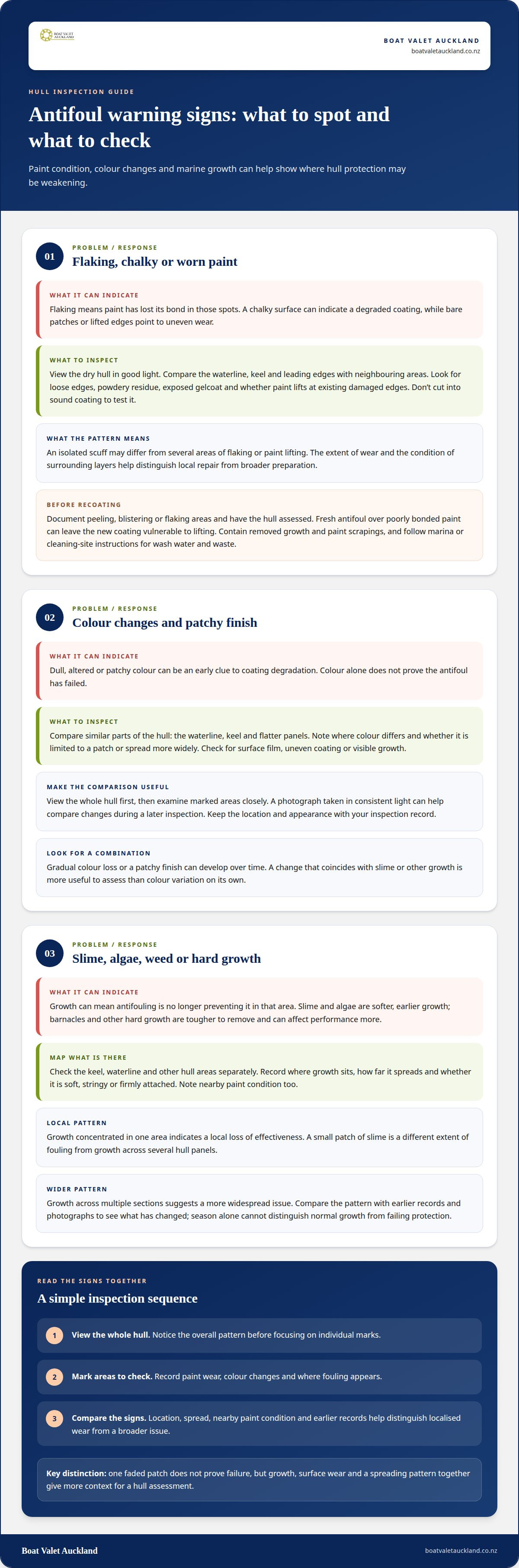
Inspect the dry hull in good light, looking for loose edges, powdery residue and patches where the coating has worn away. Compare areas around the waterline, keel and leading edges, where wear can differ from the rest of the hull. Check adhesion at existing damaged edges to see whether paint lifts or flakes. Avoid cutting into sound coating to test it. A close visual inspection can also show whether bare gelcoat is exposed or protection remains on neighbouring areas.
Flaking paint has lost its bond in those spots, while a chalky surface can indicate a degraded coating. Uneven wear matters too: one bare patch may need attention even when most of the hull still looks covered. These are common signs your antifoul is failing, but they don’t automatically mean every painted area needs the same treatment. The extent of wear and the condition of surrounding layers help determine the work involved.
If antifoul is peeling, blistering or flaking, document the affected areas and have the hull assessed before recoating. Loose or poorly bonded paint needs attention; applying fresh antifoul over failing layers can leave the new coating vulnerable to lifting. An inspection helps establish whether worn patches need local repair or broader preparation.
For New Zealand biosecurity, prevent hull growth and cleaning debris from being carried between locations. Contain removed growth and paint scrapings, and follow the marina or cleaning site’s instructions for handling wash water and waste. This helps stop dislodged organisms and debris spreading during hull work.
Act on the pattern, not just the size of one mark. Several areas of flaking, bare gelcoat or paint lifting at the edges, for example, point to a wider adhesion concern than an isolated scuff. A careful assessment can distinguish local damage from coating that has worn unevenly across the hull.
2. Paint discoloration and degradation
A change in antifouling colour can be an early clue, especially when it appears with slime. A once-even hull, for example, may show dull or altered patches below the waterline. Colour alone doesn’t prove the coating has failed, but it can help identify areas needing closer inspection. Note where the change appears and whether it’s confined to a distinct patch or spread across a larger section.
Compare similar parts of the hull rather than judging one area in isolation. Look along the waterline, around the keel and across the flatter hull panels. If one section looks noticeably different from the surrounding paint, record its position and appearance. A clear photograph taken in consistent light can make changes easier to compare during a later inspection.
Antifouling wears down gradually, so degradation may show as a gradual loss of colour or a patchy finish rather than a sudden change. Check whether the coating looks different across exposed and sheltered areas, and whether the change coincides with slime or other surface growth. This combination is more useful than colour variation alone when judging whether protection may be weakening.
Follow a simple inspection sequence: view the whole hull, note colour changes, then examine each marked area closely. Look for a surface film, uneven coating or visible growth. Don’t treat every faded patch as proof that the paint has stopped working. The location, pattern and presence of fouling all help clarify what the appearance means.
Keep those observations together, including photographs and the areas where colour differs. This creates a practical record for the next hull inspection and helps distinguish a new change from an older mark. If a patch has also developed slime, arrange a closer review of the hull paint condition before deciding what preparation or coating work is appropriate.
Antifouling paint helps prevent marine growth on a vessel's hull, so visible barnacles, algae, or other marine organisms on a boat hull are signs of antifouling paint failure. Uneven areas where antifouling paint has worn off more quickly than elsewhere are also a sign of paint failure. Check whether antifouling paint has worn away completely or whether some areas retain protection. If it appears to be failing to protect the boat, take prompt action. Sand the hull to remove remaining paint and smooth the surface.
3. Algae, weed, or slime below the waterline
A slimy film, algae or weed on the hull can indicate that antifouling is no longer preventing growth in that area. Seasonal conditions can influence what appears, but season alone can’t distinguish normal growth from failing protection. Compare the location and spread of growth with the surrounding hull and earlier inspection records.
Start by noting where the fouling sits. A small patch of slime on one section differs from weed spread across several hull panels. Check the keel, waterline and other areas separately, then record whether growth is soft, stringy or firmly attached. These details show how far fouling extends and help track whether it’s increasing between inspections.
Slime and algae are early, softer growth. Barnacles and other hard growth are more difficult to remove and can affect performance more. A thin film across one panel, for example, suggests a different level of fouling from barnacles attached around the keel. Both indicate that protection has stopped working where growth is present, even if the rest of the hull looks clear.
To judge whether fouling is seasonal or points to broader coating failure, consider its pattern alongside the paint’s condition. Growth concentrated in one area indicates a local loss of effectiveness; growth across multiple sections suggests a more widespread issue. Compare those observations with earlier hull records, including photographs, to see what has changed. A single inspection shows where growth is now, while a record helps reveal how it has spread over time.
Don’t judge the whole hull by one patch. Map the affected areas, note the type of growth and look for changes in nearby paint. This gives a clearer picture of whether the problem is local or widespread, and helps determine how much of the hull needs attention. Hard growth deserves particular attention because it’s tougher to remove than slime or algae.
4. Sluggish handling and increased fuel use
A fouled hull creates drag, which can make a boat feel slower to respond. You may notice it takes longer to reach its usual pace or feels less responsive when manoeuvring. Extra resistance can also increase fuel use. These changes can develop gradually, so compare the boat’s behaviour with its usual performance rather than waiting for a dramatic difference.
Look for a pattern across comparable trips. Note how the boat responds under similar load and conditions, and whether fuel use has changed alongside slower acceleration. One trip can’t show the whole picture, but repeated changes combined with visible hull growth point to a performance issue worth investigating.
The risks of sailing with ineffective antifouling include increasing hull growth, added drag, slower response and higher fuel use. Barnacles and other hard growth can affect performance more than slime or algae alone, so note the type and location of fouling during an inspection.
Antifouling wears down gradually, and performance can decline before the coating looks obviously damaged. Handling and fuel use are useful clues, but they don’t replace examining the hull. Compare your trip notes with the condition of the underwater surface; growth concentrated on one section may help explain a change you’ve noticed.
Record the route, load, handling changes and fuel use for comparable outings. Then pair those notes with a hull inspection to assess whether fouling may be adding resistance. If performance changes accompany marine growth, arrange professional antifouling care to address the hull’s protection and condition.
Because antifouling wears down gradually rather than failing overnight, a change in performance can be an early reason to check the hull, even when the coating doesn’t look obviously damaged. Don’t rely on visible failure as the only sign that protection may have declined. Consider performance changes alongside the hull’s condition, rather than relying on either clue alone.
If the boat seems to respond differently or use more fuel, keep tracking those changes and arrange an inspection of the underwater surface. A gradual decline is easy to overlook when each outing feels only slightly different from the last. Reviewing comparable trips alongside the coating’s condition can help identify a developing problem and guide decisions about antifouling care.
Boat Valet Auckland: Antifouling
Boat Valet Auckland provides antifouling for owners who have spotted worn paint, marine growth or changes in boat performance. These clues can help show when the hull needs assessment and fresh antifouling work.
The right next step depends on the coating’s condition and how widely it has worn. An inspection can establish whether preparation and reapplication are needed across the hull or whether attention can focus on affected areas. Antifouling work helps restore protection against marine growth.
If you’ve noticed these changes on your boat, contact Boat Valet Auckland to discuss antifouling.
Plan your next step for the hull
The signs your antifoul is failing can help you decide when to arrange a closer hull assessment. Explain what you’ve observed so you can discuss the appropriate preparation and antifouling work. A clear plan makes it easier to address the hull before the next outing, rather than waiting until performance or growth becomes more troublesome.
Boat Valet Auckland provides mobile antifouling for boats needing attention below the waterline, across Auckland. The team can also provide Boat Cut and Polish and Teak Restoration for other parts of the vessel. Choose the work that matches your priorities, whether that’s hull protection or refreshing visible surfaces.
Take the next step at a pace that suits your maintenance plans. Contact Boat Valet Auckland today to discuss your boat’s antifouling needs and move forward with a clear plan for its care.
Frequently Asked Questions
What are the signs that antifouling paint is failing on a boat?
Look for coating that has lifted or worn unevenly, altered colour, growth below the waterline, or a boat that feels slower and uses more fuel. Judge these clues together rather than by appearance alone. Compare the hull with photographs taken after its last haul-out, for example, and note whether the same patches have changed. This record helps distinguish new deterioration from older marks.
How much marine growth on a hull indicates antifoul failure?
There’s no single amount of growth that defines failure. Even a small patch of attached growth indicates that antifoul isn’t preventing fouling in that spot. Record whether it’s slime, weed or barnacles, and where it appears. A few barnacles in one area and soft growth across a wider section are different patterns, but both help show which parts of the hull need assessment.
How long should antifouling paint last in New Zealand waters?
Normal antifoul treatments are estimated to last around one to two years.
Comments