
Removing Old Antifoul Paint in Auckland: What Boat Owners Need to Know

Updated: 3 days ago
Does every tired-looking hull need to be stripped back to bare material? Not necessarily. When removing old antifoul paint Auckland boat owners need to weigh the coating’s condition against the hull material and the preparation needed for a sound recoat. A failing, flaking or heavily built-up surface may call for removal; a stable coating may only need preparation.
It’s reasonable to worry about damaging gelcoat or timber, and about where paint dust and scrapings end up. Antifoul residue needs careful containment, and the rules of the Auckland marina or hardstand where the work is done matter too. Choosing a method by habit can create avoidable risks. Start by assessing the coating and the surface beneath it.
This guide explains when removal may be appropriate, how scraping, sanding, chemical stripping and abrasive blasting differ, and what to consider before recoating. It also covers substrate protection and responsible waste handling, so you can make a more informed decision and plan antifouling maintenance for your boat in Auckland.
Table of Contents
Removing old antifoul paint in Auckland: when is stripping necessary?
How antifoul paint removal methods affect different hull materials
Strip, overcoat or spot-prepare: choosing the right antifoul option
Planning antifoul removal at an Auckland marina or hardstand
Arrange professional antifouling preparation with Boat Valet Auckland
Removing old antifoul paint in Auckland: when is stripping necessary?
Antifoul removal means taking away some or all of the existing antifouling coating before preparing the hull for another application. Complete stripping removes accumulated paint layers down to the underlying surface. Localised preparation deals with damaged or poorly bonded areas, while a stable coating may only need surface preparation.
There’s no single rule for every boat. The right decision depends on how firmly the paint is attached, whether it’s compatible with the planned recoat, how much has built up and what lies beneath it. Whether old antifoul needs stripping depends on the coating’s condition, compatibility and accumulated thickness, as well as the hull material.
What signs suggest old antifoul needs attention?
Look for flakes lifting at the edges, paint that comes away easily, blistering, bare patches and an uneven surface. Several thick, ridged layers can also indicate build-up that needs assessment before another coat goes on. These signs point to a preparation issue, but don’t automatically mean the entire hull must be stripped.
A visual check has limits. It may reveal surface failure, but won’t necessarily show every layer underneath or establish whether older paint is compatible with a new coating. Before haul-out, record the hull material, any paint products or preparation work you know about, and where the coating is peeling, blistered, exposed or unusually thick. Photos can help document its condition.
Does every boat need all its antifoul removed?
No. If the paint is sound, well bonded and compatible with the planned recoat, suitable preparation may be enough. Isolated damage may call for attention to those patches rather than wholesale stripping. Spot preparation won’t, however, resolve widespread poor adhesion, incompatible layers or excessive build-up across the hull.
Antifouling paints are designed to help limit marine growth, but coatings differ in composition and use. Understanding Antifouling Paint gives a broader overview of their purpose, types and environmental impact. For the practical decision, the specific paint history matters. Note product names or labels if available, and don’t assume a new coating will bond well just because the old paint looks intact.
When considering removing old antifoul paint auckland, start with the coating and the surface beneath it, not a default preference for stripping. Fibreglass, timber and other hull materials can require different care, and removing sound paint unnecessarily can add work or risk surface damage. Assess what’s present, identify what you can about previous coatings, then choose a preparation scope suited to the hull. A careful assessment helps prepare for the next antifouling application.
How antifoul paint removal methods affect different hull materials
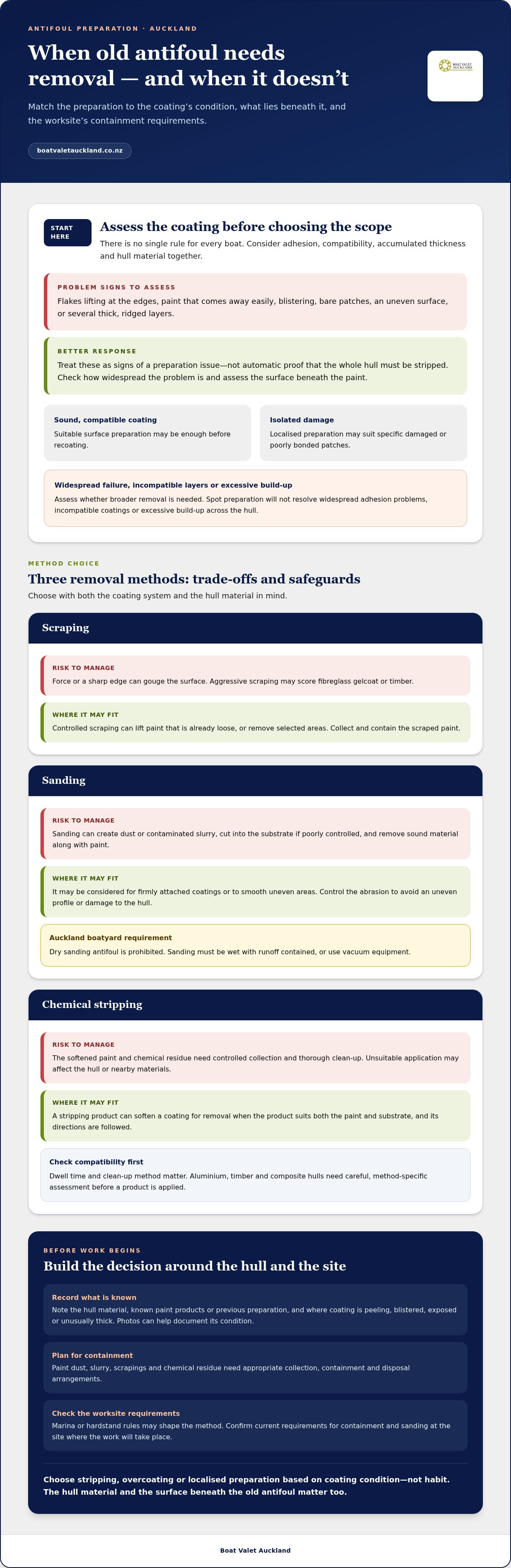
There’s no single best way to remove old antifoul. Scraping, sanding and chemical stripping affect the paint, waste and hull surface in different ways. Choose a method with both the hull material and coating system in mind. A technique that suits one surface may damage gelcoat, timber or a composite hull, so assess the coating and substrate together before work begins.
Compare the main trade-offs:
Scraping: Can lift loose or selected layers with limited airborne dust, but force or a sharp edge may gouge the surface. Scraped paint still needs to be collected and contained.
Sanding: Can reduce firmly bonded paint or smooth uneven areas, but creates dust or contaminated slurry and can cut into the substrate if poorly controlled. Auckland boatyards prohibit dry sanding antifoul; sanding must be wet with runoff contained or use vacuum equipment.
Chemical stripping: Can soften a coating for removal, but leaves residue that must be managed and cleaned away. The product, dwell time and clean-up method must suit both the paint and hull material.
Mechanical removal: scraping and sanding
Controlled scraping can be useful where paint is already lifting or removal is limited to selected areas. Sanding may be considered for firmly attached coatings or surface levelling. Neither method is risk-free: aggressive scraping can score gelcoat or timber, while sanding can create an uneven profile or remove sound material along with the paint. Dust and slurry also need appropriate containment, protective measures and disposal arrangements for the work site.
Chemical stripping and substrate compatibility
A stripping product must suit the coating and substrate and be used according to its directions. The softened paint and chemical residue still require controlled collection and thorough clean-up. Dwell time matters: too little may leave coating behind, while too much or unsuitable application may affect the hull or nearby materials. Aluminium, timber and composite hulls need careful, method-specific assessment before a product is applied.
At a New Zealand marina or hardstand, site rules may also shape the method. Confirm the current requirements for containment, sanding and waste handling before work starts, and don’t let dust, washings or scrapings enter the surrounding area. For owners planning removing old antifoul paint auckland, matching the method to the hull is central to protecting the surface and preparing for a sound recoat. Boat Valet Auckland provides professional antifouling preparation at Auckland marinas and private properties, with preparation decisions informed by the coating and hull assessment.
Strip, overcoat or spot-prepare: choosing the right antifoul option
A fresh coat doesn’t automatically mean stripping everything underneath. The key question is whether the existing layers provide a sound, compatible base for the intended coating. Use the table as a starting point, alongside an assessment of the hull and the coating manufacturer’s preparation guidance.
When might preparation and recoating be enough?
A stable coating with good adhesion may be suitable for preparation rather than complete stripping. That depends on identifying, as far as possible, the existing paint and whether it’s compatible with the intended antifoul. The manufacturer’s instructions can specify how to prepare an existing surface. Don’t take a sound appearance as proof that overcoating will work; assess the existing layers too.
Where a coating is broadly sound, preparation may involve addressing the surface condition and local defects before recoating. The appropriate scope depends on the hull as a whole, not just one clean-looking patch. A small test area can help inform an assessment, but it doesn’t establish that every layer elsewhere is bonded or compatible.
When should owners consider fuller removal?
Consider fuller removal where failure is widespread, the coating history is unclear, compatibility is in doubt or layers have built up substantially. Peeling or blistering are useful warning signs, but don’t identify the cause on their own. A local flake and broad areas of lifting, for example, may call for different scopes of work even on the same hull.
The choice isn’t simply “strip” or “paint over”. Spot preparation may suit isolated damage when the surrounding coating remains sound and compatible. It may fall short if paint is failing across a wider area or accumulated layers are affecting the surface. Assess the hull’s condition and material, the known coating system and the antifoul planned next.
For removing old antifoul paint auckland, avoid deciding on a full strip based only on the paint’s age or a few visible defects. Record what you know about previous coatings, note where they’re failing and compare that information with the intended recoat instructions. This gives you a clearer basis for choosing the preparation scope, without making complete removal an automatic part of every antifouling cycle.
Planning antifoul removal at an Auckland marina or hardstand
Good planning starts before haul-out. The work area, access to the hull and arrangements for containing paint debris can differ between a marina, hardstand and private property. Confirm the current requirements for the specific location before settling on a removal method or booking the work. Auckland Council guidance, facility rules and the paint manufacturer’s label can all inform the plan.
What to prepare before the boat comes out?
Gather what you know about previous coatings and hull work. A product name or label, application date, repair history and clear photos can help inform the preparation assessment. Record areas of peeling, exposed substrate or heavy build-up, rather than relying on memory once the boat is ashore.
Use this sequence to organise the work:
Document coating history. Collect antifoul product details, approximate application dates and records of known hull repairs.
Inspect and record. Photograph visible coating damage and note the hull material and any areas that need closer assessment.
Select the scope. Decide whether the work calls for local preparation or a broader removal assessment before recoating.
Prepare the site. Confirm access, work-area arrangements, containment expectations and waste-handling requirements with the facility or property manager.
Complete the work. Follow the agreed scope and relevant site and product instructions, then prepare the hull for the intended coating.
Coordinate haul-out access with other below-waterline maintenance. Combining jobs may help organise the work around one period ashore, but the sequence and site access need to suit the boat and facility. For private-property work, consider where the boat can be positioned and how the work area can be managed without debris or washings reaching drains or waterways.
Containment and waste handling in Auckland
Antifoul debris and washings can carry coating residues. Plan to keep them out of the surrounding ground and waterways, and establish how they’ll be collected and handled before work begins. Requirements may vary by location, so don’t assume arrangements at one hardstand apply at another. Check current Auckland Council guidance, the marina or hardstand rules, and the product label. Keep relevant containment and disposal instructions with the work plan.
A pre-haul-out check can be straightforward: coating records, hull material, photos, known repairs, intended preparation scope, access arrangements and confirmed site requirements. Having these details ready helps avoid rushed decisions once the boat is ashore.
For removing old antifoul paint auckland, a site-aware plan connects coating assessment with practical containment and access. Boat Valet Auckland provides mobile antifouling maintenance at Auckland marinas and private properties. Arrange professional antifouling preparation for your hull work.
Arrange professional antifouling preparation with Boat Valet Auckland
Choosing the right preparation starts with understanding the hull. The coating’s visible condition, the substrate beneath it and any known paint history help shape a practical plan for the intended antifoul work. Assessment can help distinguish between preparing a sound surface, addressing localised failure or considering broader removal. It also avoids assuming that one method or scope suits every boat.
Boat Valet Auckland provides mobile antifouling maintenance at Auckland marinas and private properties across greater Auckland. Established in 1998 and owner-operated by Steve Kellie, the business brings local experience to hull preparation decisions. The Auckland antifouling hull protection guide offers further context on planning a coating programme for your vessel.
What to expect from a professional preparation discussion
A useful discussion covers the hull material, visible coating condition, known paint products and application history, plus the antifoul work you’re planning. Share product labels, records and photos of peeling, exposed patches or uneven build-up. These details provide a clearer starting point for assessing the boat and coating system, rather than presuming a removal method or outcome before the hull has been assessed.
If you’re unsure about the product history, say so. Uncertainty can affect how compatibility and preparation are assessed. A professional conversation should connect what you know about the hull with what can be seen, then clarify the preparation scope before recoating is planned. This gives you a sounder basis for coordinating the work and considering site requirements.
Coordinate hull care around your Auckland haul-out
A haul-out can be a practical time to organise antifouling alongside other below-waterline maintenance. Plan the sequence with access and the facility’s arrangements in mind, and let the coating assessment inform the preparation. For broader vessel care around a maintenance visit, the mobile boat grooming Auckland resource covers related considerations.
Owners researching removing old antifoul paint auckland don’t need to arrive with a fixed decision to strip or overcoat. Bring the details you have and discuss the coating condition, hull material and intended antifoul work. Boat Valet Auckland’s mobile service supports hull planning at Auckland marinas and private properties, with preparation decisions informed by assessment rather than a one-method-fits-all approach.
Ready to plan your hull work? Discuss your antifouling project with Boat Valet Auckland.
Make your next hull-care decision with confidence
Your next step doesn’t need to be a commitment to strip the hull. Turn what you know into a clear project brief: the boat’s substrate, any coating records, visible areas of concern and where the work will take place. This gives the preparation discussion a useful starting point and helps keep the plan grounded in your boat’s needs.
If you’re weighing up removing old antifoul paint auckland, focus on making the decision before haul-out rather than rushing it once the boat is ashore. A considered assessment can help you plan the right scope, coordinate the work and approach recoating with greater clarity.
Boat Valet Auckland is an owner-operated business led by Steve Kellie, established in 1998 and providing mobile marine maintenance across greater Auckland. Discuss your antifouling project with Boat Valet Auckland and take the next step towards a well-planned hull-care project.
Frequently Asked Questions
Does all old antifoul paint need to be removed before repainting?
No. Complete removal isn’t automatically needed before every repaint. If the existing coating is firmly attached and suitable beneath the planned paint, preparation may be sufficient. Check the coating maker’s instructions and consider the hull’s condition before deciding. For removing old antifoul paint auckland, don’t base the scope on age alone: an older but sound coating and a newer failing one may call for different approaches.
Can you apply new antifoul over existing paint?
Yes, sometimes, provided the existing paint is sound and compatible with the new coating. Check both manufacturers’ preparation and recoating guidance, particularly if you know the old product name. If the paint history is uncertain, don’t assume a fresh coat will adhere just because the surface looks tidy. A small trial area may help inform preparation, but it can’t establish that every layer across the hull is suitable.
How do you remove antifoul paint from a fibreglass hull?
Choose a method only after considering the coating and the gelcoat beneath it. Scraping, sanding and chemical stripping can each affect fibreglass differently, and excessive abrasion or an unsuitable product can damage the surface. Before work, identify any repairs and check the paint and method guidance. If sanding is used in an Auckland boatyard, dry sanding is prohibited; follow the applicable site requirements for contained wet sanding or vacuum sanding.
Can antifoul paint be removed from an aluminium boat?
Yes, but the removal plan must account for the aluminium and existing coating system. Don’t assume a method or stripping product that suits a fibreglass hull will be appropriate for metal. Identify the paint if possible, review its instructions and consider the hull’s condition before choosing preparation. If the coating history is unclear, an assessment can help avoid damaging the surface or applying a new system over an unsuitable layer.
What happens if old antifoul paint is peeling?
Peeling means the affected area needs attention before repainting, because new paint applied over loose flakes may not provide a sound base. Avoid simply covering the edges with another coat. Note where paint is lifting, photograph the patches and check whether failure is local or spread across the hull. Assess the extent and cause before choosing between local preparation and a wider scope of work.
Where can antifoul paint be removed in Auckland?
Plan removal at a location with suitable access and containment, such as an appropriate hardstand or designated work area. Conditions differ between Auckland facilities and private properties, so confirm the site rules before arranging the work. Boat Valet Auckland provides mobile antifouling maintenance at Auckland marinas and private properties; the preparation plan should suit the hull and work location.
How should antifoul paint residue be handled at an Auckland marina?
Keep paint scrapings, dust, slurry and washings contained, and prevent them entering drains, soil or waterways. Before work starts, establish the marina or hardstand’s collection and waste-handling process, and check current Auckland Council guidance and product-label directions. Disposal arrangements can differ by site. Auckland boatyards prohibit dry sanding antifoul; sanding must use wet methods with contained runoff or vacuum equipment.
Comments