
How to Restore a Teak Swim Platform: Clean, Dry and Refinish

A grey teak swim platform can often be brought back with careful cleaning and the right finish. When restoring a teak swim platform, scrub gently with a soft brush along the grain, rinse with fresh water and let the wood dry completely before applying a treatment. One owner waited 24 hours before oiling, but the key is that the teak is fully dry.
Sun and salt can leave teak looking tired, so it’s understandable to want a finish that lasts. This guide explains how to clean weathered boards without roughing up the wood fibres, choose and apply a finish, and care for the platform through the boating season. You’ll also learn when removing the platform can make refinishing easier and what to consider before tackling the job. With a steady approach, you can refresh its appearance and help protect the teak from further weathering.
Table of Contents
Cleaning and scrubbing weathered teak
Inspect the boards first, then remove residue before scrubbing. Grey colour alone doesn’t mean the teak needs replacing.
Assess the teak’s conditionInspect every board in good light before choosing a treatment. Check for deep splits, loose sections, missing material and soft areas. Grey, weathered teak is often still sound and can generally be restored through cleaning and treatment. Clean it if the surface is firm but discoloured. Consider careful sanding if the teak remains rough after cleaning. Replacement is appropriate when boards are badly damaged or no longer secure.For sanding, use fine-grit paper with a sanding block and light pressure. Work along the grain, testing a small area first. Avoid aggressive power sanding, which can remove too much wood. A soft brush, fresh water and a suitable teak cleaner are the main cleaning tools.
Remove old sealer or oilApply a teak cleaner designed to lift old oil or sealer, following the label directions. Work in a manageable area so the cleaner doesn’t dry before you rinse it away. Use a soft brush to loosen residue, then rinse thoroughly with fresh water. If a visible coating remains, repeat the cleaning process rather than scraping hard or cutting into the teak.Check the surface after rinsing. Persistent glossy patches can indicate leftover finish, while uneven colour may show where another gentle pass is needed. Avoid mixing cleaning products or applying a new finish over oily residue. A clean, evenly prepared surface helps the next treatment reach the wood instead of sitting on top.
Scrub the weathered teakWet the platform and apply teak cleaner as directed. Scrub gently with a soft brush, following the grain from end to end to reduce the risk of raising or damaging the wood fibres. Use steady strokes along each board, paying attention to corners where dirt collects. Don’t use a hard-bristled brush or scrub across the grain.Rinse the whole platform thoroughly with fresh water after cleaning. Teak brightener can help counter weather-related grey colour and bring back a natural golden tone. Apply it as directed, let it work, then rinse clean. One owner’s cleaning session lasted about 45 minutes, but work to the surface condition rather than a fixed timer. Let the boards dry before deciding whether further sanding is needed.
Drying teak before applying a finish
Wear gloves and eye protection as directed on the product label. Keep wash water, cleaner and oil out of the sea: capture runoff and follow marina waste instructions.
Move the platform to a dry, sheltered, well-ventilated place. Remove pooled rinse water with a clean, absorbent cloth, then leave air able to reach the boards and their edges. Don’t apply oil while the surface feels cool, damp or patchy. Moisture can prevent even penetration and leave an uneven finish.
Check several boards, including joints and end grain, before finishing. Press a clean, dry cloth against the timber. If it picks up moisture, allow more drying time. Look for dark, damp-looking areas beside fittings and seams. Don’t judge readiness by surface colour alone. The teak must be completely dry for the treatment to penetrate and produce an even finish.
Apply marine teak oil only when the wood is dry. Follow the product label for preparation and application, working along the grain on a small section at a time. This helps you spread the oil evenly and spot missed areas. Marine teak oil penetrates the grain, helping restore natural colour and protect against drying and sun exposure. Don’t apply a heavy coat to disguise patchy preparation.
Give the oil time to soak into the wood, then wipe away excess with a clean cloth. Pooled oil can leave a sticky, uneven surface, so check board edges and seams too. Follow the label before adding another coat or returning the platform to use. One owner waited 24 hrs before oiling cleaned teak, but complete dryness matters more than copying a fixed wait.
Let the teak dry completely before applying any protective treatment. The surface may look dry while moisture remains in the wood. Waiting until it is fully dry helps the treatment penetrate more deeply and supports an even finish. Applying it too soon can leave an uneven result.
Maintaining teak through the season
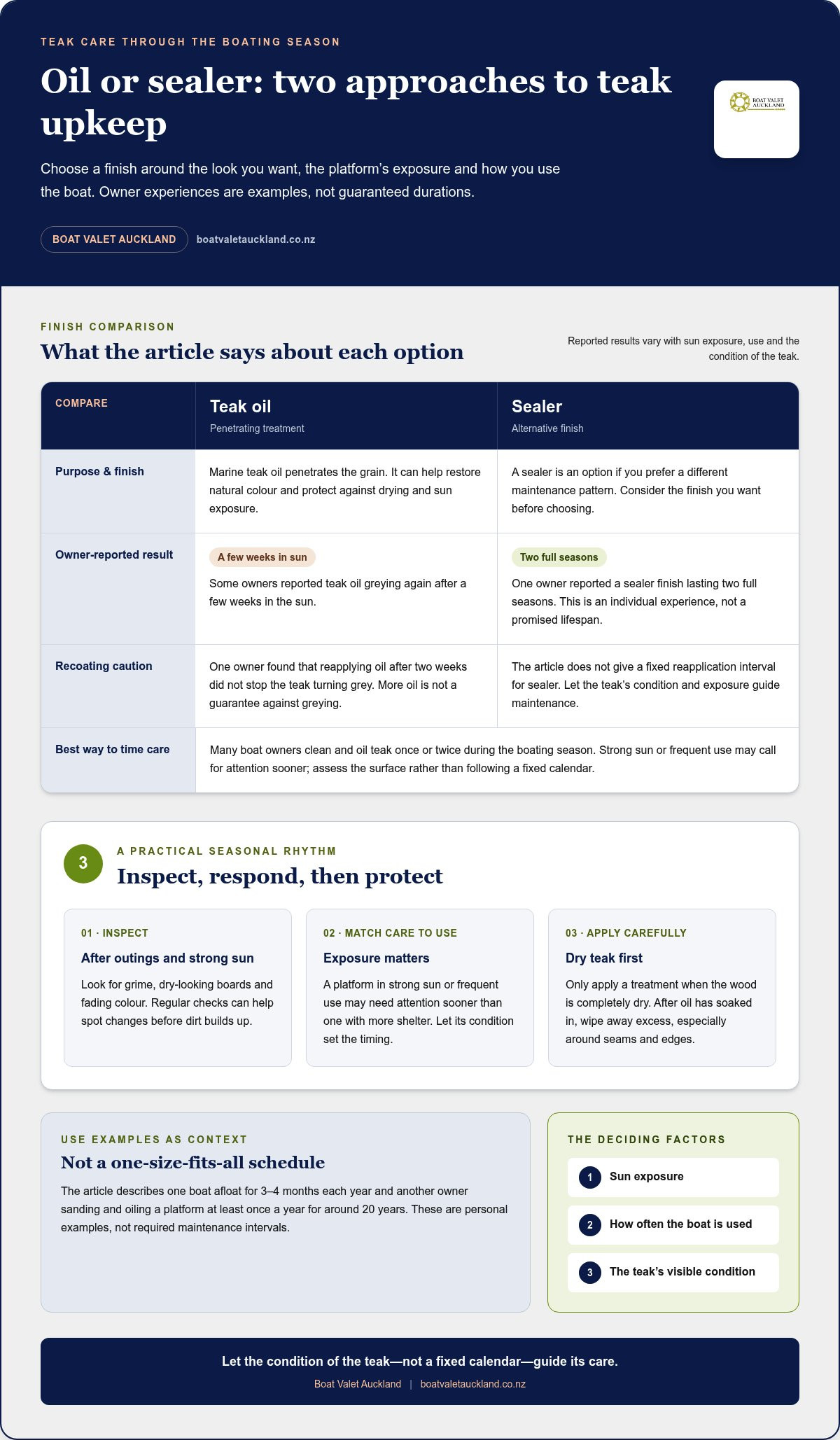
Base maintenance on sun exposure and boat use. Inspect the platform regularly, then clean or treat it when its condition calls for attention.
Check the teak after outings and periods of strong sun. Look for grime, dry-looking boards and fading colour. Light cleaning and occasional oiling can help limit heavy weathering. A brief inspection also helps you spot changes before dirt builds up or the surface becomes harder to refresh.
Plan cleaning and oiling around the platform’s exposure and use. Many boat owners clean and oil teak once or twice during the boating season. A platform in strong sun or frequent use may need attention sooner than one with more shelter. Let the surface condition guide the timing instead of following a fixed calendar.
Choose a sealer if you prefer a different maintenance pattern. Individual boat owners have reported teak oil greying again after a few weeks in the sun, while another reported a sealer finish lasting two full seasons. These experiences aren’t fixed durations. Consider the finish you want and the platform’s exposure before choosing a treatment.
Don’t rely on another coat of oil to prevent greying. One owner found that reapplying oil after two weeks didn’t stop the teak turning grey. Wipe away excess oil after it has soaked in, especially around seams and edges. Pooled residue can leave an uneven surface and collect dirt.
Account for time in the water when planning care. One platform’s boat was afloat for 3-4 months each year. Another owner described sanding and oiling a platform at least once a year for around 20 years. Use these examples as reminders to assess your own teak, not as a required schedule. Sun exposure and use remain key factors.
After using teak brightener, let it work for the time stated on the label, then rinse the surface clean. Follow the product directions and don’t leave residue behind. A clean finish makes it easier to spot fresh weathering during your next inspection.
After cleaning, a forum member recommended sealant; another reported it lasting 2 full seasons.
A forum member said reapplying teak oil after 2 weeks did not prevent greying; wipe excess after it soaks into wood.
Removing the swim platform for refinishing
Decide whether removal would give better access to the teak’s edges and underside. Photograph the platform, its mounting points and visible fittings before loosening anything. Arrange stable support on the ground or a workbench first. The platform can be heavy and awkward to handle, so plan how to lower and carry it without twisting the boards.
Identify how the platform attaches to the hull. Check each bracket, bolt and fixing point, including any visible sealant around the fittings. Use tools that fit the fasteners properly, and keep removed hardware together. Don’t lever against the teak or gelcoat. If a fixing resists, stop and check for another attachment rather than forcing it.
Repair loose, cracked or missing caulking before refinishing. Carefully remove failed material from the affected joint, then clean and dry the channel. Apply marine teak-deck caulking suited to the joint, tool it smooth and let it cure according to the manufacturer’s instructions. Keep caulking out of the grain and off surrounding surfaces.
Support the removed platform evenly before working on it. Check the underside, edges, fastener holes and board joints for damage or trapped residue. Keep sanding dust and cleaner away from fittings and the boat’s finish. Work methodically across the boards, and don’t remove sound timber simply to create a uniform colour.
Before refitting, inspect the platform and its mounting hardware again. Make sure the refinished surface and repaired caulking have cured as directed. Align the platform with its original mounting points, then secure it without forcing misaligned fittings. If the work involves extensive teak repairs, arrange help with platform refinishing before refitting.
Boat Valet Auckland: Boat Cut and Polish
Boat Valet Auckland provides Teak Restoration for owners whose swim platforms need more than routine cleaning and seasonal care. Choose this service when weathering, a worn finish or difficult-to-reach areas make refinishing a bigger job. It’s a practical option if you’ve assessed the teak and want professional help refreshing its appearance.
Boat Cut and Polish is also available for broader boat-care needs, alongside Antifouling and Interior Valet. Choose the service that matches the work required, rather than treating every maintenance issue as a teak problem. For support with your platform, visit Boat Valet Auckland.
Keep your platform ready for the water
Make a realistic maintenance plan for the season ahead. Restoring a teak swim platform starts with choosing a level of work that suits its condition and the time you have. If refinishing feels too involved, Boat Valet Auckland’s Teak Restoration can help refresh the platform.
For broader boat care, Boat Valet Auckland also offers Boat Cut and Polish and Antifouling. Choose support that fits the job, whether you’re focusing on the teak or planning other maintenance. There’s no need to turn routine upkeep into a bigger project than it is.
Discuss your platform and the work you have in mind with Boat Valet Auckland. Contact Boat Valet Auckland for help, and take the next step towards a cared-for platform.
Frequently Asked Questions
How do you restore a teak swim platform step by step?
Inspect the boards and fittings, remove any failing finish, clean the teak, then let it dry before applying your chosen treatment. If your swim platform has loose caulking, repair the joints before refinishing. Removing the platform can make its edges and underside easier to reach, but only do so if you can support it securely and refit it correctly.
What cleaners and treatments are safe for teak swim platforms?
Choose cleaners and brighteners made for teak, and follow each product’s label. Test a small, discreet area first to see how the wood responds. Use a soft brush rather than an abrasive pad, and rinse away cleaner thoroughly with fresh water. Don’t combine products or let cleaner dry on the boards, as residue can affect the finished surface.
Should teak swim platforms be oiled, sealed, or left to weather naturally?
Choose based on the appearance and upkeep you prefer. Marine teak oil helps restore the wood’s colour, while a sealer offers a different finish; one owner reported a sealer lasting two full seasons. Leaving teak untreated allows it to weather grey. Whichever option you choose, inspect the platform periodically and clean it as needed, especially after heavy use or strong sun exposure.
Comments