
Get Your Boat Ready for Labour Weekend 2026: The Ultimate Auckland Checklist

Updated: Oct 3
Picture backing down the ramp at Okahu Bay on a bluebird Friday afternoon, only to be met with dead batteries and seized steering gear while an impatient queue watches on. A successful launch demands thorough pre-season commissioning, not a hurried last-minute hose down. If you want to get your boat ready for Labour Weekend without the chaos, methodical preparation well before late October is essential.
Every Auckland boatie knows that Labour Weekend signals the true start of the Kiwi summer cruising season. You have spent winter dreaming of anchorages across the Hauraki Gulf, but months of damp weather inevitably leave behind chalky gelcoat, weathered teak, and foul running gear. Master your pre-season commissioning with our essential step-by-step checklist tailored specifically for Auckland waters. You will discover how to protect your vessel against harsh maritime UV degradation, beat marina bottlenecks, and ensure complete seaworthiness before you cast off. Here is your definitive roadmap to a reliable, stress-free long weekend on the water.
Table of Contents
Why Early Labour Weekend Boat Preparation Is Crucial in Auckland
Labour Weekend serves as the true opening bell for boating across the Hauraki Gulf. After months of winter storage, thousands of local skippers head for the water simultaneously. Auckland spring weather brings sudden shifts in wind and rain, so waiting until mid-October to check your vessel invites disaster. To get your boat ready for labour weekend, you must establish an early timeline that absorbs foul weather delays and ensures unhurried preparation.
The Reality of Auckland Marina and Hardstand Deadlines
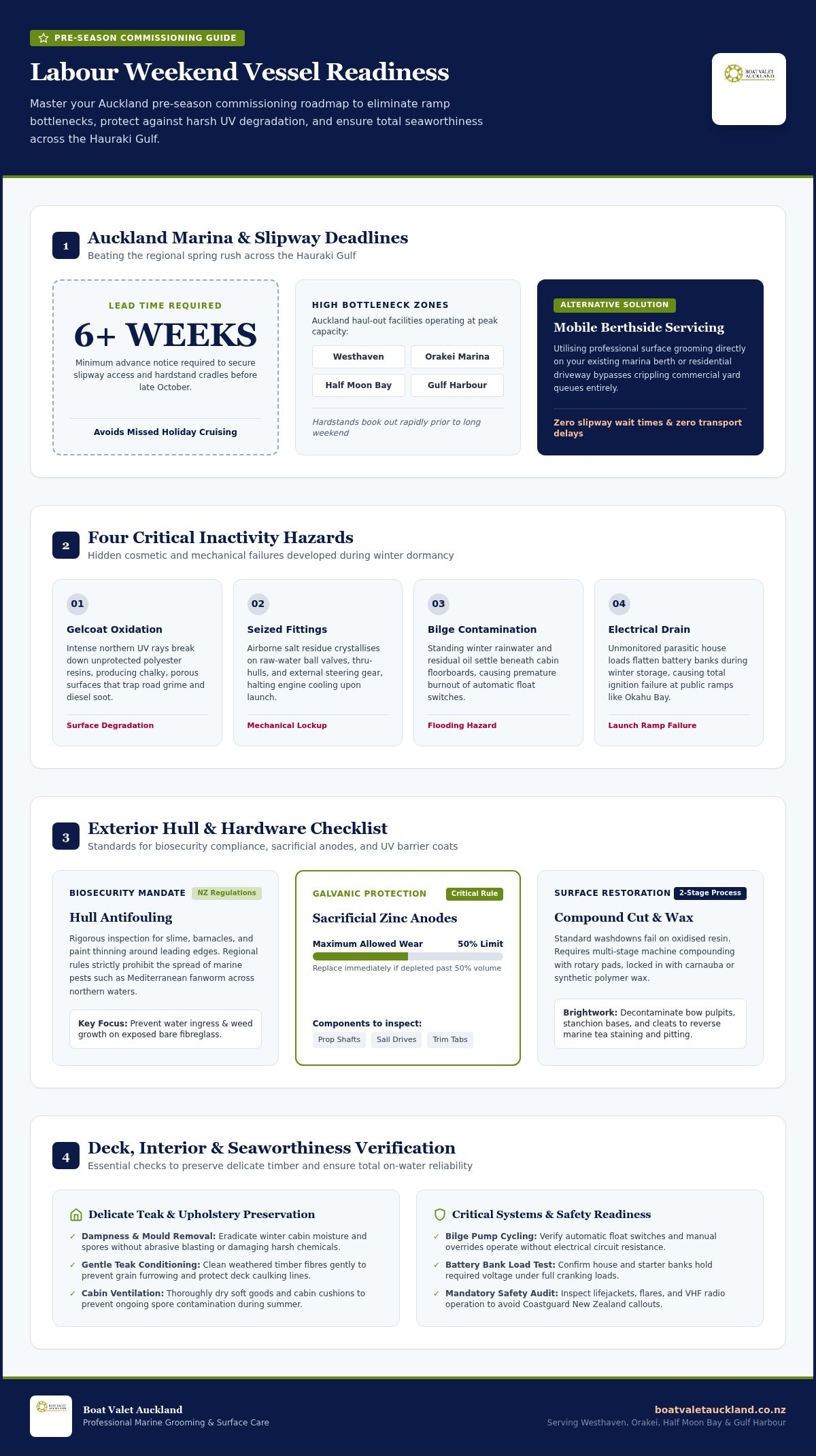
Auckland haul-out facilities experience severe bottlenecks every spring. Marina hardstands across Westhaven, Orakei Marina, Half Moon Bay, and Gulf Harbour reach maximum capacity weeks before the holiday. If you require slipway access for maintenance or underwater work, book your cradle at least six weeks in advance. Service providers book out rapidly; a late booking risks missing the long weekend entirely. Utilising mobile surface grooming directly on your existing berth or driveway helps sidestep these crippling yard queues.
De-Winterising Pitfalls: What Happens When Boats Sit Idle
Dormant vessels deteriorate silently during a cold, wet Auckland winter. Moisture trapped in enclosed cabins creates aggressive mould, while saltwater crystallisation locks seacocks and external steering components. Following a structured boat preparation and inspection guide ensures critical systems remain operational rather than failing upon launch.
Left unchecked, months of inactivity produce distinct mechanical and cosmetic failures:
Gelcoat oxidation: UV rays break down unprotected polyester resins, creating porous, chalky surfaces that attract grime.
Seized fittings: Salt residue cements ball valves and thru-hulls, preventing raw-water engine cooling.
Contaminated bilges: Standing rainwater and oil mix beneath floorboards, risking automatic pump burnouts.
Electrical drain: Parasitic loads flatten unmonitored battery banks, leaving you stranded on the ramp.
Diligence now keeps you off the VHF calling Coastguard New Zealand for an avoidable tow. Begin de-winterising early so you can address latent mechanical issues and properly get your boat ready for labour weekend cruising.
Exterior and Hull Checklist: Antifoul, Gelcoat, and Hardware
Winter conditions in Auckland take a heavy toll on your boat's exterior surfaces. Before you plan your maiden voyage of the season, a rigorous stem-to-stern visual inspection is non-negotiable. Road grime, diesel soot, and airborne salt crust settle into every crevice over damp months. Washing down topsides with dedicated marine cleaners strips this fallout away, revealing the true condition of your gelcoat and underwater running gear so you can get your boat ready for labour weekend with complete confidence.
Evaluating Antifouling and Running Gear Condition
Biosecurity rules across the northern regions require clean hulls to prevent the spread of invasive marine pests like Mediterranean fanworm. Inspect your underwater surfaces closely for slime, barnacles, or paint thinning around leading edges. Flaking paint exposes bare fibreglass to water ingress and weed growth. If your hull coating has depleted past its protective boundary, consult our guide to marine antifouling Auckland for proper preparation and application standards. Check sacrificial zinc anodes on prop shafts, sail drives, and trim tabs; replace any anode worn beyond 50 percent to protect expensive underwater running gear from galvanic corrosion.
Restoring Faded Gelcoat: Compounding and Wax Protection
New Zealand's high UV index quickly breaks down oxidised surfaces. A simple wash and chamois cannot cure dull, chalky topsides; it merely masks degraded resin until the water dries. Removing deep oxidation requires a multi-stage machine compounding process using specialised marine abrasives and rotary pads. To restore deep colour and gloss to tired fibreglass, review our detailed approach to professional boat cut and polish Auckland. Once cut smooth, lock in the surface with a hard carnauba or synthetic polymer wax to repel salt, reduce washdown effort, and shield against harsh summer sun.
Brightwork and Stainless Steel Inspection
Stainless hardware on Auckland vessels faces relentless marine air that induces unsightly tea staining and fine surface pitting:
Deck fittings: Clean bow pulpits, stanchion bases, and mooring cleats using dedicated stainless polish to remove rust bleed and seal microscopic surface imperfections.
Ground tackle: Inspect the anchor swivel, windlass gypsy, and primary chain links; strip away dried salt to guarantee reliable anchoring in busy Hauraki bays.
Hatches and latches: Lubricate friction hinges and locking dogs to ensure watertight integrity when taking green water over the bow.
If tackling oxidised topsides and tarnished stainless feels overwhelming alongside your other pre-season jobs, a specialist mobile boat grooming service can handle the exterior restoration directly at your slip or hardstand, freeing up your valuable time.
Deck, Teak, and Interior Commissioning Checklist
Stepping aboard after winter should feel inviting, not musty. Enclosed saloons and damp cockpits trap humidity over wet Auckland months, fostering rapid spore growth and grime accumulation. To properly get your boat ready for labour weekend, prioritize the living spaces where family and guests spend their leisure hours. Tackling interior surfaces, timber decks, and transparent enclosures early ensures your boat smells fresh, looks pristine, and provides crystal-clear visibility through every channel crossing.
Reviving Weathered Teak Decks Without Damaging Soft Grain
Never take a high-pressure water blaster to your boat's teak. Blasting tears out the soft wood grain, leaving behind rough, ridged planks and blown caulking seams that leak directly into subfloors. Instead, apply a gentle, two-part chemical cleaning and brightening process worked across the grain using soft-bristle brushes. For heavily greyed or ridged timber requiring sanding and seam repairs, check our specialist methods for complete teak restoration Auckland. Finish with a breathable teak sealer to repel red wine, fish blood, and greasy barbecue spills across long summer afternoons.
Interior Valet and Mould Remediation in the Cabin
Damp winter air leaves tell-tale black spotting across forward berths and saloon headliners. Eliminate musty odours by executing a deep internal clean well before your holiday departure:
Upholstery sanitisation: Strip and air mattress toppers, vacuum beneath berth storage lockers, and wipe marine vinyl with antimicrobial cleaners to kill active spores.
Head and galley hygiene: Flush fresh water and specialised tank treatments through the marine toilet lines; clean galley cabinetry to eliminate lingering moisture.
Engine bay degreasing: Clean and degrease engine compartments and bilge sumps so any fresh coolant, fuel, or fluid leaks show up immediately during sea trials.
Restoring Clarity to Strataglass and Clears
Hazy, salt-encrusted clears make navigating into low afternoon sun hazardous across the inner gulf. Never wipe dry salt crystals off clear vinyl; flush them thoroughly with abundant fresh water and pH-neutral wash soap first. Once clean, use a dedicated marine clear-plastic polish to buff away minor surface hazing, condition the plasticisers, and shield against UV yellowing. Check all canopy tracks, zips, and canvas stitching so an unexpected spring squall does not rip your bimini open underway.
Taking care of these detailed living areas ensures you genuinely get your boat ready for labour weekend, turning your cabin into a comfortable retreat rather than a damp chore.
Critical Systems, Safety Equipment, and On-Water Readiness
Cosmetic perfection means very little if your vessel fails mechanically fifty metres off the boat ramp. True pre-season commissioning requires a systematic sweep through every operational component onboard. To genuinely get your boat ready for labour weekend, treat your vessel's electrical, steering, and emergency hardware to the same exacting standards applied to the exterior gelcoat.
Electrical Systems and Battery Health Checks
Winter trickle chargers often mask dying battery cells. Disconnect your house and engine-start banks, let them rest, and perform a genuine load test to expose internal plate degradation. Scour battery terminals free of white lead-sulphate fur, re-torque every terminal nut, and coat connections with dielectric grease. Power up your navigation electronics, VHF unit, and running lights simultaneously to confirm the alternator and solar regulators handle peak amp draw without dropping system voltage.
Maritime NZ Safety Kit and Flare Expiry Dates
Safety enforcement ramps up significantly around the Hauraki Gulf during public holidays. Maritime NZ regulations mandate reliable safety apparatus suited to your vessel class, making an audit essential:
Lifejackets (PFDs): Check that you have an appropriately sized lifejacket for every passenger aboard. Inspect inflatable bladders, oral inflation tubes, and ensure CO2 gas canisters show no surface corrosion. New rules require everyone on craft six metres or under to wear a lifejacket while underway, making compliant gear vital.
Distress beacons and flares: Check expiration dates printed on handheld pyrotechnics. Ensure your 406 MHz EPIRB battery remains in date and verify that your registration details with Rescue Coordination Centre New Zealand (RCCNZ) are current.
Fire extinguishers: Weigh onboard dry-powder extinguishers against their stamped gross weight. Invert each canister and tap the base to prevent dry extinguishing powder from packing solid over months of vibration.
Steering, Throttle Linkages, and Bilge Hygiene
Stiff controls ruin a weekend faster than a poor forecast. Inspect hydraulic helm pumps for air bubbles or milky, emulsified fluid; bleed the lines until steering wheel response is crisp from lock to lock. Check external throttle linkages and gear shift cables for stiff motion, lubricating pivot points with water-resistant marine grease. Finally, flood the bilge sump with fresh water to verify that automatic float switches trip reliably and high-water warning sirens trigger as designed.
Keep your engine room clean and oil-free to spot emerging leaks before heading out. For pristine machinery spaces without the grime, book professional engine room cleaning to ensure your vessel is completely seaworthy from the inside out.
DIY vs Professional Marine Grooming: Choosing Your Prep Strategy
Deciding between rolling up your sleeves or hiring a specialist comes down to time, equipment, and desired finish. Scrubbing decks on a sunny Saturday sounds manageable initially. Yet restoring weathered gelcoat, polishing stainless brightwork, and sanitising damp berths quickly consumes entire weekends. When planning how to get your boat ready for labour weekend, choosing the right maintenance route ensures your vessel receives the protection it needs without exhausting your free time.
Evaluating Your Available Time vs the Scale of Work
Proper compounding and multi-stage polishing demand immense physical stamina and technical precision. A typical thirty-foot launch often requires upwards of twenty hours of intensive machine compounding just to lift winter chalking. Inexperienced hands using high-speed rotary buffers risk burning through delicate gelcoat along sharp chines, leaving behind unsightly buffer swirls and holograms that show under direct sunlight. Hand applications of wax over poorly prepared surfaces simply seal in remaining oxidisation, degrading rapidly once exposed to harsh marine elements. Investing in professional marine detailing services NZ ensures heavy correction work is handled safely while preserving your vessel's capital value.
The Value of Mobile Specialist Care Across Auckland
You do not need to fight haul-out yard congestion to secure professional standards. Arranging dedicated mobile boat grooming Auckland brings industrial-grade extraction systems, variable-speed rotary buffers, and marine compounds straight to your marina berth or suburban driveway. Under the personal oversight of owner-operator Steve Kellie, the Boat Valet Auckland team draws on more than 25 years of local grooming experience across the region's marinas. Every surface, from high-gloss topsides to non-skid decks, receives bespoke detailing tailored to local waters.
Schedule your mobile specialist well before spring bookings close. Letting experienced professionals execute the heavy restoration work leaves you completely free to load provisions, review charts, and look forward to a spotless, stress-free holiday on the water.
Secure Your Spot for Unrivalled Summer Cruising
Thorough preparation transforms the start of the boating season from a frantic rush into a rewarding cruise. Addressing hull biofouling, battery reliability, and mould remediation well before October guarantees total peace of mind once you slip the lines. When you take the right steps to get your boat ready for labour weekend, you protect your vessel against harsh seasonal weathering while sidestep crowded hardstand bottlenecks.
Don't spend your remaining spring weekends wrestling with heavy rotary buffers or stubborn mildew. With over 25 years of proven marine detailing expertise across Auckland, Steve Kellie delivers bespoke mobile service straight to your marina berth or private driveway. From multi-stage machine cut and polish work to teak revival and antifouling, every service is completed to exacting standards. Book your pre-season grooming with Steve Kellie at Boat Valet Auckland today, and get set for an effortless, sun-soaked summer on the water.
Frequently Asked Questions
When should I start preparing my boat for Labour Weekend in Auckland?
Start your preparations at least six to eight weeks in advance, ideally in late August or early September. This lead time gives you room to discover dormant battery or steering faults and secure haul-out slots before October congestion hits. If you book mobile detailing directly to your berth or driveway, booking early guarantees your vessel is professionally groomed and seaworthy in time to get your boat ready for labour weekend.
How do I know if my boat's gelcoat needs a cut and polish or just a wax?
Run your hand over the dry topsides to test surface texture. If the gelcoat feels powdery, leaves white chalk on your fingertips, or looks cloudy under direct sunlight, the resin is oxidised and requires machine compounding. Wax alone cannot fix dead resin. A simple wash and wax is only suitable if the surface remains smooth, glossy, and free of deep fading or staining.
Can I use household cleaning products to de-mould my boat interior?
Avoid domestic bleach and kitchen sprays, as harsh chemicals degrade marine vinyl stitching and dry out delicate fabric linings. Domestic cleaners often bleach the colour without killing subsurface fungal roots, causing mildew to return rapidly in damp marine environments. Instead, use pH-neutral, enzyme-based marine cleaners formulated with mould inhibitors. These safely sanitise cabin headliners, vinyl squabs, and bilges without rotting expensive thread or upholstery backing.
What are the common causes of pre-season boat ramp breakdowns?
Flat batteries and stale fuel cause the vast majority of ramp failures across Auckland ramps. Batteries that hold surface charge on trickle power often collapse under high starter motor cranking amps. Other frequent spring culprits include seized steering cables, hardened impeller blades that fail to pump cooling water, and corroded trailer wheel bearings that overheat on the highway before reaching the water. Making sure your tow vehicle is equally roadworthy is just as critical, and using My Auto Shop allows you to book trusted local mechanics across New Zealand to inspect brakes, cooling systems, and towing setups before you hit the road.
How often does an Auckland boat require fresh antifouling paint?
Most recreational vessels berthed in Auckland marinas require fresh antifoul every 12 to 24 months, depending on paint formulation, water movement, and usage. The warm waters of the Waitematā Harbour accelerate weed and barnacle growth. Applying two solid coats of quality ablative or hard antifouling ensures compliance with regional pest pathways, prevents fouling penalties, and maintains smooth cruising efficiency through the summer season.
What safety gear is legally required on board for Labour Weekend in New Zealand?
Maritime rules require correctly sized lifejackets for every person on board, and anyone on a recreational craft six metres or under must wear one while underway. You must also carry two independent, reliable forms of waterproof communication, such as a VHF radio and a distress beacon or waterproof mobile. Navigation lights are mandatory between sunset and sunrise, and carrying working flares and a charged extinguisher is essential practice to properly get your boat ready for labour weekend.
Why is water blasting a teak deck considered bad practice?
High-pressure water blasting gouges out the soft grain between hard wood fibres, leaving a grooved, splintered surface that traps dirt. The excessive pressure also tears through flexible caulking seams, allowing saltwater to penetrate underneath the deck subfloor and rot fastenings. Always wash teak across the wood grain using soft brushes and dedicated two-part chemical cleaners that safely restore original honey tones without destroying deck timber.
Comments