
DIY vs Professional Teak Restoration: The 2026 Auckland Boat Owner’s Guide

You are standing on the pier at Westhaven, looking down at your vessel's grey, tired teak decks while the boat in the next berth over glows with a rich, golden finish. It's a frustratingly common sight at any Auckland yacht club. The harsh 2026 New Zealand UV levels and salt air turn premium timber into a silvered, weathered mess in just one season. You likely agree that letting your decks go doesn't just look poor; it risks the structural integrity of the wood and your vessel's long-term resale value.
When weighing up diy vs professional teak restoration nz, the choice often feels like a toss-up between a weekend of back-breaking labour or an investment in expert care. You want a finish that survives the Hauraki Gulf without the fear of thinning your teak through aggressive over-sanding. This guide will help you decide whether to grab the scrubbing brush yourself or hire a local specialist like Steve Kellie to restore that showroom shine. We will break down the true costs of marine-grade chemicals, the physical toll of manual restoration, and the technical steps required to ensure your timber remains a high-value asset for years to come.
Table of Contents
Understanding Teak Degradation in New Zealand’s Marine Environment
Teak (Tectona grandis) is the gold standard for marine decking because of its dense grain and high silica content. These unique Teak wood properties allow it to resist rot and pests better than almost any other timber. However, even the toughest wood isn't immune to the relentless conditions of the South Pacific. When you see your deck turning that familiar silver-grey, it isn't just a change in colour. It's a clear sign that the wood's protective natural oils have been leached out by the elements, leaving the surface fibres exposed to oxidation.
In 2026, we're seeing record-high UV levels in New Zealand that accelerate the breakdown of lignin. Lignin is the organic "glue" that binds wood fibres together. Once UV radiation destroys this bond, the timber becomes brittle and loses its structural integrity. For Auckland boat owners, the debate over diy vs professional teak restoration nz often begins when they realise the difference between surface dirt and deep-seated oxidation. While dirt can be washed away, oxidation requires a technical approach to prevent the wood from "pulping" and washing away during your next deck wash.
The Hauraki Gulf Effect: UV and Salt Spray
The Auckland sun is notoriously harsh on marine timber. At marinas like Westhaven or Orakei, your vessel is subjected to intense UV rays that can strip protective oils in just a few months. Salt spray adds another layer of trouble. As seawater evaporates, it leaves behind sharp salt crystals amongst the grain. These crystals act like microscopic sandpaper, grinding away at the wood every time you walk across the deck. This combination of UV and abrasion is why a complete teak restoration in Auckland is often necessary to stop the rot before it starts.
Identifying the Stages of Teak Weathering
Recognising how far your deck has degraded is vital for choosing the right path in the diy vs professional teak restoration nz debate. If you catch it early, the restoration is much less invasive.
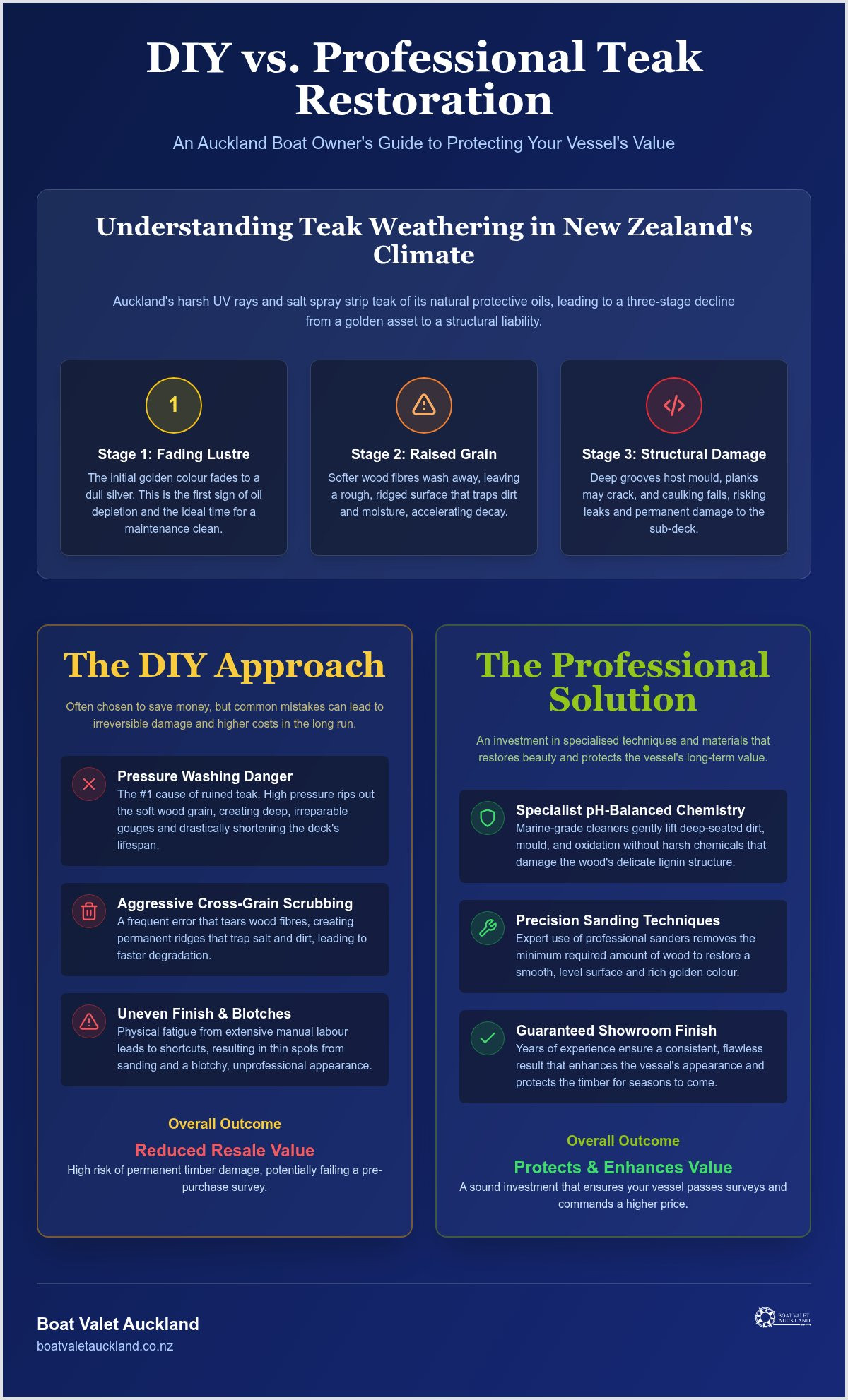
Stage 1: The golden lustre fades into a dull silver. This is the earliest sign of oil depletion and the best time for a maintenance clean.
Stage 2: You'll notice a "raised grain" where the softer wood fibres have washed out, leaving a ridged, rough surface that traps dirt.
Stage 3: Mould and mildew take hold in the deep grooves. You may see structural cracking of the planks and failing caulking, which can lead to leaks into the sub-deck.
Once your vessel reaches Stage 2 or 3, simple scrubbing won't fix the problem. You're no longer just cleaning; you're attempting to save the timber itself from permanent damage.
The DIY Teak Restoration Trap: Common Risks and Pitfalls
Many owners look at a weathered deck and think a pressure washer is the quickest solution. Don't fall for it. High-pressure water is the natural enemy of marine timber. It rips out the soft grain and leaves deep, jagged gouges that are impossible to fix without removing significant wood thickness. It's the most common way to turn a simple restoration into an expensive replacement. When you weigh up diy vs professional teak restoration nz, understand that one afternoon with a water blaster can destroy years of your deck's lifespan.
The physical toll of this work is another major factor. Restoring a 40ft deck isn't a "quick weekend job" for one person. It involves days of hands-and-knees labour, often in the direct Auckland sun. Most owners underestimate the sheer volume of scrubbing and sanding required to achieve a level finish. Fatigue leads to shortcuts. These shortcuts usually manifest as "thin spots" where the sander stayed in one place too long, or uneven patches that look blotchy once the sealer is applied.
The Danger of Aggressive Scrubbing
Scrubbing across the grain is the single most frequent mistake made by Auckland boat owners. Always scrub with the grain or at a slight diagonal. Scrubbing across it tears the soft fibres and creates permanent "ridges" in the timber. These ridges trap salt, dirt, and moisture, which eventually invite the biological agents that degrade timber structures in marine environments. If you've already created these ridges, you'll have to sand the entire deck down to the level of the deepest groove. This thins your planks and brings you one step closer to a full deck replacement.
Chemical Missteps and Environmental Hazards
Household cleaners like chlorine bleach are far too aggressive for marine-grade teak. They break down the wood's cellulose and leave it looking unnaturally white and brittle. Even more critical is the impact of chemical runoff. In 2026, Auckland Council regulations on marine pollution are stricter than ever. Harsh DIY chemicals can strip your boat antifouling in Auckland or cause damage to neighbouring vessels. Professional restorers use specific two-part marine cleaners that are carefully neutralised during the process. To avoid the risk of fines or damage to your hull, it's often better to consult a professional specialist who uses eco-compliant chemistry. This ensures your vessel stays protected whilst keeping the Hauraki Gulf clean.
The Professional Advantage: Specialist Tools and Marine Chemistry
Professional restoration isn't just about a deep scrub. It's a technical recovery process rooted in chemistry. When considering diy vs professional teak restoration nz, the biggest differentiator is the two-part cleaning system. Amateurs often use a single, harsh cleaner that leaves the wood in an acidic state. We use a secondary alkaline brightener to neutralise the wood's pH levels. This step is vital. It stops the chemical reaction, closes the wood grain, and brings back the natural golden hue that standard hardware store soaps simply cannot reach.
Efficiency is another hallmark of expert care. Utilising professional marine detailing services in NZ saves you weeks of back-breaking labour. A specialist team can complete a full restoration in a fraction of the time it takes a solo owner, ensuring your vessel is ready for the Hauraki Gulf season without the "work-in-progress" look lingering at your berth.
Advanced Sanding and Dust Extraction
Precision is mandatory when working near high-value gelcoat and stainless steel. We use industrial-grade sanding systems, like Festool, equipped with high-efficiency dust extraction. This setup keeps the marina clean and prevents fine teak dust from settling on neighbouring hulls or your own upholstery. Managing the mess is a professional priority. By carefully controlling the sanding depth to specific micron levels, we achieve a perfectly level finish. This removes the grey oxidation while preserving as much of the original plank thickness as possible. It's the difference between a deck that looks new and one that's been sanded into early retirement.
Specialist Teak Sealants and Protection
Auckland's 2026 UV levels are relentless. High-street teak oils are often too thin and evaporate within weeks, leaving the wood vulnerable to silvering again. Steve Kellie selects professional-grade sealants specifically formulated for our local climate. You can choose between oil-based finishes for a classic look or modern water-based sealants for longer-lasting protection. These products don't just look good; they provide a non-slip surface and a deep UV barrier. The result is a showroom-standard finish that actually survives the salt spray and intense sun of a New Zealand summer.
Calculating the Investment: Time, Labour, and Vessel Value
Your weekend is worth more than a scrubbing brush and a sore back. When boat owners evaluate diy vs professional teak restoration nz, they often forget to factor in the "opportunity cost" of their own labour. A full-scale restoration on a medium-sized yacht can consume forty to sixty hours of your personal time. If that work results in an uneven finish or thin spots, it actually detracts from the vessel's value during a pre-purchase survey. Professional care ensures that the timber remains thick, level, and structurally sound; this is the first thing a qualified surveyor checks when assessing a high-value asset.
Preventative maintenance is the most effective way to protect your investment. By choosing expert service, you can extend the life of your teak decks by ten years or more. It's a proactive approach that stops small issues from becoming expensive structural failures.
Resale Value and Market Perception
A weathered, grey deck is a red flag for potential buyers. It suggests that other aspects of the vessel's maintenance might have been neglected too. Investing in pre-sale boat grooming in NZ provides an immediate return by removing that "tired" stigma. Local brokers call it the "Broker’s Secret" because a golden, well-maintained deck creates an emotional connection before the buyer even steps into the cabin. To see how this level of presentation looks on a world-class scale, check out Bella Boating and their impeccably maintained luxury vessels. Because professional sealants last three to four times longer than consumer-grade oils, you aren't just buying a look; you're building a history of care that justifies a higher asking price in the competitive Auckland market.
Neglected teak eventually leads to failing caulking. Once the bond between the plank and the sub-deck fails, water ingress begins. This can lead to delamination or rot, turning a cosmetic issue into a structural nightmare. A complete teak restoration in Auckland acts as a preventative shield against these risks. Industry data from 2026 indicates that a full teak deck replacement for a 40-foot yacht can range between NZ$100,000 and NZ$200,000 depending on the complexity. Regular professional visits keep your timber healthy and maintain that essential "Auckland Shine" without the risk of a massive replacement bill. To ensure your vessel stays in peak condition, organise a professional teak assessment and protect your deck's integrity for the long haul.
Expert Mobile Teak Care with Boat Valet Auckland
Steve Kellie has been the hands-on face of Boat Valet Auckland since 1998. When you call for a consultation, you speak directly to the person who will be on your deck doing the work. This level of personal accountability is rare in the marine industry. In the ongoing debate of diy vs professional teak restoration nz, the value of 25+ years of local experience is the ultimate deciding factor. Steve understands the specific micro-climates of Auckland's marinas and how they affect different timber ages, from brand-new installs to thirty-year-old classic decks.
We bring the workshop directly to your berth. Whether your vessel is moored at Westhaven, Orakei, or Gulf Harbour, our mobile setup is fully equipped for 2026-standard restoration and recovery. This isn't just a standalone service; it is part of a holistic approach to vessel preservation. We often integrate our specialist timber work with mobile boat grooming in Auckland. This ensures your gelcoat, stainless steel, and teak all receive the same high-end treatment, leaving your boat in showroom condition for the Hauraki Gulf season.
Customised Maintenance for Your Vessel
Every deck has unique requirements based on its history and how you use the boat. Steve starts with a thorough assessment of your teak’s current health. A racing yacht with high foot traffic requires a different protection strategy than a leisure cruiser that spends most of its time under a cover. We develop a localised 2026 maintenance plan that fits your specific boating lifestyle. You won't deal with a faceless corporation or a revolving door of junior staff. You get direct communication and precision results from a specialist who treats your vessel as if it were his own.
Organising Your 2026 Restoration Session
Timing is critical for a perfect finish. We identify the ideal weather windows to ensure sealants and oils cure correctly without the interference of Auckland’s unpredictable humidity or rain. Getting started is straightforward. We provide bespoke, obligation-free quotes based on the actual physical condition of your timber. This ensures you know the exact scope of the recovery process before we even pick up a sander. Organise your restoration session today to ensure your vessel is protected and ready for your next summer adventure on the water.
Protect Your Vessel’s Heritage for the 2026 Season
Deciding between diy vs professional teak restoration nz is ultimately a choice about the longevity of your vessel's most visible asset. The risks of aggressive DIY methods, such as pressure washing or uneven manual sanding, often lead to irreversible grain damage and a significant drop in resale value. Professional restoration isn't just a cleaning service; it's a technical preservation process that uses pH-balanced chemistry and precision tools to protect the timber's structural integrity whilst achieving a showroom-standard golden finish.
Steve Kellie has provided expert mobile care to the Auckland maritime community since 1998. Whether your boat is moored at Westhaven, the Viaduct, or Gulf Harbour, you can rely on an owner-operator with over 25 years of experience in high-end gelcoat and teak recovery. Don't spend your weekends on your knees with a scrubbing brush when you could be out on the water. Contact Steve at Boat Valet Auckland for a professional teak consultation and give your deck the specialist protection it needs to survive the Hauraki Gulf sun. Your vessel is a major investment; let's ensure it stays in peak condition together.
Frequently Asked Questions
Is it actually cheaper to restore my boat’s teak myself?
While DIY saves on initial labour costs, it's rarely cheaper in the long run. When weighing up diy vs professional teak restoration nz, you must factor in the cost of marine-grade chemicals and precision tools. Most owners find that a single mistake, like over-sanding or using the wrong acid, results in professional repair bills that far exceed the original quote. The professional investment provides far better value and a superior finish.
Can I ruin my teak deck with a pressure washer?
Yes, you can permanently ruin your deck in a single afternoon. Pressure washers blast away the soft wood fibres between the grain, creating deep ridges that trap dirt and salt. This "pulping" effect requires aggressive sanding to level the surface, which significantly thins your planks. Professional restorers never use high-pressure water; we rely on technical chemistry and soft-bristle brushes to preserve the timber's structural integrity and lifespan.
How long does a professional teak restoration usually take in Auckland?
A professional restoration typically takes between two and five days, depending on the vessel's size and current condition. While a DIY project can drag on for several weekends, our team uses industrial-grade equipment to work efficiently. We manage the entire process from deep cleaning and pH neutralisation to precision sanding and sealing. This ensures your boat is back in service quickly, ready for the next Hauraki Gulf adventure.
What is the difference between teak oil and a teak sealer?
Teak oil is a traditional finish that penetrates the wood but evaporates rapidly under Auckland's intense UV. It often turns dark and attracts dirt over time. Teak sealers are modern polymer or water-based barriers that sit just below the surface. They provide a much stronger UV shield, don't trap soot, and maintain that golden look for three to four times longer than standard oils in our local marine environment.
How often should I have my teak professionally restored in the Hauraki Gulf?
We recommend a professional assessment every twelve months. In the Hauraki Gulf, the combination of high UV and salt spray is relentless. If your deck is professionally sealed, a light maintenance clean might be all that's needed. However, if the silver-grey patina returns, a full restoration is required to replenish the wood's natural oils and prevent the grain from becoming brittle or cracking under the harsh New Zealand sun.
Does professional teak restoration really increase a boat’s resale value?
It certainly does. A golden, well-maintained teak deck is the first thing a buyer or broker notices. It acts as a visual shorthand for the vessel's overall health. In the Auckland market, boats with professionally restored decks often sell faster and closer to the asking price. It removes the buyer's fear of a looming six-figure deck replacement bill, making the survey process much smoother for everyone involved.
Can Boat Valet Auckland provide mobile services at my private jetty?
Absolutely. Steve Kellie offers a fully mobile service that extends to private jetties and residential docks throughout Auckland. We aren't restricted to major marinas like Westhaven or Gulf Harbour. Our mobile unit is self-contained, allowing us to perform high-end teak restoration and grooming wherever your vessel is berthed. This convenience saves you the hassle of moving the boat to a haul-out facility for simple cosmetic maintenance.
What are the best products for protecting teak from Auckland’s high UV levels?
The best protection comes from a two-part chemical cleaning process followed by a high-solids UV sealer. When considering diy vs professional teak restoration nz, remember that specialists have access to industrial-grade products specifically formulated for 2026 UV levels. We avoid high-street oils that "cook" the wood. Instead, we use specialised sealants that provide a breathable, non-slip barrier against the intense sun and salt air of the South Pacific.
Comments