
Cost to Antifoul a Boat in NZ: The 2026 Auckland Pricing and Maintenance Guide
- Steve Kellie

- Aug 17
- 12 min read
What if the most expensive part of your vessel's maintenance isn't the invoice you pay this week, but the fuel you'll burn pushing a fouled hull through the Hauraki Gulf next summer? For many Auckland boat owners, calculating the true cost to antifoul boat nz feels like a stressful exercise in balancing the books against a ticking clock. You know that a clean hull is essential for performance, yet the fear of overpaying for a poor application or getting stung by unexpected hardstand charges often leads to delayed maintenance.
We agree that keeping your boat in peak condition shouldn't involve guesswork or hidden surprises. This guide provides a complete breakdown of the 2026 maritime landscape, including the latest haul-out rates at Auckland marinas like Tamaki Marine Park and the current retail price for high-performance coatings. You'll learn exactly how yard fees, material choices, and labour requirements influence your total spend. We'll also cover essential EPA regulations regarding DIY additives, helping you protect both your investment and the local marine environment whilst ensuring your boat stays fast and efficient.
Table of Contents
Understanding the Fundamentals: What Drives the Cost to Antifoul a Boat in NZ?
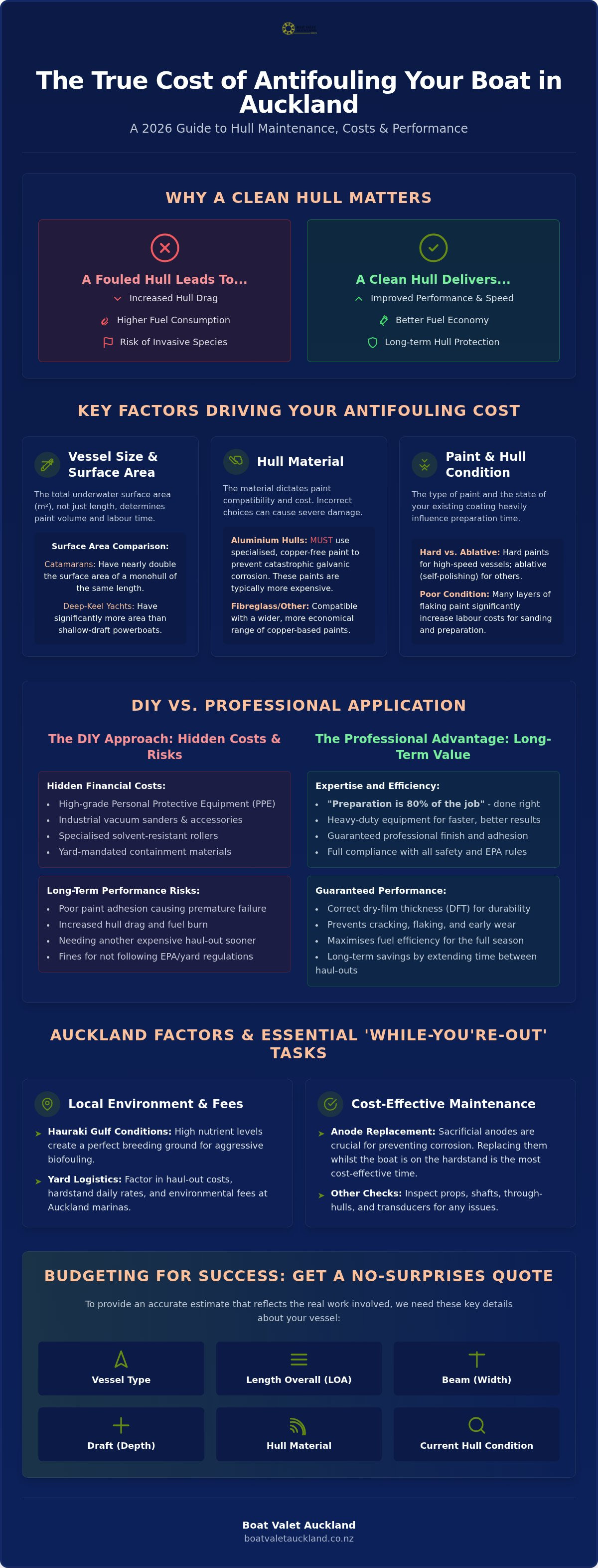
Your vessel's hull is constantly under attack from marine organisms that thrive in New Zealand's temperate coastal waters. To protect your investment, you need a high-performance barrier. Before diving into specific yard fees, you must understand that the cost to antifoul boat nz is primarily dictated by the physical dimensions of your hull and the specific environment where you moor. What is antifouling paint? It is a specialised coating applied to the hull to prevent the growth of barnacles, algae, and tubeworms. Antifouling acts as the primary defence against invasive species and hull drag.
In the Hauraki Gulf, high nutrient levels and seasonal temperature shifts create a perfect breeding ground for biofouling. This means you cannot simply pick the cheapest paint and expect it to last. The cost drivers include your boat's length, beam width, and total underwater surface area. These factors determine the volume of paint required and the hours of labour needed for preparation. Cutting corners on the initial assessment often leads to budget blowouts once the boat is actually on the hardstand.
Hull Material and Paint Compatibility
Hull material is a major factor in paint selection. If you own an aluminium vessel, you must use copper-free antifouling. Using standard copper-based paints on an alloy hull causes galvanic corrosion; this can lead to catastrophic structural failure over time. These specialised coatings often come with a higher price tag. You also need to choose between hard and ablative (self-polishing) paints. Hard coatings are ideal for fast powerboats, whilst ablative paints wear away over time to reveal a fresh layer of biocide. The state of your existing paint also matters. If your hull has years of flaking layers, the preparation time increases significantly, which directly impacts your total project cost.
The Role of Vessel Size and Surface Area
Professional applicators calculate material needs based on square metres rather than just linear feet. This provides a more accurate estimate of the paint volume required. For example, deep-keel yachts have a much larger surface area than shallow-draft powerboats of the same length. This results in higher labour costs for sanding and application. Catamarans present a unique challenge. Having two hulls effectively doubles the surface area and the amount of paint needed compared to a monohull. When calculating the total cost to antifoul boat nz, providing your boat's beam and draft measurements ensures the estimate reflects the actual work involved.
DIY vs Professional Antifouling: Calculating the Real Price of Your Time
Choosing to tackle your own hull maintenance often seems like a smart way to lower the cost to antifoul boat nz. However, the true expense of a DIY project extends far beyond the price of a few tins of paint. You must account for hidden costs like high-grade PPE, industrial vacuum sanders, and specialised solvent-resistant rollers. New Zealand boatyards also enforce strict health and safety protocols. These regulations often require specific containment measures that can be difficult for a private owner to manage without professional equipment. If you don't have the right gear, the "savings" of doing it yourself vanish quickly.
A poor DIY application carries significant long-term risks. If you don't achieve perfect adhesion, the paint may delaminate or fail prematurely. This leads to increased hull drag and higher fuel consumption. It also means you'll be paying for another haul-out much sooner than expected. Staying informed about the latest antifouling paint regulations is essential to ensure your chosen product is both legal and effective for your specific mooring location. Using the wrong product can lead to expensive fines or the need to strip the hull back to the gelcoat.
The Professional Advantage: Prep Work and Precision
Experienced applicators know that sanding is 80% of the job. Professionals use heavy-duty gear to remove old growth and key the surface faster and more effectively than a hand-held domestic sander. Precision is vital. We focus on achieving the correct dry-film thickness (DFT) across the entire hull. If the coating is too thin, it won't last the full season. If it's too thick, it may crack or flake. Using a specialist like Boat Valet Auckland ensures your hull receives a uniform finish that minimises turbulence and protects your high-value asset.
Opportunity Cost for the Boat Owner
Consider the actual man-hours required for a 30ft vessel. Between masking, sanding, and applying multiple coats, you can easily spend three full days on the hardstand. Your time has value. If weather delays or technical issues cause you to miss your splash date, daily yard fees will quickly erode any initial savings. Hiring a professional allows you to keep your weekends whilst ensuring the job is completed within the strict haul-out window. If you want to ensure your vessel is ready for the season without the stress, book a professional application to manage the entire process at the yard.
The Auckland Factor: Haul-out, Yard Fees, and Logistics
Auckland's marine infrastructure is world-class, but it operates under a unique set of economic pressures. Whether your vessel is moored at Westhaven, Half Moon Bay, or Gulf Harbour, the choice of facility significantly impacts the total cost to antifoul boat nz. You aren't just paying for the application; you're paying for the premium real estate your boat occupies whilst out of the water. Demand for hardstand space in the City of Sails is high, often resulting in waitlists that can stretch from six to eighteen months. Booking your slot during the winter "off-season" is a strategic move that can provide better yard availability and more flexible scheduling for professional applicators.
Daily hardstand fees are a critical component of your budget that many owners overlook. These costs accumulate during every phase of the project, from the initial water blast to the final curing of the paint. If you're managing a DIY project and hit a weather delay, those daily rates can quickly erode your initial savings. Professional application ensures the job stays on track, minimising the time your boat spends on the hardstand and keeping your yard bill predictable. We coordinate closely with Auckland yards to ensure our mobile team is ready to go the moment your hull is dry.
Haul-out and Water Blasting Requirements
Every Auckland marina requires a mandatory bio-foul cleaning process the moment your boat leaves the water. This isn't optional; it's a vital biosecurity measure to protect our local ecosystems from invasive species. Haul-out pricing is typically determined by your vessel's weight and the capacity of the travel-lift required. In 2026, return lift prices at major regional facilities vary significantly based on boat length, with larger vessels over 80ft incurring much higher rates than smaller trailer boats. You must also account for environmental levies. These fees cover the cost of responsible waste management and the filtration of heavy metals from the water blasting runoff, ensuring our harbours remain clean for future generations.
Yard Logistics and Professional Access
Logistics are the secret to a smooth maintenance window. When you choose a mobile service provider, you gain the convenience of a specialist who travels to your preferred Auckland facility. However, you must ensure your chosen yard allows external professional contractors to operate on-site. Most major Auckland marinas support this, provided the contractor meets strict health and safety standards. Since 1998, we've built strong relationships with yard managers across the region. This local integration allows us to work efficiently within their schedules, ensuring your cost to antifoul boat nz remains transparent and your vessel returns to the water as quickly as possible.
Beyond the Paint: Essential Maintenance "Whilst She Is Out"
Haul-out day provides a rare window to inspect every component hidden below the waterline. Whilst you are calculating the cost to antifoul boat nz, you should also budget for essential underwater maintenance that can only happen on the hardstand. This is the time to scrutinise your through-hull fittings and skin fittings for signs of fatigue or blockage. Neglecting these small parts can lead to plumbing failures or leaks once you're back at the marina. It's also the most efficient time to maximise your yard fee by combining hull work with a professional boat cut and polish. Restoring the topsides whilst the hull is being prepped ensures your entire vessel stays protected from the harsh New Zealand sun and looks its best for the coming season.
Propeller and Running Gear Protection
Standard antifouling paint is designed for relatively slow-moving surfaces. It will simply fly off a high-speed propeller the moment you engage the throttle. This is why specialised silicone-based foul-release coatings are essential for your running gear. These systems create a surface so slick that marine organisms cannot gain a foothold. When you engage the engine, any light growth is simply washed away by the water flow. A clean prop significantly reduces engine strain and vibration. This translates directly into better fuel economy and a smoother ride. If your propeller is fouled, your engine must work much harder to maintain cruising speed, which increases long-term wear and tear.
Anodes and Galvanic Corrosion
Anodes are the cheapest insurance policy you can buy for your vessel. Their entire purpose is to sacrifice themselves to corrosion so that your expensive shafts, sail drives, and propellers remain intact. In New Zealand waters, choosing the correct material is vital. Zinc is the traditional choice, but many Auckland owners now prefer aluminium anodes for their better performance in varied water conditions. You must look for visual signs of wear. If an anode is heavily pitted or more than half-consumed, it needs immediate replacement. The labour cost of swapping an anode is negligible compared to the catastrophic expense of replacing a corroded propeller shaft or a damaged sail drive unit.
Managing these extra tasks whilst the boat is already on the hardstand is the smartest way to protect your investment. If you want to ensure every inch of your hull is ready for the water, talk to us about a complete underwater maintenance solution today.
Budgeting for Success: How to Get an Accurate Antifouling Quote
Getting an accurate estimate for the cost to antifoul boat nz requires more than just a basic boat length. To provide a transparent and fixed price, we need to understand the specifics of your vessel. This includes the make, model, and the current state of the hull. High-resolution photos are helpful, but a physical inspection is often the only way to identify underlying issues like osmosis or excessive paint build-up. There is a vast difference between a standard two-coat application and a full strip and prime project. If your previous coating is flaking or incompatible with the new paint, the preparation time will increase significantly. We pride ourselves on providing clear, professional results without hidden surprises or yard-day budget blowouts.
Planning Your Maintenance Cycle
Vessel usage dictates your long-term maintenance cycle. If you cruise the Hauraki Gulf every weekend, a self-polishing (ablative) paint will work effectively because the water movement constantly activates the biocides. Conversely, if your vessel sits in a marina for months at a time, bio-fouling accumulates faster. Most Auckland owners find a 12-month cycle keeps the hull in optimal condition. Whilst extending this to 24 months is possible with high-build coatings, it often requires diligent mid-season cleaning by a diver. Establishing a regular schedule prevents sudden performance drops and the high fuel bills associated with a heavily fouled hull. It also allows you to plan your haul-out for the winter months when yard availability is generally better.
The Final Checklist Before You Haul-out
Before you head to the travel-lift, ensure your logistics are locked in to avoid wasting time on the hardstand. Confirm your yard booking and verify that your professional applicator is scheduled to meet the vessel upon arrival. Effective communication between the yard and the contractor is the key to a fast turnaround. You should also order your specialised anodes, seals, and prop protection kits well in advance. This avoids the frustration of waiting for parts whilst paying daily hardstand fees.
Since 1998, we have helped Auckland boaties manage this entire process seamlessly. We specialise in high-quality preparation and application across all major Auckland marinas. For a detailed mobile service quote that covers everything from initial prep to the final finish, contact Steve Kellie at Boat Valet Auckland. We handle the manual labour and technical precision so you can focus on your next destination with total confidence in your hull's protection.
Secure Your Vessel's Performance for the 2026 Season
Managing the cost to antifoul boat nz requires a clear understanding of your vessel's specific needs and the unique logistics of Auckland's marinas. You've seen that the true value lies in precision preparation and choosing the right high-performance coatings for the Hauraki Gulf's temperate waters. By combining your hull painting with essential tasks like anode replacement and a professional cut and polish, you ensure your asset is protected from both biofouling and the harsh New Zealand sun.
We've provided expert mobile service at all major Auckland marinas since 1998. Our team brings over 25 years of local maritime expertise to every project, offering comprehensive grooming and hull care packages that take the guesswork out of maintenance. Request a professional antifouling quote from Steve at Boat Valet Auckland today to lock in your maintenance window. Let's get your boat back in the water and ready for another year of effortless cruising.
Frequently Asked Questions
How much does it cost to antifoul a 12m boat in NZ?
The total cost to antifoul boat nz for a 12m vessel depends on the specific haul-out fees, material volume, and labour hours required. A boat of this size typically needs significant paint and several days of hardstand time. You must factor in current Auckland yard rates and the price of high-performance coatings. Because every hull's condition varies, providing a fixed price without an inspection is impossible. Contacting a specialist ensures your quote reflects the actual work needed.
Is it cheaper to antifoul my own boat?
DIY may seem cheaper initially, but hidden costs often bridge the gap between self-application and professional service. You must purchase specialised PPE, industrial sanders, and high-quality rollers whilst managing strict boatyard waste regulations. If the application fails due to poor preparation, you'll face the expense of a second haul-out. A professional finish also reduces drag, which lowers your long-term fuel costs and justifies the initial investment. Your time also carries a significant opportunity cost.
How long does a professional antifouling job take?
A standard professional application typically takes three to five days on the hardstand. This timeframe includes the initial water blast, drying, sanding, masking, and applying multiple coats with sufficient curing time between them. Weather conditions in Auckland can influence this schedule. We coordinate closely with marina managers to ensure the work is completed within your booked haul-out window, avoiding unnecessary daily yard fees and getting you back on the water as quickly as possible.
Do I need to strip the old paint off every time I antifoul?
No, stripping back to the gelcoat is only necessary if the existing layers are flaking, cracking, or incompatible with the new coating. In most cases, a thorough sand to remove the depleted top layer and create a "key" for the new paint is sufficient. However, if you have excessive build-up from years of maintenance, a full strip might be required to restore the hull's smooth profile and maintain performance. We assess this during the initial inspection.
What happens if I don’t antifoul my boat every year?
Neglecting your annual maintenance leads to rapid bio-fouling, which significantly increases the cost to antifoul boat nz during your next haul-out. Heavy growth like barnacles and tubeworms creates immense drag, forcing your engine to work harder and consume more fuel. Over time, invasive species can damage the hull surface or block engine intakes. Regular maintenance is the most effective way to protect your vessel's value and ensure reliable performance in the Hauraki Gulf throughout the season.
Can I use the same antifoul paint on my propeller?
No, standard hull paint will quickly detach from a high-speed propeller due to the intense centrifugal forces and water turbulence. Running gear requires specialised silicone-based foul-release coatings that bond more securely to metal surfaces. These coatings are designed to be extremely slick, preventing organisms from attaching. Using the correct product on your prop and shaft ensures a vibration-free ride and prevents the power loss associated with a fouled drivetrain. This is a critical maintenance step.
What are the environmental rules for antifouling in Auckland?
Auckland marinas enforce strict biosecurity and waste management regulations to protect the local marine ecosystem. All vessels must undergo a mandatory bio-foul wash-down upon haul-out to prevent the spread of invasive species. Additionally, it is illegal to add unapproved chemicals or pesticides to your paint. You must also ensure that all sanding dust and paint flakes are fully contained and disposed of according to the yard's specific environmental protocols to avoid heavy fines and ecological damage.
How do I know if I need a hard or ablative antifoul paint?
Your choice depends on your boat's speed and how often you use it. Hard antifoul is best for fast powerboats or vessels that are frequently scrubbed by divers. Ablative, or self-polishing paint, is ideal for yachts and cruising boats because it slowly wears away to reveal fresh biocide as you move through the water. This prevents paint build-up over time. We can assess your vessel's usage patterns to recommend the most effective coating for your specific needs.
Comments