
Cleaning fenders and mooring lines while protecting their surfaces

Abrasives can leave fenders worse off than the dirt they remove. For cleaning fenders and mooring lines, use mild soap or a suitable marine cleaner, a soft brush and fresh water. Avoid scouring pads and solvents, which can damage fender surfaces. Soak dirty lines in warm water with mild detergent, rinse well and let them dry completely.
It’s tempting to scrub hard when salt, scuffs or grime won’t shift straight away. A gentler clean helps protect the materials while removing everyday dirt. This guide explains how to wash fenders and lines, when to use a specialist marine cleaner, and how to tackle stubborn marks without damaging abrasives or solvents.
You’ll also find practical checks for drying and storing your gear, so it’s ready for its next spell at the berth.
Table of Contents
1. Cleaning fenders with mild soap and marine cleaners
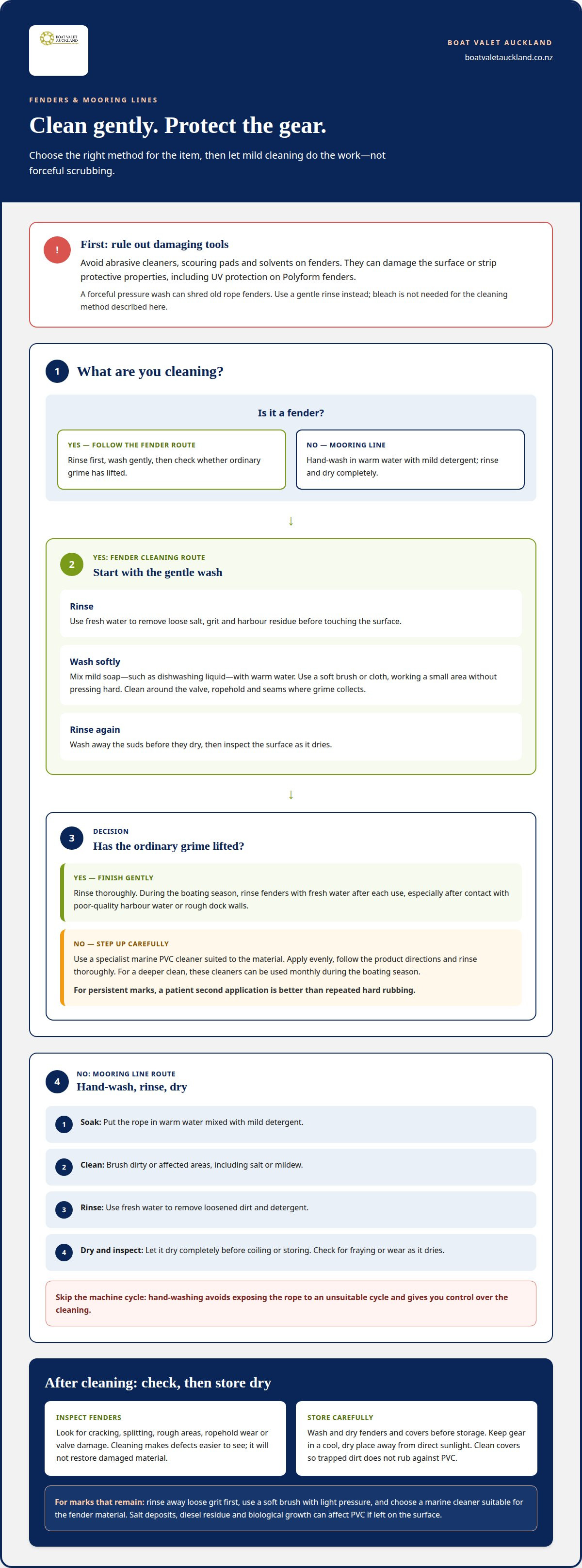
Start with a fresh-water rinse to remove loose salt, grit and harbour residue from each fender. Mix mild soap, such as dishwashing liquid, with warm water, then clean the surface with a soft brush. Rinse away the suds before they dry. This removes ordinary grime without aggressive scrubbing, which can wear the surface.
During the boating season, rinse fenders with fresh water after each use, especially after contact with poor-quality harbour water or rough dock walls. For a deeper clean, use a specialist marine PVC cleaner monthly during the season. These cleaners are formulated to lift dirt without hard rubbing. Follow the product directions, apply it evenly, then rinse the fender thoroughly.
In New Zealand, options include mild household soap and specialist marine PVC cleaners. Cost varies by product, formulation and container size, so compare the labelled uses and amount supplied rather than choosing on price alone. Cleaners designed for inflatable boats or electric shore cables can also work on fenders.
Hand-wash mooring lines rather than putting them through a machine cycle. Soak the rope in warm water mixed with mild detergent, scrub dirty areas, rinse with fresh water and dry it completely. Avoid guessing a machine temperature: hand-washing gives you control and avoids exposing the rope to an unsuitable cycle.
To remove salt and mildew from mooring ropes, soak them in warm water with mild detergent, then brush the affected areas. Rinse thoroughly with fresh water to remove loosened salt and detergent. Let the rope dry completely before coiling or storing it, as damp rope can encourage mould or mildew. Check for fraying or wear as it dries.
Boat soap or detergent can clean dirty fenders, but may not be enough for heavy soiling or stubborn stains. Marine fender cleaners are formulated to clean without extensive hard rubbing, making them useful when ordinary washing falls short. For rope fenders, a forum member recommended using a pressure-wash bay with separate soap and water settings.
2. Avoiding abrasive cleaners, scouring pads and solvents
Harsh cleaning can strip protective properties from a fender’s surface. Use gentle cleaning methods on fenders rather than abrasive cleaners, scouring pads or solvents. A kitchen scourer may seem useful for a stubborn mark, but it can damage the material. Use a soft brush or cloth instead, and let a suitable marine cleaner do the work.
Bleach, solvents and pressure washing pose different risks to marine gear. Avoid solvents and abrasive pads on Polyform fenders because they can strip UV protection. High-pressure washing can shred old rope fenders, so use a gentle rinse and mild detergent rather than directing a forceful jet at worn strands. Bleach isn’t needed for the cleaning method described here.
Take a measured approach to marks. Rinse away loose grit before touching the fender to reduce the chance of particles dragging across its surface. Apply mild soapy water with a soft brush, working a small area without pressing hard. If dirt remains, switch to a marine cleaner suitable for the material and follow its label. A patient second application is better than repeated hard rubbing, which can cause more wear.
Keep cleaning tools separate from harsher jobs around the boat. A scouring pad used on a galley sink can hold abrasive residue, so don’t use it on PVC fenders afterwards. Likewise, avoid transferring solvent from a workshop cloth onto fenders or rope. Rinse reusable brushes thoroughly after use, and store them where cleaning chemicals can’t contaminate the bristles.
Inspect the cleaned surface in good light. Look for cracking, splitting or unusually rough areas, particularly around ropeholds and contact points. A clean finish makes wear easier to see, but cleaning won’t restore damaged material. Remove rope fenders before pressure washing; if washing is necessary, keep the water flow gentle to avoid tearing older rope.
3. Cleaning boat fenders
Fender dirt affects more than appearance. Salt deposits, diesel residue and biological growth can degrade PVC if left on the surface. A dirty fender rubbing against the hull can also leave stubborn streaks. Check contact areas after mooring, particularly if a fender has touched a fuel-marked berth or accumulated harbour growth.
When cleaning fenders and mooring lines, deal with the source of the mark as well as its appearance. Remove the fender to reach the full surface. Rinse away loose grit, then wash with mild soapy water and a soft brush. Clean around the valve, ropehold and seams, where grime collects. Rinse thoroughly and inspect the PVC as it dries. Avoid mineral spirits and abrasive pads, which can strip protective surface treatments.
Vinyl restorers or protective coatings can help reduce dirt and stain absorption while shielding fenders from damaging UV light. Choose a product intended for the fender material and follow its application and drying directions. A snug cover made from durable, UV-resistant material adds protection when the fender is deployed. Keep the cover clean, as trapped dirt can rub against the PVC.
Before storage, wash and dry both fenders and covers. Moisture trapped in a folded cover can encourage mould or mildew. Store the gear in a cool, dry place away from direct sunlight, which can degrade PVC. Check each ropehold for wear, and address cracking or splitting around the rope eye before the next boating season.
Include fender condition in your routine for cleaning fenders and mooring lines. Check that each fender is intact and properly inflated, then inspect for cracks, splits or valve damage. An inflatable fender should feel firm but have slight give when squeezed. If it presses together easily, it may need more air; if it feels rock-hard, release a small amount. Clean surfaces make defects easier to spot before an outing.
4. How do you remove algae, scuff marks, and rust stains from fenders?
To remove algae, take the fender off the boat and rinse away loose growth and grit. Apply mild soapy water or a marine cleaner suited to the fender material. Work it over the affected patch with a soft brush and light pressure. Rinse thoroughly and inspect the surface before repeating the gentle clean.
Scuff marks often appear where a fender rubs against a hull, dock or berth. Rinse the area first so grit doesn’t scratch the PVC as you clean. Use a soft cloth or brush with soapy water, then rinse and check the mark in good light. If it remains, use a suitable marine cleaner according to its label rather than a kitchen scourer.
Treat rust stains just as carefully. Clean the surface with mild soapy water first, then rinse and assess any remaining discolouration. Don’t use solvents, abrasive pads or steel wool on the stain. On Polyform fenders, these can strip surface UV protectants and accelerate degradation. A stain may remain, but preserving the fender’s surface matters more than forcing it away with damaging abrasion.
Remove rope fenders from the boat before cleaning. A high-pressure water jet can clean rope, but it may shred older or worn strands. If you use water pressure, keep it gentle and watch the rope closely. Stop if fibres begin to fray or separate. Afterwards, rinse away loosened dirt and let the rope dry completely.
Finish by checking the cleaned fender for cracks, splitting or wear around its ropehold. Algae and scuffs can obscure damage, so inspect the contact points once the surface is clean. If a mark returns quickly, look for continued rubbing against a rough dock wall or hull. Adjusting the fender’s position can reduce repeated contact and further marking.
After rinsing, dry metal mooring components and apply an anti-rust treatment. Store fenders in a cool, dry location away from direct sunlight, as UV is the primary cause of PVC degradation. Chafe guards help protect mooring lines from wear against rough surfaces. At a pile berth, a fender board helps stop fenders sliding off the post as the boat moves.
Boat Valet Auckland: Engine Room Cleaning
Boat Valet Auckland provides Engine Room Cleaning for owners whose maintenance extends beyond fenders and mooring gear. A clean, orderly engine space is a useful part of wider vessel care, particularly when planning a broader grooming programme alongside exterior work.
For visible hull marks or a tired finish, Boat Cut and Polish may suit the job. Antifouling and Teak Restoration address other specific maintenance needs. Choose the service that matches the area requiring attention; engine room work is separate from washing fenders or ropes.
If you’d like help with engine room upkeep, contact Boat Valet Auckland to discuss your boat.
Keep your next maintenance step in view
Use each cleaning session as a prompt to consider the boat as a whole. Note recurring rubbing, staining or wear, then plan maintenance around the areas that need attention. This makes cleaning fenders and mooring lines part of a considered care routine, rather than just a response to visible grime.
If your next project extends beyond onboard gear, match the work to the surface: Boat Cut and Polish for the hull finish, Antifouling for the hull, or Teak Restoration for teak. Boat Valet Auckland provides these services as part of your boat care plans.
Choose the next step that suits your vessel and your priorities. Contact Boat Valet Auckland today to discuss the work you have in mind, and keep your boat looking cared for from bow to stern.
Frequently Asked Questions
How do you clean boat fenders safely?
Use a gentle cleaning method suited to the fender’s material, and avoid anything that could abrade or chemically attack its surface. For example, loosen dried harbour residue with water before brushing, rather than rubbing while grit remains. Clean around the valve and rope attachment carefully, where forceful brushing could disturb fittings. Once dry, inspect those areas for damage before putting the fender back into use.
What cleaners are safe for inflatable PVC and Hypalon fenders?
For PVC fenders, mild soap or a marine PVC cleaner is suitable. Hypalon is a different material, so don’t assume a cleaner labelled for PVC is suitable for it too. Read the product label for material compatibility and follow its directions. Avoid solvents and abrasive pads on Polyform fenders, as they can remove surface UV protectants. If you’re unsure of the material, identify it before choosing a cleaner.
Comments