Antifoul Application Specialists Auckland: Expert Hull Protection for 2026
- Steve Kellie

- 4 days ago
- 11 min read
Updated: 1 day ago
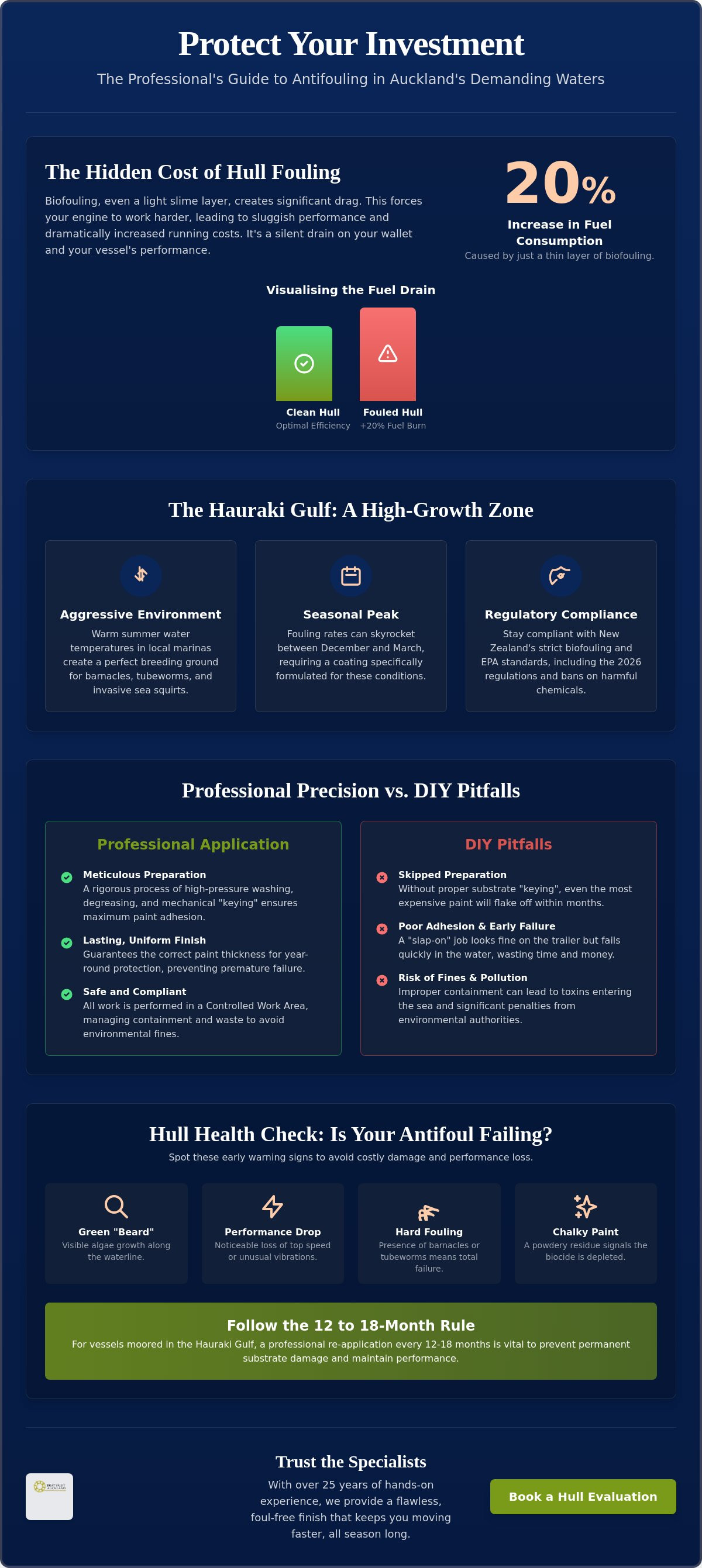
Did you know that even a thin layer of biofouling can increase your fuel consumption by up to 20%? You've likely noticed your boat feeling sluggish or seen the "fuzz" appearing along the waterline just months after a DIY job. It's frustrating to watch your vessel's performance drop while your running costs climb. When you work with professional antifoul application specialists Auckland owners trust, you're not just getting a fresh coat of paint. You're investing in a precision-engineered barrier designed for the specific challenges of the Hauraki Gulf.
We understand the hassle of coordinating haul-outs and chasing different contractors for hull and topside work. It's time to simplify your maintenance. This article shows you how expert application protects your vessel's value and ensures you stay compliant with 2026 biosecurity regulations. We'll preview the best paint systems for local waters and explain how a single point of contact for your grooming and hull protection makes your next maintenance cycle completely stress-free. Discover how to achieve a smooth, foul-free finish that keeps you moving faster and more efficiently all season long.
Table of Contents
The Role of Antifoul Application Specialists in Auckland’s Waters
Antifouling isn't just a routine maintenance task; it's a critical defensive strategy for your boat. At its core, antifouling paint is a specialised coating applied to the hull to prevent marine organisms from attaching. These coatings usually work via a controlled release of biocides or by creating a surface so slick that nothing can stick. For boat owners, the goal is simple. You want to maintain a smooth hull to ensure speed and efficiency. Without it, you're fighting a losing battle against the ocean.
Biofouling creates massive amounts of drag. Even a light slime layer can force your engine to work harder, burning significantly more fuel to maintain the same knots. For larger vessels, this translates to thousands of dollars in wasted diesel over a single season. This is why antifoul application specialists Auckland focus on precision. A "slap-on" job might look okay on the trailer, but it often lacks the uniform thickness needed to provide year-round protection. Professional application ensures the coating lasts, protecting your asset's value and your wallet.
Why Auckland’s Hauraki Gulf Requires Specialist Hull Protection
The Hauraki Gulf is a beautiful but aggressive environment for boat hulls. Warm summer water temperatures in marinas like Westhaven and Okahu Bay create a perfect breeding ground for barnacles, tubeworms, and invasive sea squirts. Seasonal shifts mean that fouling rates can skyrocket between December and March. You need a coating formulated for these specific local conditions. Additionally, New Zealand’s strict environmental regulations mean many traditional chemicals are now banned. We ensure your vessel stays compliant with the latest EPA standards, including the bans on substances like diuron and thiram, which remain strictly enforced in 2026. For those looking for advanced, eco-friendly alternatives to biocidal paints, you can learn more about Seacoat SCT, LLC and their non-toxic coating solutions.
The Difference Between Professional Application and DIY
Preparation is 90% of the work. If you don't get the substrate right, the most expensive paint in the world will simply flake off within months. Professional antifoul application specialists Auckland follow a rigorous process of high-pressure washing, degreasing, and mechanical "keying." DIY jobs often skip these steps to save time, leading to poor adhesion. There's also the legal side. Since 2015, all antifoul work must occur in a "Controlled Work Area" to prevent toxins from entering the sea. Specialists handle the containment and waste disposal, saving you from potential environmental fines. We also have the equipment to reach complex areas like bow thrusters and sail drives that rollers often miss.
Evaluating Your Hull: When to Call the Specialists
You don't always need a haul-out to know your hull is struggling. Most Auckland boaties can spot trouble right from the dock if they know where to look. Keep an eye out for a green "beard" of algae along the waterline or a cloudy, chalky appearance in the paint. These are clear signs the active biocides in your coating are spent. If you're noticing a drop in top speed or unusual vibrations through the deck while underway, your hull is likely hosting more than just a bit of slime. It's working against you.
Auckland's waters follow a demanding schedule. We generally recommend the "12 to 18-month rule" for vessels moored in the Hauraki Gulf. Because our local marinas sit in high-growth zones, pushing past 18 months often leads to permanent substrate damage or the need for aggressive, costly hull scraping. Staying ahead of this cycle ensures you remain compliant with New Zealand's biofouling requirements, which are strictly enforced to protect our local marine ecosystems. If you're unsure of your current status, having antifoul application specialists Auckland perform a mid-season inspection can save you thousands in fuel and repair costs later.
Key Signs Your Existing Antifoul is Failing
Hard fouling is your biggest enemy. If you see barnacles or tubeworms, the protective barrier has completely failed. Soft fouling, like slime and algae, is easier to manage but still increases drag significantly. Check the waterline for "chalking." This happens when the paint depletes, leaving a powdery residue that offers zero protection. Don't ignore pitting on metal fittings either. This often signals galvanic corrosion, which requires immediate attention before it compromises your rudders or props. If you spot these issues, it's time to book a professional assessment to plan your next maintenance window.
Understanding Different Antifouling Paint Types for NZ Conditions
Choosing the right paint depends on how you use your boat. Ablative, or self-polishing, paints wear away slowly as you move, constantly revealing a fresh layer of biocide. These are perfect for cruising yachts and slower vessels. Hard antifouls are better for high-speed powerboats because they don't wash away under high pressure. Aluminium hulls require specific copper-free formulations to prevent catastrophic corrosion. Every marina in Auckland, from Half Moon Bay to Pine Harbour, has slightly different salinity and temperature levels. This is why antifoul application specialists Auckland don't use a "one size fits all" approach. We tailor the product to your specific berth and vessel type to ensure maximum longevity.
The Professional Antifouling Process: What to Expect
A professional antifoul job starts long before a brush or roller touches the hull. We begin with a high-pressure water blast that does more than just remove slime; it reveals the true condition of the existing coating. If we find areas where the paint is lifting or "alligatoring," we know we've got deeper issues to address. Degreasing follows immediately. It's a step many DIYers skip to save time, but it's absolutely vital. As antifoul application specialists Auckland, we use industrial-strength degreasers to remove every trace of diesel soot, oil, or wax. Without this, your new coating is simply sitting on a layer of contaminants, destined to flake off within months.
Sanding is where the real labour happens. We call this the "keying" process because we're creating a microscopic profile for the paint to lock into. We don't just scuff the surface; we ensure a uniform texture across the entire hull. During this phase, we mask off transducers, shafts, and rudders with surgical care. Getting antifoul on a transducer can ruin its signal, and paint on a propeller shaft can cause balance issues or seal damage. We take the time to protect these sensitive components before the first drop of primer is even mixed. Applying multiple coats then ensures a consistent film thickness that can withstand the abrasive forces of the Hauraki Gulf.
Preparation: The Secret to Long-Lasting Hull Protection
Old paint build-up is a silent killer of hull performance. Over several seasons, thick layers of old paint become brittle and start to flake away in large chunks. We scrape back these "islands" to ensure the new coating isn't just sticking to a failing substrate. We also monitor the environment closely. Auckland's humidity can be tricky, so we ensure the hull is completely moisture-free before applying primers to seal the gelcoat. This is a critical step because the toxicity effects of antifouling paints mean we must prevent leaching caused by poor adhesion.
Advanced Application Techniques and Propspeed Integration
Propspeed is the gold standard for your running gear. It's a non-biocidal foul-release coating that keeps your props and shafts clean through sheer physical slickness rather than chemical action. During the hull application, we focus on Dry Film Thickness (DFT). We apply extra coats to leading edges and the waterline where turbulence and wear are highest. Our final check involves inspecting the "smile": the crisp, clean waterline that defines a professional job. It's about ensuring your boat looks sharp and stays protected for the next 18 months of cruising.
Strategic Maintenance: Combining Antifouling with Marine Grooming
Hauling your vessel out of the water is a significant logistical exercise. It involves booking the travel lift, organising transport, and losing access to your boat for several days. Smart owners use this window to address more than just the hull. This is the prime opportunity for comprehensive marine detailing services NZ. By handling topside restoration and hull protection simultaneously, you ensure your boat returns to the water in peak condition, both mechanically and aesthetically. It's about working smarter, not harder.
Working with antifoul application specialists Auckland who also understand the nuances of gelcoat care is a strategic move. It eliminates the need for multiple contractors who might get in each other's way. Instead of chasing three different people, you have one point of contact managing the entire project. This integrated approach reduces your total downtime. You get back on the water faster, knowing every inch of your vessel has been professionally attended to. It's a seamless way to protect your investment.
Why Simultaneous Cut and Polish Saves Time and Money
A professional boat cut and polish auckland is far easier to perform while the boat is on the hard. Accessing the hull from the waterline up is safer and more thorough when the vessel is blocked up in the yard. We always coordinate the timing to protect your fresh paint. Polishing the topsides before the final antifoul coats are applied prevents compound run-off from contaminating the new hull protection. This sequence ensures a flawless finish and maximises your vessel's resale value without requiring a second haul-out later in the year.
Coordinating with Auckland Marinas and Haul-out Facilities
We work closely with yard managers at Westhaven, Orams, and Tamaki Marine Park to keep your project on track. Logistics can be a headache, but we handle the scheduling so you don't have to. Booking your 2026 slot early is essential, especially during the busy spring and autumn periods when haul-out slots are at a premium. Our mobile team brings the expertise to your preferred yard, offering the flexibility you need. To get your maintenance organised for the coming season, contact us for a combined grooming and antifoul quote today.
Why Boat Valet Auckland are Your Trusted Antifoul Application Specialists
Choosing the right team for your hull protection is a decision that impacts your boat's performance for the next two years. At Boat Valet Auckland, we don't just send a crew of random labourers to your boat. Steve Kellie, our owner-operator, personally oversees every project. With over 25 years of hands-on experience in the Auckland marine industry, Steve brings a level of precision that only comes from decades of manual labour and technical study. Since 1998, we've built our reputation on being the antifoul application specialists Auckland owners can call directly for honest advice and a superior finish.
We believe in using only premium, NZ-proven coatings. The Hauraki Gulf is a unique environment, and what works in the Mediterranean won't necessarily survive a summer in Westhaven. We select paint systems that comply with the latest EPA regulations while still delivering the biocide performance needed to stop local barnacle growth. From the tip of the keel to the top of the masthead, we provide comprehensive care that keeps your vessel in showroom condition. Our approach balances the manual reality of sanding and painting with an understanding of the luxury standards expected in the Auckland fleet.
Steve Kellie’s 25+ Years of Auckland Marine Expertise
Experience matters because every Auckland marina has its own biological fingerprint. A boat berthed at Okahu Bay faces different fouling pressures than one at West Harbour. Steve’s tenure in the industry means he knows exactly which paint formulations thrive in specific local waters. This deep local knowledge ensures you aren't just getting a generic service; you're getting a tailored protection plan. When you call us, you're speaking directly to the person doing the work. This direct line of communication provides a quality guarantee that larger, faceless companies can't match. It's about personal accountability and a job done right the first time.
Mobile Service Across Westhaven, Orams, and Beyond
Our mobile business model is designed for your convenience. We operate across all major Auckland maritime hubs, including Orams, Westhaven, and Tamaki Marine Park. As a special incentive for our clients, we offer a 10% contribution towards haul-out fees at Hobsonville Marina for our antifouling services. Whether you own a high-performance racing yacht, a family launch, or a trailer boat, we create maintenance programmes that fit your schedule. We handle the dirty work so you can enjoy the results. Contact Steve today for a direct quote and expert advice on your 2026 hull protection. Let's ensure your vessel stays fast, efficient, and protected.
Secure Your Vessel’s Performance for the 2026 Season
Maintaining a high-value vessel in the Hauraki Gulf requires more than just a quick coat of paint every few years. As we have explored, the secret to a fast, fuel-efficient hull lies in meticulous preparation and choosing the right coating for your specific Auckland berth. By following the 12 to 18-month maintenance rule and combining your haul-out with professional marine grooming, you can protect your asset's value whilst minimising time out of the water. It's about total vessel preservation from the keel up.
When you trust antifoul application specialists auckland like Boat Valet Auckland, you're hiring over 25 years of local expertise. Since 1998, Steve Kellie has provided an owner-operated, mobile service that reaches every major yard in the region. We don't just apply paint; we provide a precision barrier that stands up to the aggressive local conditions. Don't wait for your fuel bills to climb or for biofouling to take hold. Contact Steve at Boat Valet Auckland for an expert antifoul quote today. Let's get your boat ready for another season of smooth, efficient cruising on our beautiful local waters.
Frequently Asked Questions
How often should I hire antifoul application specialists in Auckland?
You should ideally hire antifoul application specialists Auckland every 12 to 18 months for vessels kept in the Hauraki Gulf. Auckland's warm water temperatures and high nutrient levels in marinas like Westhaven accelerate biofouling growth significantly. Sticking to this cycle prevents permanent hull damage and ensures your vessel remains compliant with New Zealand's strict biosecurity standards.
What is the typical cost for boat antifouling in NZ for 2026?
Antifouling costs in New Zealand are not standardised and are provided on a per-quote basis. The final investment depends on your vessel's size, hull type, and the current condition of the existing substrate. We recommend requesting a detailed assessment from antifoul application specialists Auckland to get an accurate figure tailored to your specific requirements and vessel condition.
Can you apply Propspeed at the same time as the antifoul?
Yes, applying Propspeed whilst the boat is hauled out for antifouling is the most efficient approach. This foul-release coating is specifically designed for metal surfaces like propellers, shafts, and rudders. Doing both together ensures your entire underwater profile is protected. This improves both speed and fuel economy during a single maintenance window.
Do I need to be present at the marina during the application process?
No, you don't need to be present whilst we work on your vessel. As a mobile service, we coordinate directly with the yard managers at facilities like Orams or Tamaki Marine Park. Steve personally oversees the application and will keep you updated on progress. This allows you to focus on your own schedule while your asset is in expert hands.
Which antifouling paint is best for a boat kept in Westhaven Marina?
The best paint depends on your vessel's speed and usage patterns rather than just the marina location. Slower cruising yachts generally benefit from ablative paints that wear away over time. High-speed launches require hard antifouls that won't wash away under pressure. We assess your specific berth and hull material to recommend the most effective formulation for Westhaven's conditions.
How long does a professional antifoul application usually take?
A professional application typically takes between two and four days. This timeframe allows for thorough high-pressure washing, degreasing, mechanical sanding, and the application of multiple coats with correct drying times. Auckland's humidity can occasionally extend this window. We require a moisture-free environment to ensure the best possible paint adhesion and longevity.
Can you help with pre-sale boat grooming nz while the boat is hauled out?
Yes, the haul-out period is the perfect time to invest in pre-sale boat grooming nz. While the vessel is on the hard, we can perform a full cut and polish alongside the hull work. Presenting a boat with a fresh hull and gleaming topsides significantly maximises its resale value and appeal to potential buyers.
What happens if I skip my annual antifoul application?
Skipping your application leads to rapid biofouling, which increases hull drag and can raise fuel consumption by up to 20%. The added weight and friction put unnecessary strain on your engines and cooling systems. A fouled hull also risks breaching MPI biosecurity regulations. This could result in fines or your vessel being denied entry to sensitive New Zealand coastal zones.
Comments