
What a Full Boat Detail Includes for Boat Owners

A full boat detail is more than a wash: it can include exterior cleaning, deck scrubbing, interior surfaces, seating and metal fittings. The finish may also need gelcoat oxidation removal, followed by buffing and polishing to restore gloss. What’s included in a full boat detail depends on the boat’s condition and the work its surfaces need.
A thorough wash won’t necessarily restore a faded finish: cleaning and restoration are different jobs. A wash removes dirt and salt, while chalky or oxidised gelcoat needs a separate correction process. Knowing what’s included in a full boat detail helps you identify what your boat needs and understand the work involved.
This guide covers the usual stages, from washing the hull and scrubbing non-skid decks to interior cleaning, metal care and polishing. It also explains what can vary between boats, so you can define the scope before arranging a detail.
Table of Contents
Q: What’s Typically Included in a Full Boat Detailing Package?
A full detail brings together exterior cleaning, interior care and finish work. The scope depends on the boat’s materials, condition and the areas that need attention.
Full Detailing Versus Washing
A wash removes surface dirt and salt from accessible areas. A full detail can also cover cabin surfaces, seating, storage spaces and fittings. Restoration is separate: it corrects dull or oxidised gelcoat through a dedicated polishing process. Understanding what’s included in a full boat detail helps you distinguish these jobs and set a useful scope.
In New Zealand, detailing costs depend on the boat’s size, layout, condition and required work. Boat Valet Auckland provides a free, no-obligation quote after assessing the job. A professional detail is commonly scheduled once a year, although use and exposure affect how often your boat needs attention. To understand what’s included in a full boat detail, consider the surfaces and their condition.
Seating and Helm Cleaning
Interior cleaning can cover vinyl seats, helm surfaces, cabin glass and nearby touchpoints. Cleaning around seams and crevices removes grime that quick wipe-downs often miss. Wipe surfaces carefully to avoid leaving residue on controls or screens.
Check seat stitching and textured panels, where dirt and salt can collect. At the helm, take care around switches, displays and steering components, and avoid excess moisture.
Heads and Galley Cleaning
Heads and galleys need focused cleaning of frequently touched surfaces, sinks, benches and cupboard fronts. A deep clean can include disinfecting these areas, with the method matched to each material.
Unsuitable chemicals or abrasive pads can mark surfaces, dull finishes or damage protective coatings. Use marine-appropriate products suited to the material being cleaned.
Cabin, Cockpit and Bilge Cleaning
Cabin and cockpit work can include vacuuming carpets or soft furnishings, wiping surfaces, and cleaning glass and vinyl. Clear loose debris from storage spaces before cleaning their surfaces. For vessel owners considering a complete aesthetic refresh rather than routine upkeep, studios like heime.design provide inspiration on how luxury marine interiors are thoughtfully planned and curated.
Bilge cleaning focuses on accessible areas where residue can collect. Teak decks may need cleaning and brightening, with a suitable oil or protective sealant applied afterwards. The teak’s condition and your preferred finish guide the treatment.
Exterior washing and non-skid deck scrubbing
A thorough exterior wash removes salt, grime and dirt from the surfaces you use and see. It cleans the boat, but won’t restore faded or oxidised gelcoat.
Exterior Grime Removal
Start with a fresh-water rinse, especially after using the boat in salt water, to lift loose salt and grit. Wash the hull sides above the waterline, topsides, gunwales, cockpit and windows with pH-neutral marine soap. Clean hatch edges and gutter tracks too, where trapped debris can leave marks.
At the slip, this work covers accessible surfaces above the waterline. Cleaning below the waterline can be more difficult while the boat is in the water. Shore power and dock water can help, but aren’t essential. A complete wash for a 30-40 ft boat takes a few hours, depending on its layout and condition.
Washing removes surface grime; it won’t bring gloss back to chalky gelcoat. That needs a separate restoration process. A regular wash every 2-4 weeks during the season helps manage salt and dirt between details.
Non-Skid Deck Scrubbing
Non-skid patterns hold dirt in their grooves, so a quick rinse may leave grime behind. Work marine soap into the texture with a suitable soft brush, then rinse thoroughly. Clean around fittings, deck edges and hatch tracks, where dirt can collect. Take care around damaged areas to avoid worsening chips or lifting edges.
Finish by checking for missed residue on the deck, gunwales and cockpit. Soap left in textured surfaces can dry into visible marks. A wash cleans the surface; a sealant or wax is a separate protective step, not a substitute for scrubbing. For ongoing exterior care, exterior wash and wax can pair cleaning with protection.
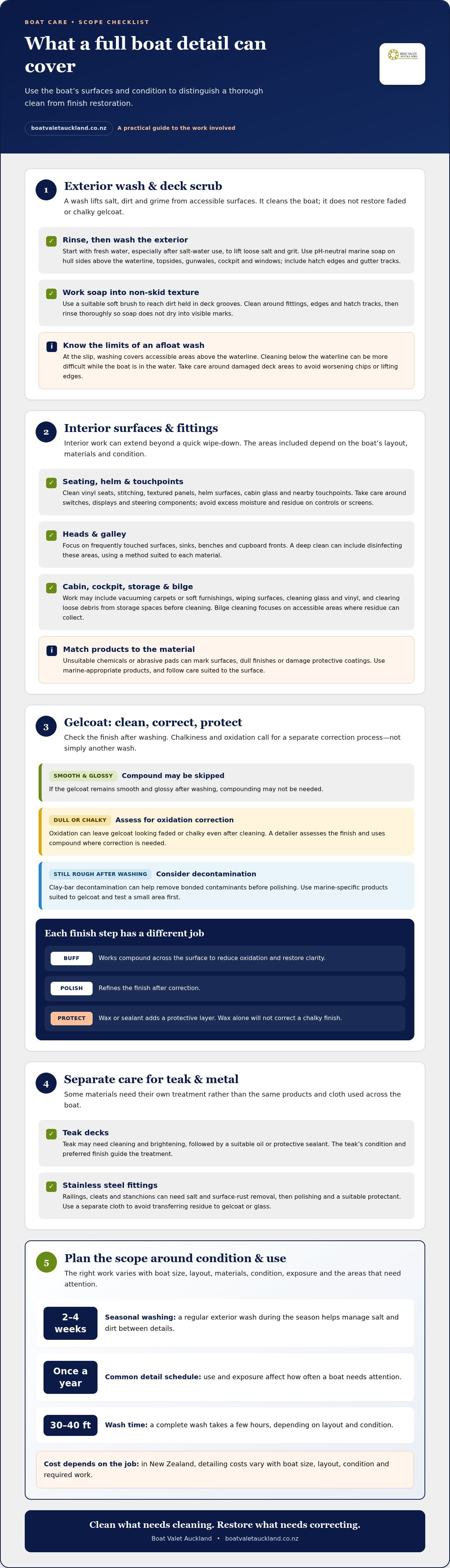
Gelcoat oxidation removal, buffing and polishing
Washing removes surface dirt, but oxidation needs a separate correction process. The right approach depends on whether the gelcoat is smooth, dull or chalky.
Gelcoat Oxidation Removal
Oxidation leaves gelcoat looking faded or chalky, even after cleaning. A detailer assesses the finish and uses compound where correction is needed. If the gelcoat remains smooth and glossy after washing, compound can be skipped.
If the surface still feels rough after washing, clay-bar decontamination can help remove bonded contaminants before polishing. Use marine-specific compounds and polish suited to gelcoat, and work in the shade, early morning or overcast conditions. This slows drying and helps you work in a controlled way across each section.
Buffing and Waxing Gelcoat
Buffing works the compound across the surface to reduce oxidation and restore clarity. Polishing refines the finish, while wax or sealant adds a protective layer. Each step has a different purpose, so wax alone won’t correct a chalky finish.
Apply protection in thin, even coats rather than one heavy layer. Waxing and polishing help preserve the gelcoat finish and restore shine. Regular care is especially important for boats exposed to direct sunlight or salt water.
For a careful detailing process, match marine-appropriate products and pads to the surface, then test a small area before treating the whole panel. Keep compound, polish and protective products off other materials, and follow the product’s application directions.
Metalwork needs its own treatment. Stainless steel detailing can remove salt and surface rust from railings, cleats and stanchions, followed by polishing and a suitable protectant. Use a separate cloth for metal to avoid transferring residue to gelcoat or glass.
After washing, inspect the finish for chalkiness, roughness and salt deposits on stainless fittings. This helps distinguish cleaning from restoration and identify where polishing is needed. Follow a careful sequence: wash, correct, polish, then protect. Wax alone won’t solve oxidation.
What a full boat detail includes
A full detail brings together exterior cleaning, interior care, finish correction and protection. The work is matched to the boat’s condition, from a routine clean to restoration for chalky gelcoat.
A full exterior detail typically includes washing the hull sides above the waterline, deck, gunwales and cockpit. It can also cover windows, hatch tracks, non-skid surfaces and stainless hardware. Cleaning below the waterline may require the boat to be out of the water.
Wash: rinse away salt and loose dirt, then clean the hull, deck and cockpit.
Interior: vacuum carpet where present, wipe cabin surfaces and clean vinyl seating and glass.
Correct: assess gelcoat condition, then compound and polish areas with oxidation.
Protect: apply wax or sealant after preparation, where appropriate.
The sequence matters. Compound addresses oxidation, polish refines the finish, and wax or sealant provides a protective layer. If gelcoat remains smooth and glossy after washing, compound can be skipped. If it feels rough, clay-bar decontamination may be suitable before polishing.
Other areas can be included depending on the boat’s layout and materials. These may include storage spaces, teak decks, metal fittings and the engine. Teak can be cleaned and brightened, with oil or protective sealant applied if requested. Engine cleaning is separate from mechanical repairs.
Ceramic coating is an add-on rather than a substitute for preparation. It follows buffing and polishing, so the gelcoat must first be properly cleaned and corrected. A full detail that includes compound and polish is recommended 1-2 times per year; use, salt exposure and storage conditions influence the routine.
To judge the scope, note the boat’s length, surface condition and areas needing attention. A detail differs from a wash because it can combine deep cleaning, restoration and protection. Choose exterior wash and wax when the priority is cleaning exterior surfaces and adding protection.
Boat Valet Auckland: Boat Cut and Polish
Boat Valet Auckland’s Boat Cut and Polish is suited to gelcoat that looks dull, faded or oxidised after washing. The service addresses the finish through surface preparation, compound and polishing, rather than treating a simple wash as restoration. The work is matched to the boat’s condition, so smooth, glossy gelcoat may need a different approach from a chalky surface.
For broader upkeep, Teak Restoration can address weathered teak, while Interior Valet focuses on cabin and cockpit cleaning. Antifouling is for maintenance below the waterline, not restoring topside gloss. Start by identifying the surfaces and condition you want addressed.
Contact Boat Valet Auckland to discuss the finish or areas you want cared for.
Plan the right care for your boat
Use what you’ve learned about what’s included in a full boat detail to decide which areas need attention first. A faded topside, tired teak and a hull due for antifouling are different maintenance priorities. Note the surfaces you’re concerned about and how you want the finished boat to look. That gives you a practical starting point for discussing the work.
Boat Valet Auckland offers Boat Cut and Polish, Antifouling and Teak Restoration. These services address different parts of boat care, so you can focus the discussion on your vessel’s actual needs rather than treating every task as one package.
Take the next step at a pace that suits you. Contact Boat Valet Auckland to discuss the care you’re considering. A clear plan can help you feel ready for your boat’s next season on the water.
Frequently Asked Questions
How long does it take?
Timing varies with boat length, layout, condition and whether correction work is included. A 25-foot boat’s full detail is estimated to take a full workday, while a 40-foot boat may need 3-4 days of hand detailing. A straightforward wash takes less time than compound and polish work. Berth access and the boat’s condition also shape the work sequence.
Is a complete wash the same as detailing?
No. A complete wash removes dirt and salt from accessible surfaces, while detailing can include deeper interior cleaning, metal care and finish correction. For example, a boat left unused in its slip for several weeks may need a thorough wash first. If the gelcoat remains dull afterwards, it needs restoration work rather than another wash.
What are the steps to detail a boat from start to finish?
A practical sequence is to assess the surfaces, clean them, correct the finish where needed, then apply protection. First, identify grime, rough gelcoat, stained metal and areas needing interior attention. Next, clean each material using a suitable method. Follow with compound and polishing where oxidation needs correction. Finish by applying wax or sealant to prepared surfaces.
What services are included in a full boat detail?
A full detail can bring together exterior washing, cabin and cockpit cleaning, vinyl and glass care, and attention to fittings. The work may also include Boat Cut and Polish for dull gelcoat, stainless steel or window polishing, and teak care. These are distinct tasks, so define the scope around the boat’s surfaces and maintenance priorities rather than assuming every job needs every treatment.
What does a full interior boat detail include?
Interior detailing can cover vacuuming carpets and soft furnishings, wiping cabin surfaces, and cleaning vinyl seating and the helm. Heads and galleys may need focused cleaning of sinks, benches and frequently touched surfaces. Before the detail, clear personal items from storage spaces. This gives the detailer better access to corners and helps avoid leaving covered areas untouched.
Does full boat detailing include hull cleaning, oxidation removal, and polishing?
A full detail can include all three, but they are separate stages. Washing cleans accessible hull surfaces above the waterline; below-waterline work usually requires the boat to be lifted. Oxidation removal and polishing address dull gelcoat after cleaning, rather than forming part of a basic wash. Ceramic coating is an optional extra applied after buffing and polishing.
Comments