
Pride of Ownership Boat Care: Practical Maintenance Checklists

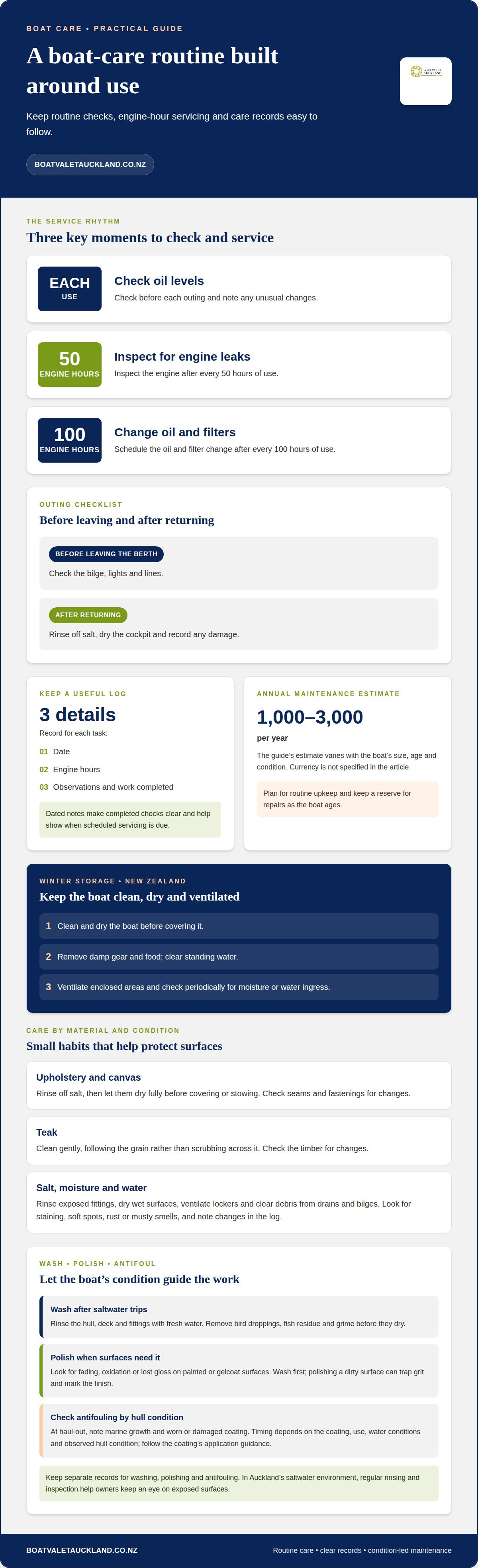
A boat’s best protection is a steady routine, not a last-minute tidy-up. Pride of ownership in boat care means keeping an eye on condition as well as appearance: check oil levels before each use, inspect the engine for leaks after every 50 hours of use, and change the oil and filters after every 100 hours of use. A checklist makes those jobs easier to remember.
Owning a boat brings ongoing care alongside the pleasure of getting out on the water. That can feel like a lot to keep track of, especially when routine upkeep competes with time afloat. A practical boat care checklist helps you plan regular checks, spot changes early and avoid maintenance becoming a last-minute scramble.
This guide explains what boat ownership involves and how to organise maintenance around use, cleaning and seasonal care. You’ll see which jobs suit a regular routine, what to watch for and when professional grooming can help protect your boat’s finish.
Table of Contents
Boat maintenance checklists
Separate checks before each outing from servicing scheduled by engine hours. Record each task’s date, engine hours and any observations.
Before each use, check oil levels and note unusual changes.
Inspect the engine for leaks after every 50 hours of use.
Change boat oil and filters after every 100 hours of use.
Before leaving the berth, check the bilge, lights and lines.
After returning, rinse off salt, dry the cockpit and record damage.
Keep the log with the boat’s maintenance records. A note such as “oil checked before use” makes completed tasks clear. Recording engine hours also helps you see when scheduled servicing is due, rather than relying on memory.
For winter storage in New Zealand, clean and dry the boat before covering it. Remove damp gear and food, clear standing water and ventilate enclosed areas. Check the boat periodically for moisture or water ingress.
Caring for upholstery, canvas and teak
Marine upholstery, canvas and teak each need care suited to their material and condition. Regular cleaning helps limit embedded dirt, damp patches and visible wear. Rinse salt from canvas and upholstery, then let them dry fully before covering or stowing them. Clean teak gently, following the grain rather than scrubbing across it. Check seams, fastenings and timber for changes, and record any repairs in the maintenance log.
Preventing corrosion, mould and water damage
Prevent moisture and salt build-up by inspecting places where water can collect. Damp lockers, fittings and enclosed spaces can develop mould or show corrosion. Rinse salt from exposed fittings after use, dry wet surfaces and keep lockers ventilated. Clear debris from drains and bilges so water can escape. Look for staining, soft spots, rust or musty smells, and record their location and any changes for follow-up.
The guide estimates annual boat maintenance costs at 1,000 - 3,000, depending on the boat’s size, age, and condition. This estimate can help owners plan for routine upkeep and retain a reserve for repairs as the boat ages.
What Does Boat Ownership Really Involve?
Boat ownership combines maintenance with planning, record-keeping and regular decisions. The workload depends on the vessel, its condition and how you use it.
Boat ownership responsibilities
Ownership means keeping the boat safe, clean and ready for use. Missed upkeep can lead to larger repairs or disrupt planned time afloat. Alongside routine checks, owners need to organise servicing, cleaning, insurance and berthing. In Auckland, saltwater exposure makes rinsing and inspecting exposed surfaces useful parts of regular care.
Track service dates, engine hours and work completed.
Plan for insurance renewals and marina or berth arrangements.
Keep the boat clean, dry and ready after each outing.
Set aside time for seasonal preparation and periodic inspections.
Costs depend on the boat’s size, age, condition and location. Insurance, berthing and the amount of professional work required also affect the ownership budget. Keep receipts and maintenance records together to review spending and identify recurring jobs.
DIY maintenance and professional detailing
DIY upkeep can reduce labour costs, but it still takes time, materials and suitable tools. Professional boat detailing costs more for the work itself, but brings specialist preparation and finishing to appearance-related jobs. Choose based on the task, the time you have and the condition of the surfaces.
DIY maintenance can be less costly for straightforward cleaning if you have the tools and time to do it properly. Professional detailing can make sense when oxidation, ingrained grime or a tired finish needs more involved preparation. Compare the work required, not just the immediate outlay. Washing deck surfaces, for example, is different from restoring faded paintwork.
Fit routine cleaning into your own schedule, then plan professional help for work that needs extensive surface preparation. A clear record of completed jobs helps distinguish regular upkeep from larger projects. This balance helps you manage time and costs while keeping the boat’s condition in view.
How often should a boat be washed, polished, and antifouled in New Zealand?
Set a cleaning routine around each outing, then assess polishing and antifouling separately. Auckland boats face saltwater, changing weather and varied use, so one fixed timetable won’t suit every hull or finish.
After saltwater trips, rinse the hull, deck and fittings with fresh water. Remove bird droppings, fish residue and grime before they dry onto surfaces. Cleaning also makes changes easier to spot, such as dull patches, staining or damaged coatings. Dry the boat to help prevent water marks and lingering moisture in lockers and corners.
Polishing depends on the surface condition, not a set schedule after every trip. Look for fading, oxidation or lost gloss on painted or gelcoat surfaces. Washing removes dirt; polishing addresses surface dullness and can restore the finish when needed. Timing depends on exposure, the existing condition and how the boat is stored. Don’t polish a dirty surface, as trapped grit can mark the finish.
Wash after use to clear salt and fresh contamination.
Inspect painted or gelcoat surfaces for dullness before polishing.
Record hull growth and coating condition at each inspection.
Antifouling timing depends on the coating, boat use, water conditions and the hull’s observed condition. Check for marine growth during haul-out and note areas where the coating looks worn or damaged. Follow the selected coating’s application guidance, including preparation and recoating instructions. If the boat is used frequently or kept afloat, base attention on the hull’s actual condition rather than an assumed calendar interval.
Keep separate records for washing, polishing and antifouling. Dated notes describing hull growth, fading or coating wear help track changes over time. If the topsides have lost their shine, Boat Cut and Polish can address the finish with dedicated surface preparation and polishing. Match each job to the visible condition and schedule the next inspection.
How should boat owners care for marine upholstery, canvas, and teak?
Pride of ownership in boat care starts with matching the cleaning method to the material. Salt, damp and sun exposure can leave marks or cause wear, so check surfaces after each outing. Treat spills early and avoid harsh scrubbing that can damage fibres or timber grain.
For upholstery, remove loose grit before wiping surfaces with a soft cloth. Blot spills rather than rubbing them into the fabric. Use a cleaner intended for the upholstery material and follow its care instructions. Check seams, cushions and fastenings for trapped moisture or wear. Let cushions dry fully before storing them in enclosed spaces.
Handle canvas covers and clears gently. Rinse away salt and loose dirt, then let the material dry fully before folding or covering it. Inspect seams, zips and attachment points for damage. Avoid packing damp canvas into a locker, where moisture can cause musty odours or encourage mould.
Brush teak along the grain, not across it.
Use a soft brush and gentle cleaning method on timber.
Check for loose seams, damaged fastenings and worn stitching.
Dry upholstery and canvas before putting them away.
Teak needs a careful approach because aggressive scrubbing can mark the surface. Clean small sections at a time, following the timber grain. Rinse away residue and let the deck dry. Note greying, staining or uneven areas in your maintenance record. These signs help distinguish normal weathering from a surface that needs more attention.
Taking pride in your boat also means matching specialist attention to the material. For tired teak or worn interior surfaces, arrange specialist care for teak and interiors. A clear description of affected areas helps focus the work where it’s needed.
Care planning also involves the costs of keeping a boat in use. Keeping spending in view helps you consider routine upkeep alongside berthing, rather than treating surface care as a separate task. Record material condition and completed work so attention stays focused on the upholstery, canvas and teak that need it.
Boat Valet Auckland
Boat Valet Auckland helps owners keep their vessels clean, protected and well presented with practical grooming and maintenance services. Turn to the team when routine care is no longer enough or a particular surface needs focused attention.
Boat Cut and Polish can refresh tired exterior finishes, while Antifouling addresses hull upkeep. Teak Restoration suits weathered timber, and Interior Valet helps bring cabin spaces back into shape. These services complement your regular checks, leaving you to focus on ongoing personal care.
Choose support based on the boat’s condition and the work required. A faded hull, worn teak and an overdue interior clean each call for a different approach. Contact Boat Valet Auckland to discuss the care your boat needs.
Make your next maintenance decision count
Good ownership isn’t about keeping every surface immaculate at all times. It’s about making deliberate choices that keep your boat ready for the way you use it. Let the visible condition guide your next step. A dulled finish, a hull needing antifouling and weathered teak each call for different attention. Choosing one clear priority makes ongoing upkeep easier to plan.
Pride of ownership in boat care grows through considered decisions. Instead of letting a long list of jobs feel endless, focus on what matters most now, then keep future maintenance manageable. Boat Valet Auckland offers Boat Cut and Polish, Antifouling and Teak Restoration for owners seeking help with these areas of care.
If specialist grooming is the next job on your list, contact Boat Valet Auckland to discuss your boat’s care. Take the next step with a clear plan and enjoy your time on the water.
Frequently Asked Questions
What routine boat maintenance tasks keep a boat in good condition?
Include battery connections, belts, hoses, hinges and hatch seals in routine inspections. Look for loose terminals, fraying, cracking or stiff movement, and record any changes. Check that deck fittings are secure and lockers close properly. These small observations can reveal wear before it affects a trip. Keep replacement parts and maintenance records organised to make recurring jobs easier to plan.
What boat maintenance should be done before and after each trip?
Before departure, confirm the fuel level suits your planned trip, secure loose equipment and check that hatches are latched. Make sure controls move as expected, and stow items that could shift underway. After returning, note unusual smells, sounds or vibration while they’re fresh in mind. Remove used gear from lockers, then leave access areas open to air where practical.
Comments