
How to Restore Weathered Teak: The Ultimate Marine Guide for 2026

What if the secret to a brand-new deck isn't your sander, but your chemistry? You've likely looked at your grey, splintering deck and worried that the only way back to that honey-coloured glow is to sand away the precious millimetres of your veneer. It's a common fear amongst boat owners in New Zealand, where high UV levels turn golden timber into a dirty grey mess faster than anywhere else. Many owners search for how to restore weathered teak only to find advice suggesting aggressive grinding. This often does more harm than good.
I understand the frustration of seeing a high-value asset lose its lustre. You want that classic, non-slip surface without the risk of ruining thin veneers. This guide will help you master professional techniques to transform weathered timber back to its golden glory whilst preserving it for years to come. We'll explore why the industry is moving from traditional oils to advanced sealers and how to stay compliant with the Clean Water Act. You'll learn a step-by-step process that prioritises lifting oxidation over grinding wood, ensuring your teak remains thick, healthy, and beautiful.
Key Takeaways
Understand why chemical restoration is superior to mechanical sanding for preserving the thickness and longevity of your teak decks.
Discover how to restore weathered teak using a professional two-part system that lifts silver oxidation and returns the wood's natural golden colour.
Compare oils, sealers, and raw finishes to find the best long-term protection against the harsh New Zealand sun whilst avoiding "Black Teak Syndrome".
Learn the "Wet-Clean-Brighten" workflow and essential masking techniques to keep your gelcoat and stainless steel safe during the restoration process.
Adopt simple daily maintenance habits, like the soft brush rule, to keep your decks looking their best between professional grooms.
Table of Contents
Understanding Why Marine Teak Weathers: Salt, Sun, and Silver Patinas
Teak is a remarkable material. Its reputation in the maritime world comes from the unique properties of teak wood, which include a high natural oil content and silica. These elements make it naturally resistant to rot and water, but they don't make it invincible against the elements. When your deck begins to lose its golden hue, you're seeing a chemical reaction at the cellular level. This is why many boat owners start looking for how to restore weathered teak before the surface damage becomes structural.
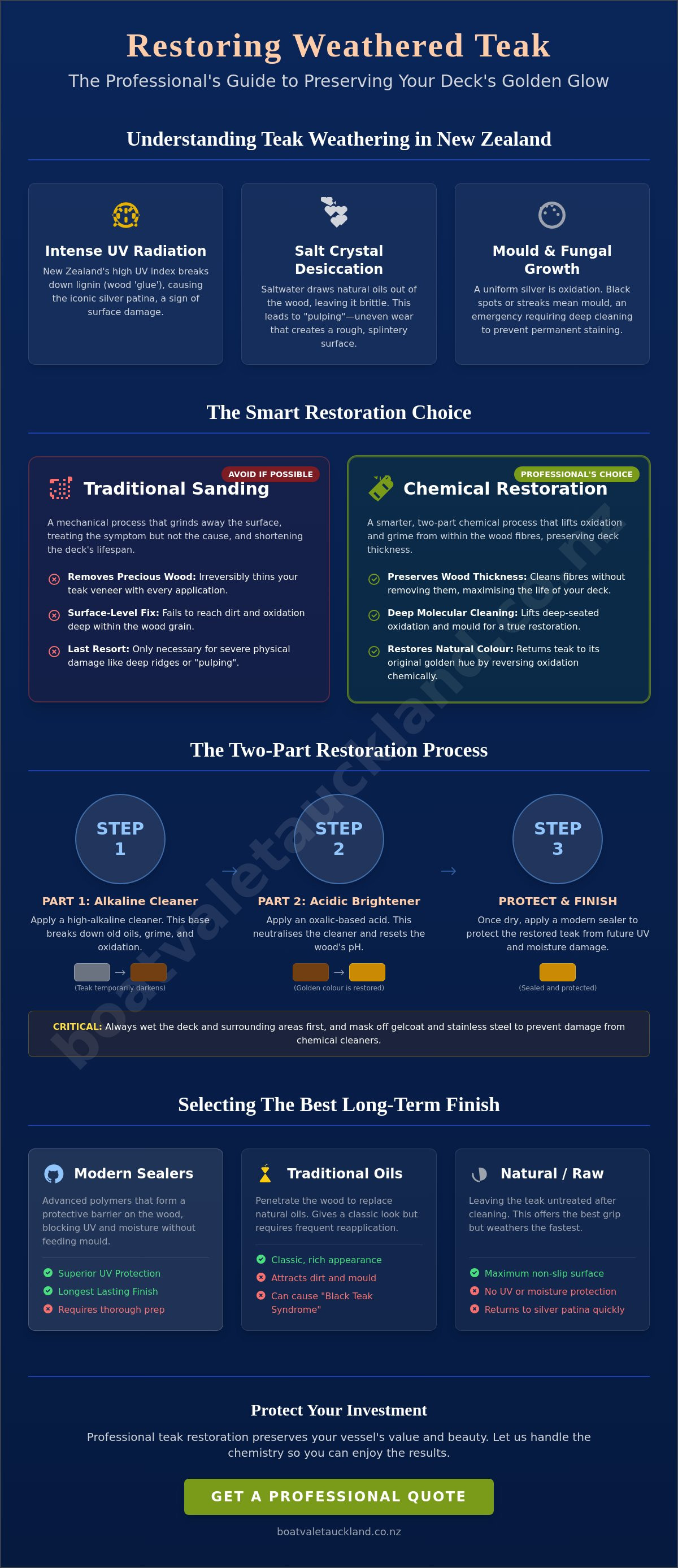
Weathering is essentially the oxidation of surface lignin. Lignin is the organic polymer that acts as the "glue" for wood fibres. When UV radiation hits the deck, it breaks this glue down. The result is that beautiful, yet vulnerable, silver patina. While some owners prefer the classic grey look, it’s a sign that the surface layer of the timber is no longer protected by its natural oils. Without these oils, the wood becomes thirsty and exposed.
The Role of New Zealand’s UV Index
Vessels moored in Auckland face a harsher environment than those in the Northern Hemisphere. Our thin ozone layer means the UV index here is significantly higher, often reaching extreme levels during summer months. This intense radiation causes a rapid cellular breakdown of teak fibres. Lignin breakdown is the primary cause of silvering in 2026. Because the sun is so aggressive, the transition from a golden deck to a parched grey one happens in a fraction of the time it would in Europe or America.
Mould vs. Oxidation: Identifying the Problem
It's vital to distinguish between healthy oxidation and a biological invasion. A silver patina is a uniform, clean grey. Black spots or streaks, however, indicate fungal growth or mould. Auckland's high humidity creates a perfect breeding ground for these spores, especially in the tight grain of weathered wood. While grey is an aesthetic choice, black is a maintenance emergency. If left to grow, mould can root deep into the grain, making it much harder to learn how to restore weathered teak without losing significant timber thickness during the cleaning process.
Saltwater also plays a role in this degradation. As it dries on the deck, salt crystals act like tiny desiccants, drawing natural moisture and oils out of the wood. This leaves the timber brittle and prone to "pulping". Pulping occurs when the softer grain wears away faster than the harder latewood, creating deep ridges. This creates a rough, splintery surface that's uncomfortable underfoot and traps even more dirt and moisture.
The Chemistry of Restoration: Two-Part Cleaners vs. Traditional Sanding
Many boat owners reach for the sander as soon as they see grey. This is often a mistake. Sanding is a mechanical process that removes the very wood you're trying to save. Chemical restoration is a smarter approach. It cleans the fibres instead of grinding them down. This is the most effective way to learn how to restore weathered teak without shortening the lifespan of your deck. You want to preserve every millimetre of that expensive timber.
The "Two-Part" system is the secret weapon of professional boat groomers. It uses a specific sequence of chemical reactions to lift oxidation and dirt. These chemical cleaning methods are far more efficient than manual labour. They reach deep into the grain where a sander cannot touch. This process treats the wood at a molecular level, ensuring the deep-seated silvering is removed rather than just covered up.
How Two-Part Marine Cleaners Work
The first step involves a high-alkaline cleaner. This base breaks down old, stubborn oils and environmental grime. It will turn your teak a frighteningly dark brown. Don't panic. The second step uses an oxalic-based brightener to neutralise the alkaline. This acid resets the timber's pH balance and restores the golden colour instantly. Neutralisation is critical. If you don't balance the pH, the chemicals can continue to react within the wood fibres, leading to long-term damage. Always protect your gelcoat. These acids can etch polished surfaces or damage stainless steel fittings if not properly managed.
When Sanding is Actually Necessary
Sanding should be your last resort, but it has its place. If your deck suffers from heavy "ridging," you'll need to level the surface. Ridging happens when the softer springwood wears away, leaving the harder grain raised and rough. This creates a trap for dirt and makes the deck uncomfortable. Use a light touch with 80 to 120-grit sandpaper to smooth the high spots. Always measure your teak thickness before you start. If the wood is getting thin, you risk sanding through to the substrate. If you're worried about ruining a thin veneer, a professional teak restoration service can help determine if your deck can handle another sand.
Selecting the Best Finish for Your Vessel: Sealer, Oil, or Natural
Once you've mastered how to restore weathered teak, the next hurdle is keeping it that way. You have three main paths: leave the wood raw, apply a traditional oil, or use a modern sealer. In the past, many boaties defaulted to oil, but the harsh New Zealand climate has changed the game. Local owners now favour breathable sealers in 2026 because they handle our extreme UV levels without the maintenance headache of older products.
Leaving teak raw is a low-maintenance choice, but it means accepting the silver patina discussed earlier. While raw teak provides excellent grip, it remains vulnerable to deep-seated dirt and mould. If you want that honey-coloured aesthetic, you need a protective barrier. However, the choice of barrier depends on how much time you want to spend scrubbing. Raw wood needs weekly cleaning to stay bright, whereas a sealed deck can look pristine for months with minimal effort.
The Problem with Traditional Teak Oils
Traditional teak oils are losing favour for a reason. In the intense Southern Hemisphere sun, these oils can actually "cook" the timber. This leads to a dark, burnt appearance that hides the natural beauty of the wood. Even worse, oils remain "wet" inside the grain. This creates a magnet for dust and environmental pollutants, a condition known as "Black Teak Syndrome." Once your deck turns black and sticky, cleaning it becomes a nightmare. Oiled decks can also become dangerously slippery when wet, which is a significant safety concern for any active vessel.
Why Modern Sealers are the Professional Choice
Modern sealers like Semco or Teak Wonder are the preferred choice for high-end restorations. Unlike oils, these products are non-sticky and breathable. They contain high-grade UV inhibitors that prevent the sun from breaking down the wood's lignin. This keeps the timber golden for months rather than weeks. A sealed deck is much easier to maintain; usually, a simple soft-brush wash with saltwater is all that's required. For a detailed look at the transformation process, see this Teak Deck Sanding and Sealing: A Case Study. It demonstrates the results you can expect when moving away from traditional oils. Most sealers only require a light top-up every six months, making them far more efficient than the monthly re-oiling cycle.
A Step-by-Step Guide to Restoring Your Weathered Teak Decks
Restoring a boat deck is far more complex than reviving garden furniture. You aren't just dealing with wood; you're working alongside sensitive gelcoat, polished stainless steel, and aluminium fittings. If you want to know how to restore weathered teak without damaging your vessel, preparation is your most important step. Start by masking off all surrounding surfaces with high-quality marine tape and plastic sheeting. Chemicals that lift oxidation from timber can easily etch your polish or cause unsightly streaks on your hull.
The "Wet-Clean-Brighten" workflow is the industry standard for safety and efficiency. Never apply restoration chemicals to a dry deck, as the wood will soak them up too deeply, making them difficult to rinse out. When it comes to scrubbing, follow the golden rule: always work across the grain, never with it. Scrubbing with the grain tears out the soft wood fibres, leading to the "pulping" and ridging mentioned earlier. A medium-stiffness brush is all you need to lift the grey transition layer.
Phase 1: The Deep Clean
Apply your Part 1 alkaline cleaner to a thoroughly wet deck. Work in small, manageable sections to ensure the product doesn't dry out. If it dries, it stops working and becomes difficult to remove. Let the cleaner dwell for several minutes whilst you gently scrub across the grain. You'll see the silver oxidation turn into a dark, muddy slurry. Rinse the area with plenty of fresh water until the run-off is clear. Never use a high-pressure cleaner. These machines destroy the soft grain and can ruin a deck in minutes. A standard garden hose with a spray nozzle provides more than enough pressure.
Phase 2: The Brightening Magic
Whilst the wood is still damp from Phase 1, apply the Part 2 acidic brightener. You'll see an instant colour shift as the dark brown timber transforms back to its natural honey-gold state. This step is a chemical neutralisation process that resets the timber's pH levels. Rinse the deck again with fresh water to ensure no chemical residue remains in the grain or around your fittings. For routine maintenance between these deep cleans, follow our guide on How to Clean a Teak Deck on a Boat to keep the surface fresh.
Phase 3: Finishing and Sealing
Patience is vital during the final phase. You must wait for 24 to 48 hours of dry weather before applying any finish. The moisture content in the timber needs to be low for a sealer to bond correctly. Apply your chosen sealer using a foam brush or a lint-free rag for an even, matte finish. Avoid over-application; the wood should look natural, not varnished. Wipe away any excess product immediately to ensure the surface remains non-slip and safe for your crew. If this process feels daunting, our professional teak restoration team can handle the heavy lifting for you.
Maintaining Your Teak and Knowing When to Call the Professionals
Restoring your deck is a significant investment in your vessel's value. Keeping it in top condition requires a consistent, low-impact maintenance routine. The most important rule is to use a soft brush. Hard bristles tear out the soft grain, undoing all your hard work and creating the ridging we want to avoid. Regular saltwater rinses are your best friend. Saltwater helps keep the wood hydrated and discourages mould growth in Auckland's humid climate. If you've mastered how to restore weathered teak, you'll know that simple prevention is much easier than a full chemical reset.
Consistency is key for a golden deck. A quick wash after every trip removes salt crystals and environmental soot before they can settle into the grain. Avoid using domestic detergents or dish soaps. These strip away the protective oils or sealers you've worked hard to apply. Stick to fresh or saltwater and a dedicated soft-bristle deck brush. This simple habit can double the time between deep restoration sessions.
The Importance of Caulking Integrity
Before you begin any cleaning, inspect your caulking. This is the "paying" or the black lines between the planks. Check if the bond is still tight against the timber. If you see gaps or the edges are lifting, stop immediately. Loose caulking allows water to seep underneath the planks. This leads to deck leaks and, eventually, core rot in the substrate. Chemical cleaners are particularly dangerous here. They can get trapped under loose planks and eat away at the adhesive from the inside. If your caulking is failing, chemical cleaning will only accelerate the damage. This is a clear sign that you need professional intervention.
Why a Professional Valet Saves Money Long-Term
DIY restoration carries high risks for the inexperienced. Strong chemicals can cause permanent burns on your gelcoat or etch your polished stainless steel. Professional equipment and years of industry tenure make a massive difference. Steve Kellie takes a proactive, mobile approach to teak restoration at Westhaven, Viaduct, and other major Auckland marinas. We ensure all chemical runoff is contained, which is essential for meeting the strict requirements of the Clean Water Act. This protects our local marine environment whilst giving your vessel a showroom finish.
Managing large-scale teak projects requires precision and the right tools. We handle everything from pre-sale grooming to deep structural cleans across the city's high-end marinas. If you're unsure about the state of your decks or want to ensure the job is done safely, we're here to help. Contact Steve at Boat Valet Auckland for a professional teak assessment and let's get your vessel back to its golden glory.
Secure the Future of Your Deck Today
Restoring your vessel's teak doesn't have to be a gamble with a sander. By choosing non-destructive chemical restoration over aggressive grinding, you preserve the timber's thickness and structural integrity. We've seen how modern sealers provide the best defence against the Auckland sun, preventing the dark, sticky mess that traditional oils often cause. Success comes down to using the right chemistry and maintaining a simple, soft-brush cleaning routine. Understanding how to restore weathered teak correctly ensures your boat remains a source of pride rather than a maintenance burden.
If you'd prefer to leave the heavy lifting to the experts, Steve and the team are ready to help. We've been Auckland's marine specialists since 1998, providing a fully mobile service at all major marinas. We specialise in high-end, non-destructive finishes that bring back that honey-coloured glow whilst protecting your gelcoat and fittings. Get a Professional Teak Restoration Quote from Steve today and let's get your decks looking their best for the season ahead. Your boat is in safe hands.
Frequently Asked Questions
Can I use a pressure washer to clean my teak deck?
No, you should never use a pressure washer on a marine teak deck. High-pressure water blasts away the soft springwood fibres, creating deep ridges and a permanently ruined surface. Instead, use a standard garden hose and a medium-stiffness brush to scrub across the grain. This method preserves the timber whilst effectively removing surface grime without the risk of structural damage.
How often should I restore my weathered teak in Auckland?
In Auckland's extreme UV environment, you should perform a deep restoration every 12 to 24 months. However, applying a sealer top-up every six months will significantly extend the life of the finish and maintain that golden glow. Regular saltwater rinses and soft-brush cleaning will keep the wood healthy and reduce the frequency of heavy chemical cleaning.
Is it better to oil or seal a teak deck?
Modern sealers are significantly better than traditional oils for New Zealand vessels. Sealers are breathable and non-sticky, meaning they don't attract dust or environmental pollutants that lead to a black, dirty appearance. They also contain high-grade UV inhibitors that prevent the wood from "cooking" and turning dark under the intense southern sun.
Will teak cleaner damage my boat’s gelcoat or paint?
Yes, restoration chemicals can damage gelcoat or paint if they aren't properly managed. The alkaline cleaners and acidic brighteners used in the professional two-part system can etch polished surfaces or leave permanent streaks on your hull. This is why professional masking and thorough, immediate rinsing are essential steps in how to restore weathered teak safely without compromising your vessel's finish.
Why has my teak turned black after I oiled it?
Your teak has likely turned black due to "Black Teak Syndrome," where environmental dust and soot stick to the wet oil. Traditional oils don't dry completely, creating a sticky magnet for pollutants that then bake into the grain under the harsh sun. Switching to a non-oily, breathable sealer after a deep clean will prevent this unsightly build-up from recurring.
How long does professional teak restoration take?
A professional restoration typically takes between two and four days to complete for most vessels. This timeframe allows for the multi-stage chemical cleaning process and the mandatory 24 to 48 hours of drying time required before applying a sealer. The exact duration depends on the size of your deck and the prevailing weather conditions in the marina.
Can I restore teak that is already thinning or worn?
Yes, you can often restore thinning teak, provided you avoid mechanical sanding. Chemical restoration is the only safe way to bring back the colour of a thin veneer without removing more of the precious timber. If the wood is extremely worn, the focus shifts to a gentle "clean and seal" approach to stabilise the remaining fibres and prevent further degradation.
Comments