
How to Detail a Boat Interior to Improve Its Appeal

A spotless cabin won’t guarantee a higher sale price, but interior boat detailing before selling can help buyers focus on the boat rather than avoidable dirt and odours. Clean upholstery, fresh-smelling storage and tidy surfaces make a better impression during viewings. The sale outcome still depends on the boat’s condition and the wider market.
It’s natural to focus on the asking price, but buyers also notice what they see and smell as they step aboard. Professional interior detailing can address everyday grime, stains and mildew, helping the cabin feel cared for rather than simply cleaned for a listing.
This guide covers how to prepare your boat for detailing, what to consider when cleaning upholstery, carpets and mildew, and which interior areas to inspect before photos or viewings. It also explains where detailing can improve presentation and where deeper damage needs more than a cosmetic clean.
Table of Contents
Boat Detailing Before Selling: Does It Raise the Price?
A clean interior won’t guarantee a higher sale price, but it can help keep buyers focused on the boat’s merits. Professional cleaning and conditioning improve the presentation of upholstery, glass, hardware and storage areas.
How professionals clean storage compartments and crevicesStart by clearing removable accessories, then vacuum storage compartments, cup holders, pockets and drawers. A professional works along seams and crevices, where sand, crumbs and sticky residue can collect. A steamer can loosen stubborn dirt for vacuum removal. Check each compartment for damp towels or life jackets, which can contribute to mould and mildew if left stored wet.
How professionals clean vinyl, carpet and upholsteryMatch the cleaning method to each material and its condition. Vinyl seats need careful cleaning and conditioning because they can dry out and crack; carpet may need shampooing or extraction, depending on its type and level of soiling. Vacuuming first removes loose grit that could mark surfaces during cleaning. DIY cleaning may suit light, routine dirt, while embedded stains, mildew or mixed materials can benefit from professional attention.
How professionals condition upholstery and polish glass and hardwareAfter cleaning, apply suitable upholstery conditioner to help preserve vinyl and improve its finish. Clean windows with ammonia-free glass cleaner to avoid damaging tints, and check for hard-water spots. Polish metal hardware to lift grime and restore a cleaner appearance. A mild all-purpose cleaner can wipe down interior surfaces before protection; the right product depends on the material being treated.
Assess repairs and stains for disclosureRecord visible stains, persistent mildew, cracked vinyl, torn seams and previous repairs for buyers, alongside any cosmetic improvement. In New Zealand, describe known interior issues accurately rather than presenting a cleaned surface as damage-free. Detailing addresses cosmetic staining and dullness, but it won’t fix deep scratches or structural damage. Allow time according to the boat’s size, materials, use and mess; no single duration fits every interior.
Professional removal of stains and mildew
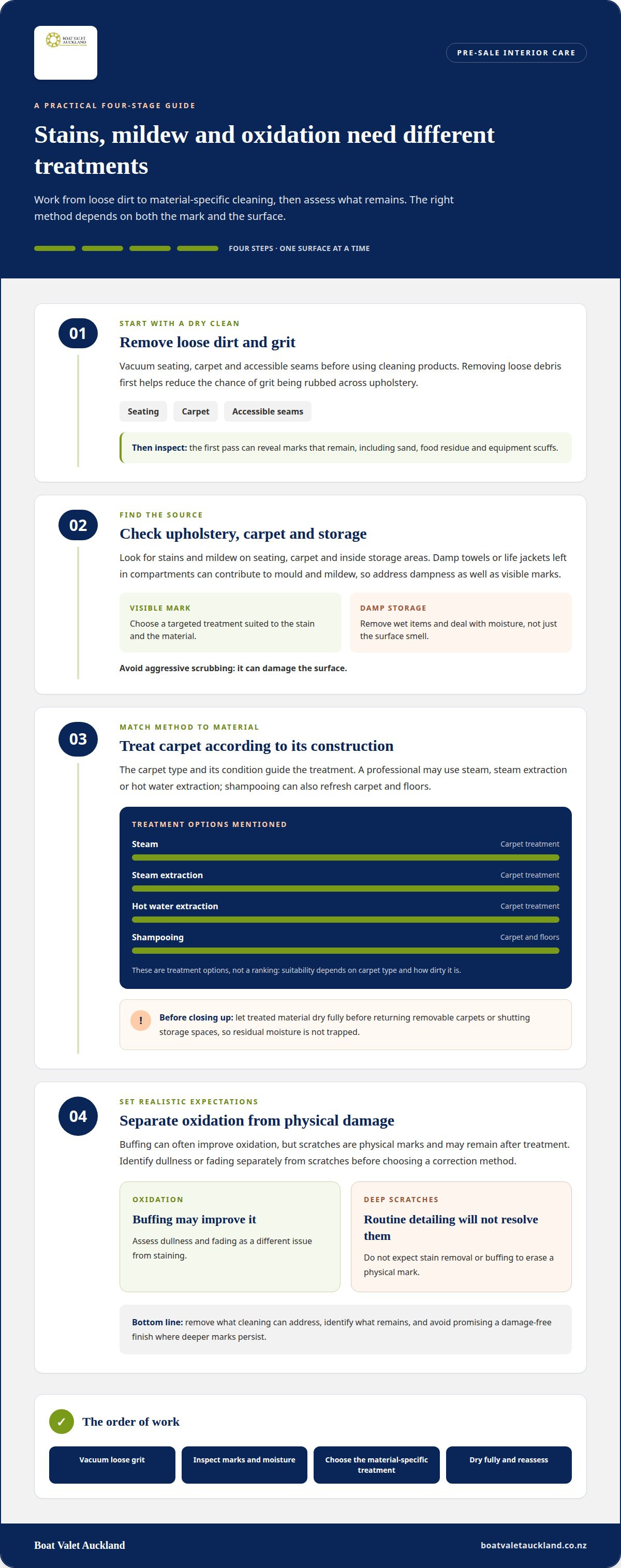
Before cleaning, assess the marks and the materials they affect. Loose grit, set-in stains, mildew and oxidation need different treatment, and the surface determines which method is suitable.
Remove loose dirt and debris first. Vacuum seating, carpet and accessible seams before applying cleaning products, reducing the chance of grit being rubbed across upholstery during stain removal. This first pass also reveals marks that remain, such as sand, food residue and equipment scuffs. Choose the cleaning method for the material rather than using one product on every surface.
Look for stains and mildew on upholstery, carpet and inside storage areas. Wet towels or life jackets left in compartments can contribute to mould and mildew, so addressing dampness matters as much as cleaning the visible mark. Upholstery cleaning and conditioning can lift dirt while helping preserve the material. Stubborn marks may need targeted treatment; aggressive scrubbing can damage a surface.
Match the carpet treatment to its construction and condition. Depending on the carpet type and how dirty it is, a professional may use steam, steam extraction or hot water extraction. Shampooing can also refresh carpet and floors. Allow the treated material to dry fully before returning removable carpets or closing storage spaces, so residual moisture doesn’t remain trapped.
Assess oxidation separately from staining. Buffing can often improve oxidation, but a scratch is a physical mark and may remain after treatment. Distinguish dullness and fading from scratches before choosing a correction method. Routine detailing won’t resolve deep scratches, so don’t expect stain removal or buffing to erase them. This assessment helps set realistic expectations for the finish.
Areas buyers inspect
Prioritise the areas buyers can see, touch and open during a viewing. A focused final inspection can reveal missed dirt, lingering odours and visible wear before the boat is presented.
Inspect seating and upholstery in good light. Buyers may notice cracked vinyl, flattened cushions, stained seams and uneven colour on frequently used seats. Check joins and piping, where dirt can remain after surface cleaning. Aim for a consistent finish across the seating, not just the cushions nearest the entrance. Note visible damage separately from marks that cleaning may remove.
Check carpet, flooring and the edges beneath removable mats. Sand and debris can collect along floor joins, under seats and around steps. Look for stains, damp patches, lingering smells and worn areas that stand out against cleaner carpet. A professional finish includes the exposed floor as well as the carpet itself, so lifting removable sections during the detail can reveal missed debris.
Open storage compartments, drawers and lockers during the final inspection. Buyers may look inside, where crumbs, dust, wet items or mildew can undermine an otherwise tidy cabin. Check corners and hinges for residue, and make sure compartments are dry and fresh-smelling. Cup holders and small pockets deserve attention too, because grime is easy to spot up close.
Review windows, metal fittings and high-touch surfaces from a buyer’s viewpoint. Glass can show fingerprints, water spots and streaks, especially in direct light. Handles, latches and trim can hold fingerprints or look dull. Finish by checking seams, switches and entry points for dust or sticky marks. These details help the interior feel consistently cared for.
Preparing the boat for professional interior detailing
Arrange detailing at least one week before listing photos or the first viewing. A pre-sale checklist should cover loose belongings, rubbish, food, wet items, removable carpets, open storage areas and access to the interior.
Remove personal belongings, rubbish and food before the appointment. Clear seats, shelves, cup holders and drawers so the detailer can reach those surfaces. Point out items that must remain aboard, such as safety equipment, so they can be kept separate from the cleaning work.
Take out unattached wet towels, clothing and life jackets. Damp items left in storage can contribute to mould and mildew. Leave lockers and compartments open to air before detailing, helping trapped moisture escape and giving the professional access to the full storage area.
Remove snap-on carpets and seat covers where practical. Removable carpets can be taken out to dry while the rest of the interior is cleaned. Keep each piece together and tell the detailer where it belongs. This makes refitting easier and exposes flooring that may need attention.
Make the cabin accessible, including drawers, lockers and seating areas. Point out known stains, previous repairs, delicate surfaces and places where water has collected. For example, identify a damp locker or a cushion with a persistent mark. This helps plan an approach suited to the boat’s materials and condition.
Coordinate the appointment with your sale schedule. Allow time for cleaned carpets and upholstery to dry before photos or a viewing. Keep the interior clear afterwards, so fresh dirt, food and wet gear don’t undo the preparation before buyers step aboard.
Prepare your boat for a professional interior detailing appointment by clearing belongings and noting areas needing special attention.
Boat Valet Auckland: Interior Valet
Boat Valet Auckland’s Interior Valet is a practical option when the cabin needs professional attention before photos or buyer viewings. It focuses on interior presentation, including upholstery, carpets, storage areas and other surfaces. Share the boat’s condition, known stains and priority areas so the work can be planned around the interior.
If sale preparation also calls for attention beyond the cabin, Boat Cut and Polish, Antifouling or Teak Restoration may suit other parts of the vessel. Choose services according to what needs work.
For a professionally cleaned interior before sale, contact Boat Valet Auckland to discuss an Interior Valet.
Set your boat up for its next chapter
Plan the final presentation around how you’ll introduce the boat to buyers. A tidy, considered interior supports a good first impression, while accurate information about its condition helps set realistic expectations. Decide which presentation work matters most before arranging photography or viewings, and fit the work into your sale schedule.
For interior boat detailing before selling, Boat Valet Auckland can prepare the cabin with its Interior Valet. If the wider presentation needs attention, Boat Cut and Polish, Antifouling and Teak Restoration address other areas of the vessel. Choose the work that suits your boat and sale plans rather than treating every service as necessary.
Take the next step with a focused plan for your boat’s presentation. Contact Boat Valet Auckland today to discuss an Interior Valet and move towards your next viewing with confidence.
Frequently Asked Questions
Does detailing always pay off?
Detailing is most useful when visible dirt or neglected surfaces distract from the boat’s condition. Identify priorities before choosing the scope of work. For example, a tidy cabin may benefit more from focused upholstery and carpet cleaning than from treating every surface. The asking price and the boat’s overall condition still shape its appeal to buyers.
What is the biggest detailing mistake to avoid?
Don’t cover up an odour or stain without considering its cause. A strong fragrance may briefly mask a smell, but buyers could notice it in a closed cabin. Damp gear or a persistently wet compartment may contribute to the problem. Tell the detailer where the odour is strongest so attention can be focused there.
Which services make the biggest difference?
Choose services according to the boat’s condition and what buyers will see. An Interior Valet addresses the cabin, while Boat Cut and Polish can refresh exterior surfaces. Teak Restoration is for tired teak, and Antifouling addresses the hull below the waterline rather than interior presentation. A focused combination may make more sense than work unrelated to your sale priorities.
What does interior boat detailing before selling include?
An Interior Valet focuses on accessible cabin surfaces and fittings, with the work tailored to the boat’s materials and condition. It may include upholstery, flooring, lockers, windows and metal trim. Identify priorities, such as a stained cushion or musty locker, so attention can be directed where it matters.
How do professionals clean boat upholstery, carpets and cabins for sale?
Cleaning methods depend on the upholstery, carpet construction and level of soiling. A professional may vacuum first, then use a method suited to each material. Carpet with embedded dirt may need extraction, while vinyl seating requires a different approach. Treating materials individually avoids handling every cabin surface as if it were made from the same fabric.
How do professionals remove mould, mildew and boat odours safely?
Assess the affected material and possible source of moisture before treating visible mildew or lingering odours. Cleaning only the surface may leave dampness unaddressed, so wet items and affected storage spaces need attention too. Avoid mixing cleaning products or applying a strong treatment without considering the surface. Persistent or widespread growth may need more than routine interior cleaning.
Comments