
How to Clean a Boat to Appeal to Potential Buyers

A neglected finish can make a well-kept boat look like hard work. A clean, well-presented boat gives buyers fewer visible reasons to hesitate, which helps explain how a clean boat sells faster. Regular washing, careful gelcoat care and attention to the interior all help create a better first impression.
It’s understandable to focus on the asking price when preparing to sell, but presentation matters too. Salt, grime, water spots and musty smells can distract buyers from the boat’s condition and features.
This guide explains what regular cleaning can achieve, how professional care can protect gelcoat and exterior surfaces, and which cleaning mistakes can undermine the finish. You’ll also learn which areas to prioritise before listing, so you can prepare thoughtfully and present the boat at its best.
Table of Contents
How regular cleaning can help a boat look appealing to potential buyers
Regular washing helps keep salt, grime and odours from distracting buyers. A clean, cared-for appearance can help explain how a clean boat sells faster.
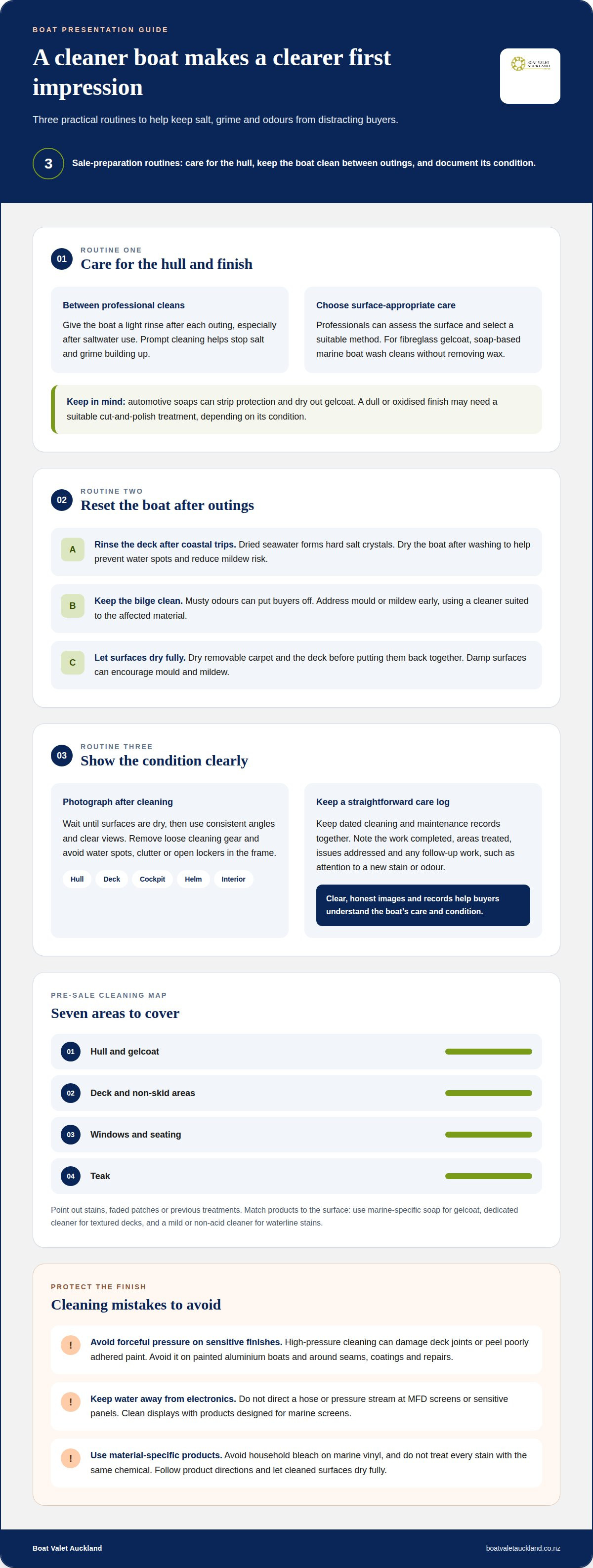
Professional hull care to protect surfaces and valueArrange regular professional hull cleaning, especially after saltwater use. A light rinse after each outing helps remove salt before it dries into deposits, while prompt cleaning stops grime building into a larger job. When the boat is kept in the water, keeping the hull to a thin slime layer helps maintain its appearance. Professionals can assess the surface and choose suitable cleaning methods, rather than applying the same treatment to every hull.Professional detailing can be more effective than DIY cleaning when the hull needs careful assessment or built-up grime needs attention. Routine owner cleaning still helps between visits, but a professional can focus on finish and problem areas.
Keep the boat clean between outings with professional detailingSchedule detailing regularly instead of waiting until sale preparation. Wipe down the boat after outings to stop dirt and grime building up. Rinse the deck after coastal trips, as dried seawater forms hard salt crystals, then dry the boat after washing to help prevent water spots and reduce mildew risk. Keep the bilge clean too, since musty odours can put buyers off.At haul-out, use an approved facility so cleaning by-products are captured and treated properly. Choose products suited to the surface and handle wash water responsibly, following product directions and the facility’s requirements. Keep the boat clean before leaving its berth to reduce the risk of marine species travelling with it.
Photograph the boat after cleaningPhotograph the boat after washing, once the surfaces are dry. Show the hull, deck, cockpit, helm and interior clearly, using consistent angles so buyers can assess the condition. Remove loose cleaning gear and avoid water spots, clutter or open lockers in the frame. Include close-ups of notable wear rather than hiding it: clear, honest images help set accurate expectations.Keep dated cleaning and maintenance records together, noting work completed and any issues addressed. Buyers may want a clearer picture of care over time, so a straightforward log can support what the photographs show. Record the cleaning date, areas treated and any follow-up work, such as attention to a new stain or odour.
Cleaning gelcoat and exterior surfaces
Describe the boat’s materials and problem areas before cleaning starts. This helps a professional match the washing method and products to each surface.
Which parts of a boat professionals clean before it is listed for saleArrange a pre-sale clean covering the hull, gelcoat, deck, non-skid areas, windows, seating and teak. Point out stains, faded patches or previous treatments so they receive appropriate attention. Choose products for the surface: marine-specific boat soap suits gelcoat, while textured decks benefit from a dedicated non-skid cleaner. For waterline stains, a mild or non-acid cleaner is the cautious choice.For upholstery, use products suited to the material and avoid household bleach on marine vinyl. Clean MFD screens with a product designed for marine displays, and keep hoses away from electronics. Teak also needs a suitable cleaning method, not an all-purpose cleaner.
Clean gelcoat with material-appropriate productsAsk for a marine-specific wash on fibreglass gelcoat. Soap-based boat washes clean without removing wax, whereas automotive soaps can strip protection and dry out gelcoat. Avoid alkaline-based boat gel cleaners. A professional can work in manageable sections, rinse thoroughly and dry the surfaces to reduce water spots.For a dull or oxidised finish, a suitable cut-and-polish treatment can restore gloss; the right approach depends on the gelcoat’s condition. Choose exterior wash and wax when the priority is a clean, protected finish. Keep cleaning products matched to the hull material, and follow each product’s directions.
Professional removal of mould, mildew, stains and odoursArrange treatment at the first sign of mould, and identify the affected surface before applying a cleaner. Select a product suited to the material and address visible staining without using household bleach on marine vinyl. Let cleaned areas dry fully, since trapped moisture can contribute to further mildew.For waterline marks, use a mild or non-acid hull cleaner unless you are experienced with stronger products. On bare aluminium, use an aluminium cleaner as directed to tackle grime, oxidation and staining. Match the product to the surface instead of treating every stain with the same chemical.
Common boat-cleaning mistakes
Use cleaning methods suited to each boat surface. The wrong tool or product can damage finishes, fittings and fabrics.
Keep high-pressure cleaners away from decks and painted finishes. A forceful jet can damage deck joints or peel paint that hasn’t adhered properly to its substrate. Avoid high-pressure washing on painted aluminium boats. Use a gentler approach, especially around seams, coatings and repaired areas.
Protect permanently installed carpet from hoses and pressure washers. Excess water can soak into the backing and take longer to dry. For routine cleaning, use a vacuum and damp cloth. Treat spills with mild detergent, lukewarm soapy water and gentle scrubbing.
Dry removable carpet and the deck before putting them back together. After washing snap-in carpet, let the deck dry completely before replacing it. Rinse a boat cover only when needed, then spread it out to dry before reinstalling. Covering damp surfaces can encourage mould and mildew.
Keep water away from electronics and electrical equipment. Don’t direct a hose or pressure stream at an MFD screen or sensitive panel, and avoid spraying electrical devices inside the boat. Clean displays with a suitable method rather than treating them like the surrounding console.
Avoid harsh cleaners on marine materials. Household bleach can damage marine vinyl over time, while unsuitable cleaners may affect other surfaces. Match the product to the material and follow its directions. Take extra care around upholstery seams, fittings and areas with existing wear.
Don’t reinstall a cover before the boat has dried and aired. Moisture trapped beneath it can contribute to mildew and musty smells. Brush dirt and debris from the cover before fitting or removing it, so loose material doesn’t fall onto clean seats or flooring. Use support poles to prevent low spots where rain can pool and drip inside.
Keep hoses and pressure washers away from permanently installed carpet. Avoid high-pressure cleaning on decks and painted aluminium, and keep water streams off sensitive electronics. Let the boat dry and air before replacing its cover.
Which parts of a boat should a professional clean before it is listed for sale?
Arrange a pre-sale clean covering the surfaces buyers see and the spaces they inspect. Prioritise visible condition, lingering odours and areas where dirt can hide.
Start with the hull and waterline. Remove salt, grime and visible staining using methods suited to the hull material. A clean hull makes its condition easier to assess, while a thin slime layer on a boat kept in the water is preferable to heavy fouling. Arrange haul-out cleaning at an approved facility so by-products are captured and treated properly.
Include the deck, cockpit and non-skid surfaces. Buyers notice dirt in textured areas, around fittings and along deck joins. Choose cleaning products suited to each surface rather than using one general cleaner throughout. The finish should be clean without damaging coatings, joints or existing repairs.
Have the helm, windows and seating cleaned with products suited to each material. MFD screens need care, and hoses should stay away from sensitive electronics. Don’t use household bleach on marine vinyl. Clear windows and tidy seating help buyers inspect the helm and cockpit without grime obscuring details.
Include the interior, bilge and accessible engine-room surfaces. Musty smells from an unclean bilge can deter buyers, while cleaning can make changes such as a new oil leak easier to notice. Cleaning can identify visible concerns, but it does not replace a mechanical inspection or diagnose a fault.
Finish with teak, upholstery and removable carpet. Use methods suited to each material, then let carpet and damp areas dry fully before refitting or covering them. An even finish helps prevent one neglected patch from drawing attention away from the rest of the boat.
Prepare your boat for sale with professional pre-sale cleaning focused on the areas buyers inspect.
Boat Valet Auckland: Engine Room Cleaning
Boat Valet Auckland provides Engine Room Cleaning to help present a cleaner, better-kept space when preparing your boat for sale. This service is useful when dirt, residue or neglected surfaces could distract buyers inspecting the engine room. Cleaning improves presentation, but it isn’t mechanical engineering or a substitute for a mechanical inspection.
For a broader pre-sale finish, Boat Valet Auckland also offers Boat Cut and Polish, Antifouling and Teak Restoration. These services address different visible areas, from the exterior finish and hull to teak surfaces. The right combination depends on the boat’s condition and the areas needing attention.
Contact Boat Valet Auckland to discuss Engine Room Cleaning for your boat.
Make presentation part of your sale plan
Plan your boat’s presentation before arranging viewings. Allow time to address the areas that matter most to your intended buyer, and coordinate grooming with photography and listing preparation. Understanding how a clean boat sells faster starts with treating presentation as part of the sale, not a last-minute task.
Choose the work based on your boat’s condition and the impression you want to create. Boat Valet Auckland offers Boat Cut and Polish, Antifouling and Teak Restoration to prepare specific areas for sale. These services can form part of a considered plan alongside cleaning and detailing. Aim for a finish that presents the boat honestly and helps prospective buyers assess it with confidence.
Ready to plan the next step? Contact Boat Valet Auckland to discuss preparing your boat for sale. A clear plan can help you approach the listing with confidence.
Frequently Asked Questions
How does a clean boat attract buyers and sell faster?
A clean boat helps buyers focus on its layout, features and overall condition rather than visible dirt or neglected details. During a viewing, tidy surfaces and a fresh-smelling interior make it easier to inspect spaces and imagine using the boat. Clear presentation can also make listing photographs more inviting, helping prospective buyers decide whether to arrange a viewing.
Does cleaning and polishing a boat increase its sale price or resale value?
Cleaning and polishing can improve presentation, but they don’t guarantee a higher sale price. A well-kept finish may help buyers recognise the boat’s care and condition, while price also depends on factors such as age, equipment, maintenance history and buyer demand. Treat grooming as preparation for a stronger, more transparent sale, not as a substitute for addressing faults or setting a realistic asking price.
Treat the pre-sale clean as a chance to note problems, not just improve the photos. If the sale involves moving the yacht to another port, there’s a separate guide to hiring a delivery skipper and preparing for the passage here: https://yachtservicesaustralasia.com/delivery
For the listing itself, focus on visible surfaces, lockers and any source of odours rather than polishing everything indiscriminately. Check product directions against each surface before starting. Keep a short record of what was cleaned and flag anything that still needs attention. Photograph remaining wear clearly rather than trying to disguise it.