
2026 Teak Deck Restoration Costs for Auckland Boat Owners
- Steve Kellie

- 3 days ago
- 12 min read
Is your teak deck a stunning asset or a ticking financial time bomb? In the harsh Hauraki Gulf sun, that elegant timber can transform from a golden masterpiece into a weathered liability faster than most owners realise. Spotting the specific signs your boat teak needs restoration early is the difference between a simple refresh and a total deck replacement. While a silver-grey patina might look coastal, it often masks deep-seated issues that compromise your vessel's integrity and resale value.
You likely want that rich, honey-coloured finish back but worry about the cost or the risk of using aggressive chemicals. We understand the hesitation. Every boat owner wants to preserve their investment without being overcharged or having their precious teak sanded down to nothing. This guide breaks down the variables that dictate 2026 restoration pricing in Auckland and clarifies when you can simply clean versus when it is time to re-caulk. By the end, you will have a clear roadmap to restore your deck's glory and extend its lifespan for decades.
Table of Contents
Understanding Teak Deck Restoration: Signs Your Boat Teak Needs Urgent Attention
Teak restoration is a technical revival of your timber's natural vitality. It is a multi-stage process that involves deep cleaning and precision finishing to remove dead surface material and reveal the healthy wood beneath. Understanding the natural properties of teak wood is essential for any owner. Its high oil content and durability make it the gold standard for decks, but even this hardy species succumbs to the elements without expert care. A professional restoration doesn't just clean the surface; it stabilises the wood's internal structure and prevents long-term decay.
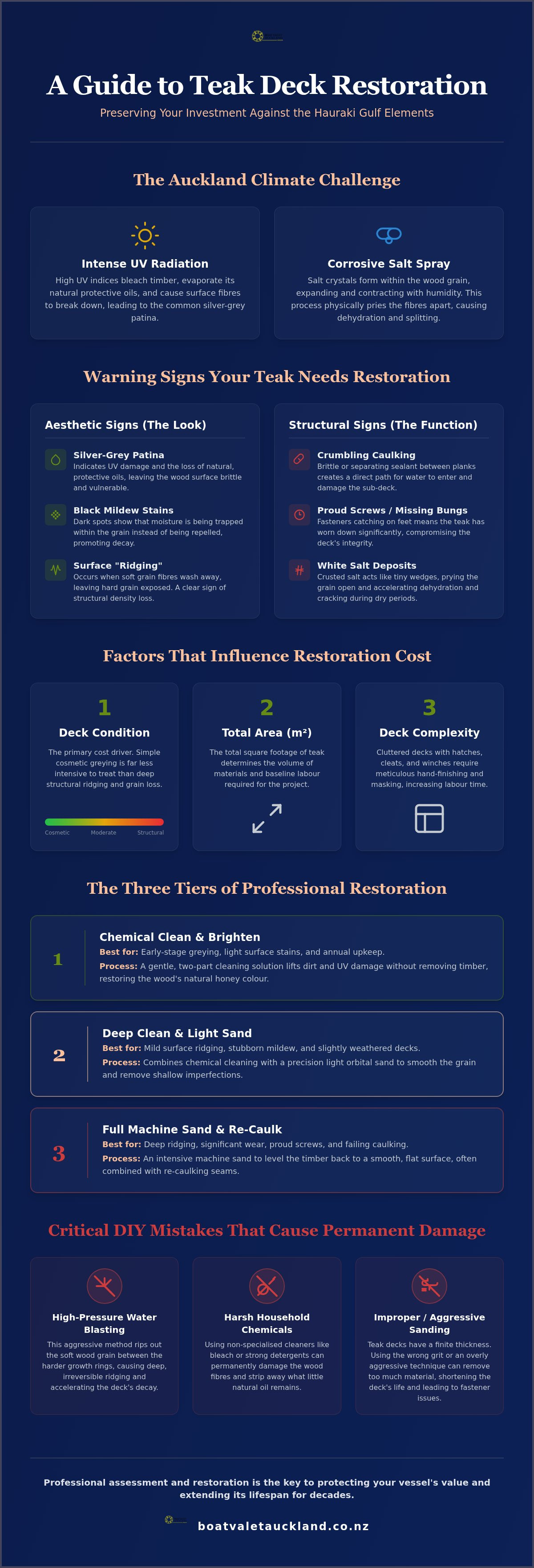
The most common signs your boat teak needs restoration begin with a shift in colour. That silver-grey patina isn't just a rugged look. It indicates UV-driven surface fibre breakdown. When the wood turns grey, the protective natural oils have evaporated, leaving the surface brittle and vulnerable. Look closer at the grain for black mildew stains. These dark spots indicate that moisture is being trapped within the wood rather than repelled. You might also notice "ridging" or a raised grain. This occurs when the soft-grain fibres wash away, leaving the hard-grain ridges exposed. It's a clear signal that the wood is losing its structural density and requires professional levelling.
The Aesthetic vs. Structural Warning Signs
Beyond the colour of the wood, you must inspect the functional components of the deck. Small failures in the deck's hardware or sealant often lead to the most expensive repairs. Watch for these specific indicators during your next inspection:
Loose or crumbling caulking: If the sealant between planks is pulling away or feels brittle, it creates a direct path for water ingress into the sub-deck.
Proud screws or missing bungs: When screws start catching on bare feet, it means the teak has worn down significantly or the fasteners are backing out.
White salt deposits: Crusted salt crystals act like tiny wedges, prying the grain open and accelerating dehydration during dry spells.
Why Auckland’s Climate Accelerates Teak Wear
Auckland's marine environment is notoriously brutal on natural timber. The high UV indices in the Hauraki Gulf cause wood fibres to snap and bleach at an accelerated rate compared to milder climates. During our humid summers, salt crystal growth within the timber expands and contracts, physically tearing the grain apart from the inside out. Whether you're moored at Gulf Harbour or Westhaven, the combination of intense sun and salt spray creates a "sandpaper effect" on unprotected decks. Regular professional maintenance isn't a luxury in Auckland; it's a necessity to prevent permanent damage to your vessel's value and aesthetic appeal.
Primary Factors That Influence Teak Restoration Cost in New Zealand
Vessel size is the natural starting point for any restoration estimate. It's a matter of square footage and the volume of timber that requires treatment. However, the physical condition of that timber is the real wildcard in the New Zealand market. If you've caught the signs your boat teak needs restoration whilst the damage is purely cosmetic, the process is far swifter. Simple greying can often be reversed with chemical brightening, but deep structural ridging requires aggressive levelling. When the soft grain has been scoured away by the elements, it demands significantly more machine time and precision to achieve a smooth, honey-coloured finish.
Industry standards for restoring weathered teak emphasize that the complexity of the workspace determines the final labour tally. It isn't just about the area; it's about what sits on top of it. Accessibility is paramount. A professional needs to move freely to ensure an even sand and consistent application of sealants. If you're unsure where your deck sits on this spectrum, getting a professional teak assessment at your local Auckland marina is the best way to plan your maintenance budget.
Deck Complexity and Hardware Integration
A wide, open cockpit is relatively straightforward to restore. Conversely, a deck cluttered with hatches, cleats, winches, and intricate rail fittings requires meticulous hand-finishing. Restoring teak around delicate stainless steel or glass centres requires extensive masking and specialised tools to avoid scratching expensive finishes. These high-detail hardware zones often double the labour time compared to a "free and clear" deck. We must work carefully around every fitting to ensure the wood is protected without compromising the seal of the hardware itself.
Condition of the Caulking Seams and Bungs
The state of your caulking is a massive cost driver that many owners overlook. If the seams are failing, water can penetrate the sub-deck. This leads to structural rot that eventually dwarfs the cost of wood restoration. A full re-caulk involves removing the old material, cleaning the grooves, and injecting new marine-grade sealant. It's a labour-intensive task that requires a steady hand. We also inspect the bungs, the small timber plugs covering the fasteners. If these are missing or "proud," they must be replaced immediately to prevent moisture from reaching the core of your deck.
The Three Tiers of Professional Teak Restoration Services
Teak maintenance isn't a one-size-fits-all job. It's a strategic choice based on the current state of your timber and your long-term goals for the vessel. If you've spotted the early signs your boat teak needs restoration, you can often opt for a less invasive approach that preserves the thickness of your planks. Understanding the wood decay processes caused by fungi and UV exposure helps you decide which tier of service is right for your boat. We categorise our work into three distinct levels to provide transparency and ensure we aren't removing more wood than is absolutely necessary.
Level 1: Deep Cleaning and Brightening
Level 1 is a non-abrasive restoration approach. We use a specialised two-part chemical system designed specifically for marine environments. The first stage deep-cleans the wood, lifting dirt, salt, and neutralising mould spores embedded in the grain. The second stage acts as a brightener, chemically reacting with the wood to restore its natural pH and honey colour. This is the most cost-effective annual maintenance choice for Auckland boat owners. It's ideal for decks that have a sound grain structure but have lost their aesthetic appeal to the Hauraki Gulf sun.
Level 2: Professional Sanding and Levelling
When the surface of your deck feels rough or shows visible ridging, chemicals alone won't suffice. Level 2 involves light machine sanding to level the surface. We remove the high-standing hard grain ridges that remain after the soft grain has eroded away. This process requires precision to ensure we don't thin the teak excessively. We use professional-grade dust extraction systems at every Auckland marina we visit. This is a critical step to protect neighbouring vessels from fine teak dust. This level of service reveals the fresh, oil-rich wood hidden beneath the weathered exterior and restores a smooth, factory-finish feel underfoot.
Level 3: Comprehensive Deck Refurbishment
Sometimes the signs your boat teak needs restoration point to deeper structural failures. Level 3 is a comprehensive refurbishment. This tier addresses missing bungs, failing caulking seams, and significant wood loss. If your deck is showing soft spots or the sealant is pulling away from the planks, you likely require professional teak restoration Auckland services. This level involves a full suite of repairs to make the deck watertight again. Whilst it is a more intensive investment, the cost of a full refurbishment is dwarfed by the massive expense of a total deck replacement. We focus on stabilising the existing timber to extend its life for another decade.
DIY vs. Professional Restoration: Avoiding Costly Damage
The temptation to tackle teak maintenance as a weekend DIY project is high. However, without the right tools and chemical knowledge, a well-intentioned afternoon can result in thousands of dollars in damage. We've seen many owners attempt to save money only to end up with a deck that's thinner, rougher, and more prone to rot. Understanding the signs your boat teak needs restoration is the first step, but the second step is knowing when to put the tools down and call a specialist.
The "Water-Blaster Trap" is the most frequent mistake in Auckland marinas. High-pressure washing scours out the soft teak fibres instantly. It leaves behind a ribbed, skeletal surface that is uncomfortable to walk on and impossible to level without removing a significant amount of wood. Similarly, using harsh household acids or bleach creates chemical burns. These substances don't just damage the timber; they can etch your gelcoat and ruin the finish on expensive stainless steel fittings. Improper sanding is equally destructive. Without industrial-grade orbital sanders, DIYers often create "valleys" where water pools, leading to permanent structural instability.
The Real Cost of DIY Damage
One bad afternoon with a pressure washer can remove five years of a deck's life in minutes. Once those soft fibres are gone, they can't be replaced. We often find that our marine detailing services NZ begin with a rescue mission to fix DIY errors. Fixing a botched sanding job or neutralising aggressive chemical spills takes twice as much time as a standard restoration. It's far more cost-effective to preserve your wood thickness from the start rather than trying to sand your way out of a mistake later.
Why Professional Mobile Services Save You Money
Professional restoration gives you access to industrial-grade two-part cleaners that lift grey fibres without destroying the wood's integrity. Steve Kellie has been refining these processes since 1998, bringing 25+ years of local experience directly to your berth. Our mobile service is equipped with specialised dust extraction systems. This is vital in Auckland marinas like Westhaven or Viaduct Harbour, where fine teak dust can lead to heavy fines if it settles on neighbouring boats. We manage all chemical runoff and waste collection, ensuring your boat stays compliant with local environmental regulations. If you want a result that looks brand new without the risk of permanent damage, it's time to book a professional teak restoration assessment today.
Organising Your Auckland Teak Restoration: The Next Steps
Identifying the signs your boat teak needs restoration is the first step toward preserving your vessel’s value. Once you have noticed silvering or ridging, a professional assessment is essential. We examine the depth of the grain and the integrity of the caulking at every corner of the vessel. For an accurate quote, we need to see the deck in its current state, preferably dry. This allows us to spot the subtle lifting of grain or the start of mildew growth that might be hidden when the wood is wet. Providing clear photos of the high-traffic areas also helps us determine the level of sanding required before we arrive on-site.
Timing your restoration is crucial in the Auckland marine environment. Most owners prefer the shoulder seasons of autumn and spring. Autumn restoration protects the wood from the damp, humid winter months when mould and fungi thrive amongst the grain. Spring restoration ensures your vessel looks its absolute best for the summer cruising season in the Hauraki Gulf. Booking ahead is essential. These windows fill up quickly at major marinas like Westhaven and Orakei, so early planning ensures your deck is protected before the weather turns.
Preparing for Your Professional Grooming Visit
To get the best result from your mobile boat grooming Auckland service, a little preparation goes a long way. Clear the deck of all cushions, lines, and personal gear. We need unobstructed access to every square inch of the teak to ensure a consistent finish. Ensure your marina berth or private jetty has reliable access to 230V power and fresh water. We work around your schedule to minimise downtime, allowing you to get back on the water with a rejuvenated deck as quickly as possible. Personal accountability is our hallmark, and we treat your vessel with the respect it deserves.
Protecting Your Investment Post-Restoration
After restoration, the debate often turns to sealers versus a natural finish. High-quality sealers can lock in that honey-coloured look for longer, but they require regular re-application to remain effective. If you prefer the wood to weather naturally, a strict washing schedule is mandatory. Use a soft brush and salt water to wash across the grain, never with it. This prevents dirt from becoming trapped in the soft fibres and slows down the return of the signs your boat teak needs restoration. For a bespoke assessment of your vessel’s needs, contact Steve Kellie at Boat Valet Auckland. We have been helping local owners protect their assets since 1998, and we are ready to find the right solution for your deck.
Secure Your Vessel's Value for the 2026 Season
Your teak deck is a finite resource that requires precision care to survive the Hauraki Gulf's demanding environment. We've explored how catching the early signs your boat teak needs restoration, such as silvering or surface ridging, can prevent the astronomical expense of a total deck replacement. Whether your vessel requires a gentle chemical brighten or a comprehensive Tier 3 refurbishment, choosing professional expertise ensures your wood thickness is preserved for decades.
Avoid the common pitfalls of high-pressure washing and aggressive DIY chemicals that often lead to permanent structural damage. Since 1998, Steve Kellie has provided owner-operated care across Auckland's premier marinas. Our mobile service brings over 25 years of technical knowledge directly to your berth at Westhaven, the Viaduct, or Gulf Harbour. We handle the technical details so you can focus on enjoying the water.
Don't let another season of intense UV exposure degrade your investment. Contact Steve Kellie for a Teak Restoration Quote today and return your deck to its stunning, honey-coloured glory. We look forward to seeing you at the marina.
Frequently Asked Questions
Is teak restoration worth the cost for an older boat?
Restoration is a strategic investment because a well-maintained deck can last 20 to 30 years. On an older vessel, the deck is often the most valuable aesthetic feature. Reviving it prevents water from reaching the sub-deck, which avoids massive structural repair bills later. Professional care ensures you don't waste the remaining wood thickness. It makes the boat far more attractive to potential buyers in the Auckland market.
How long does a professional teak restoration last in Auckland?
A professional restoration typically lasts between two and five years in the Hauraki Gulf. The exact duration depends on your washing habits and how often the boat is exposed to high UV levels. Using a soft brush and salt water helps maintain the honey colour. Regular chemical brightening between major restorations can extend this lifespan significantly, keeping the timber healthy and oil-rich for longer periods.
Can you restore teak that has already been sanded multiple times?
We can often restore thin teak, but we must use non-abrasive methods. If your deck has been sanded multiple times, we avoid further machine work and focus on Level 1 chemical deep cleaning. This lifts the grey fibres and neutralises mildew without removing any physical wood. We measure the remaining thickness during our initial assessment to ensure we don't compromise the deck's structural integrity or reach the fasteners.
Does professional restoration include re-caulking the seams?
Re-caulking is part of our comprehensive Tier 3 refurbishment service. We don't automatically re-caulk every deck, as many only require surface revival. However, if we identify signs your boat teak needs restoration alongside failing seams, we recommend a full or partial re-caulk. This involves removing the perished sealant and applying new marine-grade material to ensure the deck remains watertight and protected from core rot.
How long will my boat be out of action during the restoration?
Most restoration projects take between one and three days to complete. A simple chemical clean and brighten is often finished in a single day. More intensive work involving sanding or re-caulking requires extra time for the materials to cure and for precision finishing. We coordinate our mobile service around your schedule at Auckland marinas to ensure minimal disruption to your weekend cruising plans or planned maintenance windows.
What is the difference between teak cleaning and teak restoration?
Cleaning removes surface dirt, whereas restoration revives the wood's internal health. Standard cleaning is part of regular boat grooming to stop salt buildup. Restoration involves a deeper chemical or mechanical process to remove oxidised silver fibres and level the grain. It addresses the signs your boat teak needs restoration like deep-seated mildew or ridging that a simple soap and water wash cannot fix.
Can I restore my teak deck whilst the boat is in the water?
Yes, we perform the majority of our restorations whilst the vessel is in its marina berth. Our mobile setup is designed to work efficiently on the water at Westhaven, Viaduct Harbour, and other Auckland facilities. We use specialised equipment to contain dust and manage chemical runoff, ensuring we stay compliant with local marina regulations. You don't need the expense or hassle of hauling the boat out for deck work.
Will restoration fix large cracks or missing chunks of wood?
We can certainly address cracks and missing timber through our Level 3 refurbishment. Small cracks are often filled during the sealing process, whilst larger gaps or missing bungs require physical timber repairs. We can replace individual plugs or sections of planking to restore a uniform surface. This prevents moisture from entering the wood grain and causing the fungi-driven decay that eventually destroys the entire deck structure.
Comments